

21 Playful Small Bedroom Decor Ideas for Kids That Grow Up With Them
A small kids’ bedroom is asked to do more jobs per square foot than any other room in the house: sleep, storage, study and play, for an occupant who grows out of every answer within about two years. Our small bedroom decor ideas solve this room for a grown-up whose size holds still; these small bedroom decor ideas for kids solve the same room for a moving target, and they start by measuring the room and the child before decorating either.
The Method: Size It, Zone It, Grow-Proof It
Three decisions, in order, before anything is bought: what size the bed truly needs to be, which corner does which job, and what stays fixed while the theme changes. A kids’ room decorated out of order is decorated twice — once for the child they are, once for the child they became.
Step 1 — Size It: The Bed Is Sized to the Room and the Child
A twin mattress is 38 × 75 inches (the frame runs roughly 40–42 × 77–80 inches) and is the largest bed a small kids’ room should start from; a toddler bed takes the crib mattress, 28 × 52 inches, for the under-five years. Whichever bed, keep at least 24 inches of clear walkway on the side the child climbs in and out of, and tape the footprint on the floor before buying — the tape test catches the bed that eats the play floor while there is still time to choose again.
Step 2 — Zone It: Four Jobs, Each at the Child’s Own Scale
Sleep against the longest wall, storage where the child’s hands reach it, study in the best light, play on the floor the bed did not take. Storage is placed by the child’s height, not the adult’s: everyday shelves and bins live at or below roughly 36–40 inches for under-sixes, because a child can only tidy what a child can reach. More than any single piece of furniture, small bedroom decor ideas for kids stand on this zoning — sleep, storage, study and play each in their place, each at the child’s own scale.
Step 3 — Grow-Proof It: Safety Fixed Once, Theme Swappable Forever
The fixed layer is safety, and it is non-negotiable: no child under six sleeps on a top bunk or in a high loft, guardrails on both sides of any raised bed rise at least 5 inches above the mattress with no gap wider than 3.5 inches, at least 30 inches sit between a raised mattress and the ceiling, and every dresser and bookcase is anchored to a wall stud. The American Academy of Pediatrics sets out the raised-bed rules in full in its bunk bed safety guidance for parents. Everything decorative sits on top of that fixed layer as a swappable layer — bedding, decals, art — so the room is re-themed for the price of a duvet cover instead of a renovation.
Zone A — The Bed Does the Heavy Lifting
In a small kids’ room the bed is not furniture; it is the zoning decision. Its size sets the play floor, its height sets the safety rules, and its position sets everything else — so the bed is chosen first and chosen by measurement.
1. Start With a Twin Bed Sized to the Room

A twin mattress is 38 × 75 inches and lasts from about age three to adulthood, so the “buy a full-size bed to grow into” instinct buys a decade of lost floor for a benefit that never arrives. Tape the footprint first, and hold 24 inches of walkway on the climbing-in side.
2. Lift the Bed Into a Loft Only From Age Six
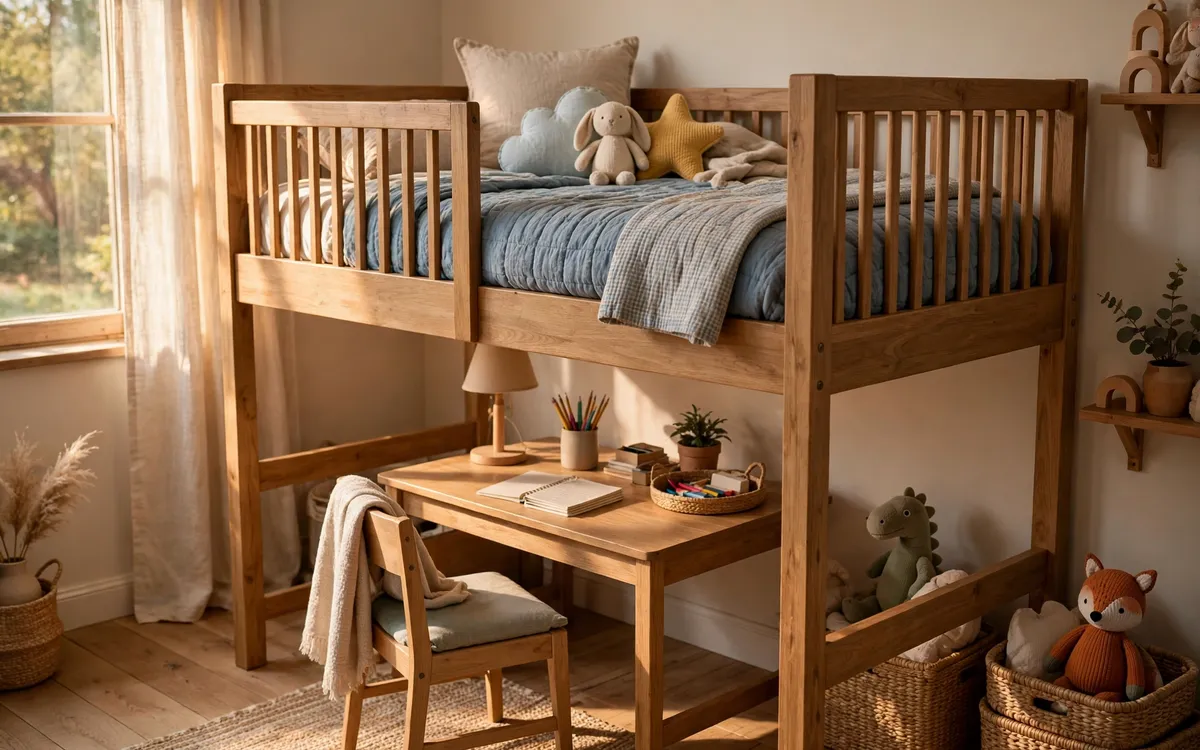
A loft returns the bed’s whole footprint to the floor as desk or play space, but the raised-bed rules are hard ones: six years and up only, guardrails on BOTH sides, rail tops at least 5 inches above the mattress, gaps no wider than 3.5 inches, and at least 30 inches from mattress top to ceiling. Measure the ceiling before the bed is ordered, not after.
3. Slide a Trundle Under for Sleepovers
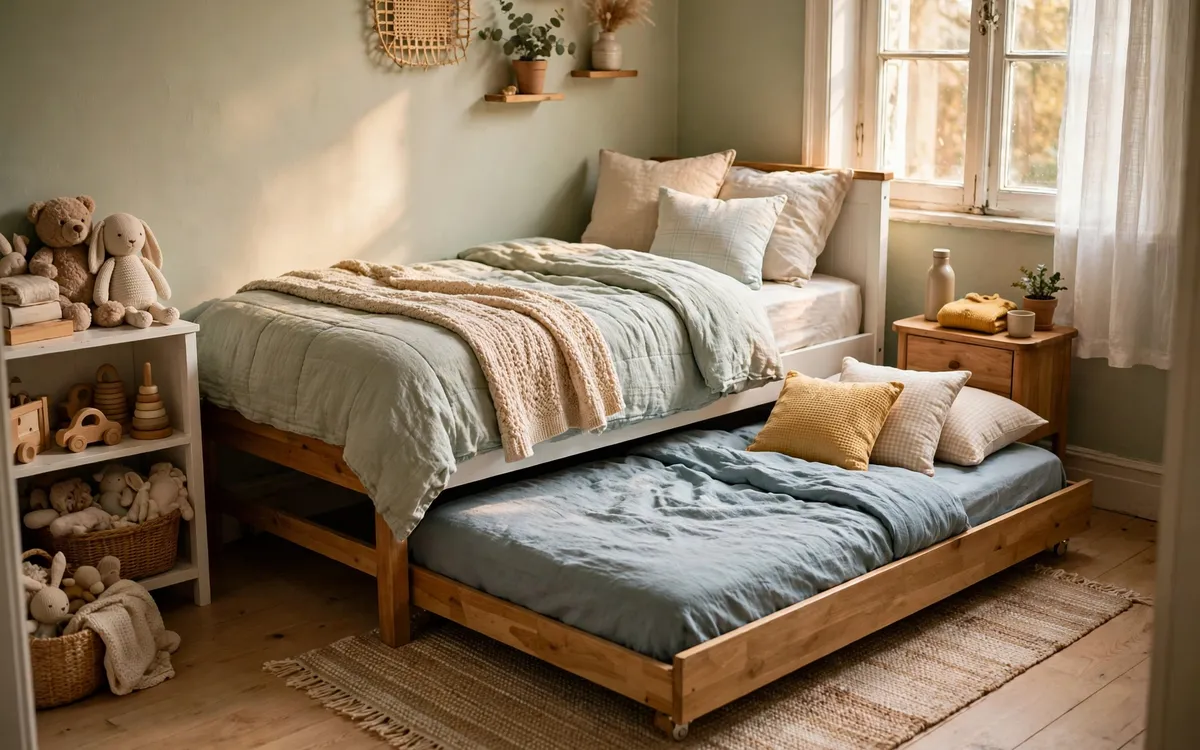
A trundle gives the room a second bed that exists only at night. Check the under-bed clearance before buying — most trundles need around 12 inches and a mattress no thicker than about 8 inches, and the exact figures are the manufacturer’s — and the daytime floor comes back whole every morning.
4. Keep the Bed Low for Little Kids

For under-fives, a low platform or floor-level bed with the mattress top around 12–18 inches off the floor: a fall from it is a tumble, not an accident, and the child climbs in and out alone. Independence is a storage strategy too — a child who can get into bed unaided is a child who can be asked to make it.
5. Tuck the Bed Into the Corner or the Slope

The awkward corner, alcove or eaves slope the room apologises for is the bed’s natural home: the bed takes the unusable shape, the room’s centre stays clear for play, and the 24-inch access rule is kept on the open side only.
Zone B — Storage at Child Height
Storage a child cannot reach is storage for adults stored in a child’s room. This zone puts the tidying tools at the child’s own height — including the dresser, the room’s clothes store and its most climbed piece of furniture, whose top in a child’s room follows the safety-first reading of our top of dresser decor ideas: low, light, and nothing tempting at the edge.
6. Run Open Bins at the Height Small Hands Reach

Cube storage two rows high tops out around 24–28 inches, inside an under-six’s reach: open bins, no lids to fight, one job per bin, picture labels for pre-readers. A child tidies what a child can reach, and simply steps over everything else.
7. Give Books a Front-Facing Ledge

Picture books are chosen by their covers, so they are stored covers-out on a shallow ledge only about 3–4 inches deep, mounted with its top rail around 30–36 inches up: a whole library in the depth of a picture frame, at the height of the reader.
8. Claim the Under-Bed Zone With Rolling Bins
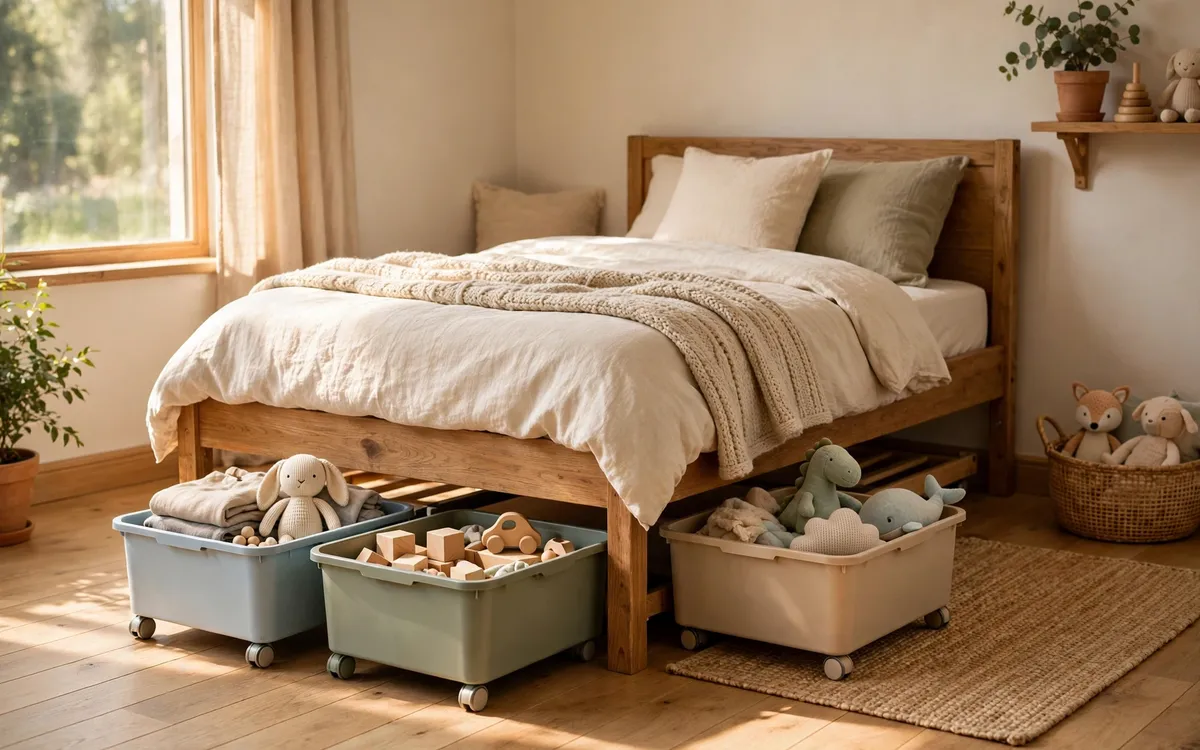
The floor under a standard twin is a full second storage layer going to waste. Wheeled bins roughly 6 inches tall slide in and out by small hands and take the off-season clothes and the big toy sets — too bulky for shelves, too rarely used for the reach zone.
9. Hang a Pocket Organiser Behind the Door
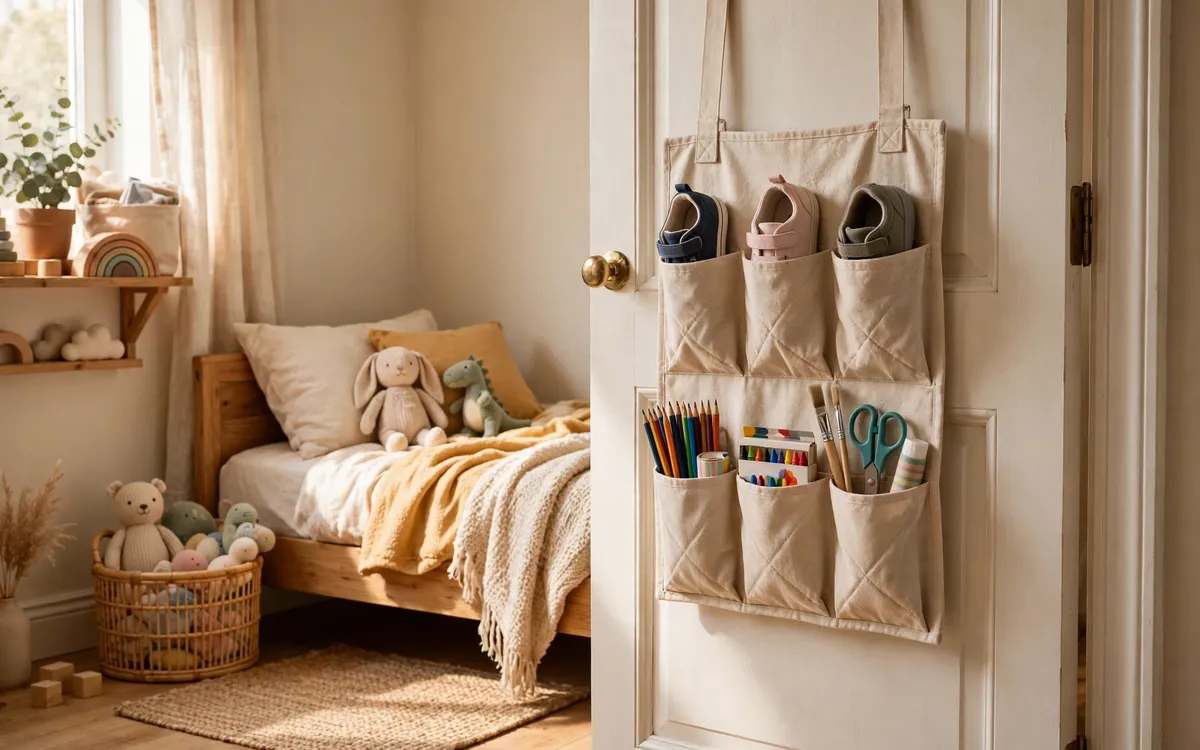
The door’s back is free wall: a hanging pocket organiser takes shoes, art supplies and the small homeless things, at zero floor cost. Check the door still opens flat against it, and keep anything heavy off it — doors are for light loads only.
10. Anchor Every Tall Piece to a Stud
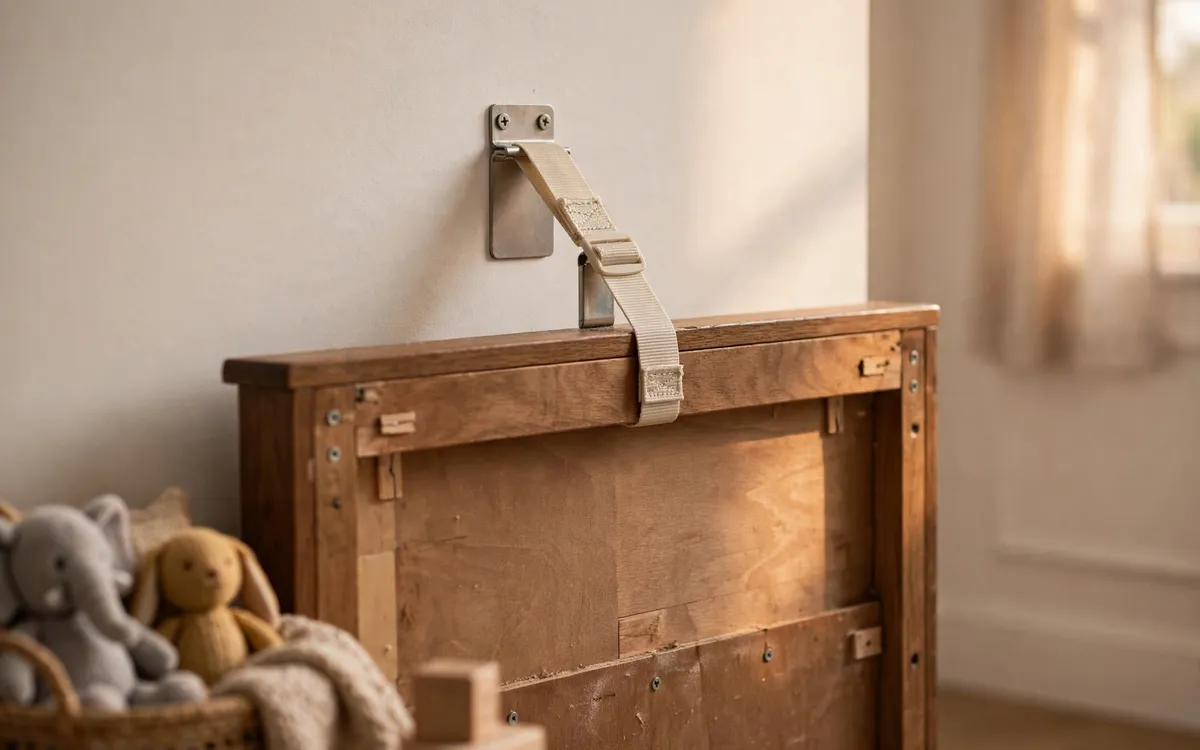
The storage zone closes with its safety rule: every dresser, chest and bookcase a child can reach is strapped to a wall stud with an anti-tip kit (a basic kit costs under $20), with heavy items loaded into the BOTTOM drawers. Drawers are ladders to a climbing toddler. Dressers made after September 2023 already meet the federal stability standard and ship with the kit in the box — install it anyway.
Zone C — A Corner to Play and Learn
Play and homework are the zones the bed did not take, fitted to the child’s body rather than the adult’s. The study corner works because it is measured; the play floor works because it is defended.
11. Fit a Desk Matched to Their Height
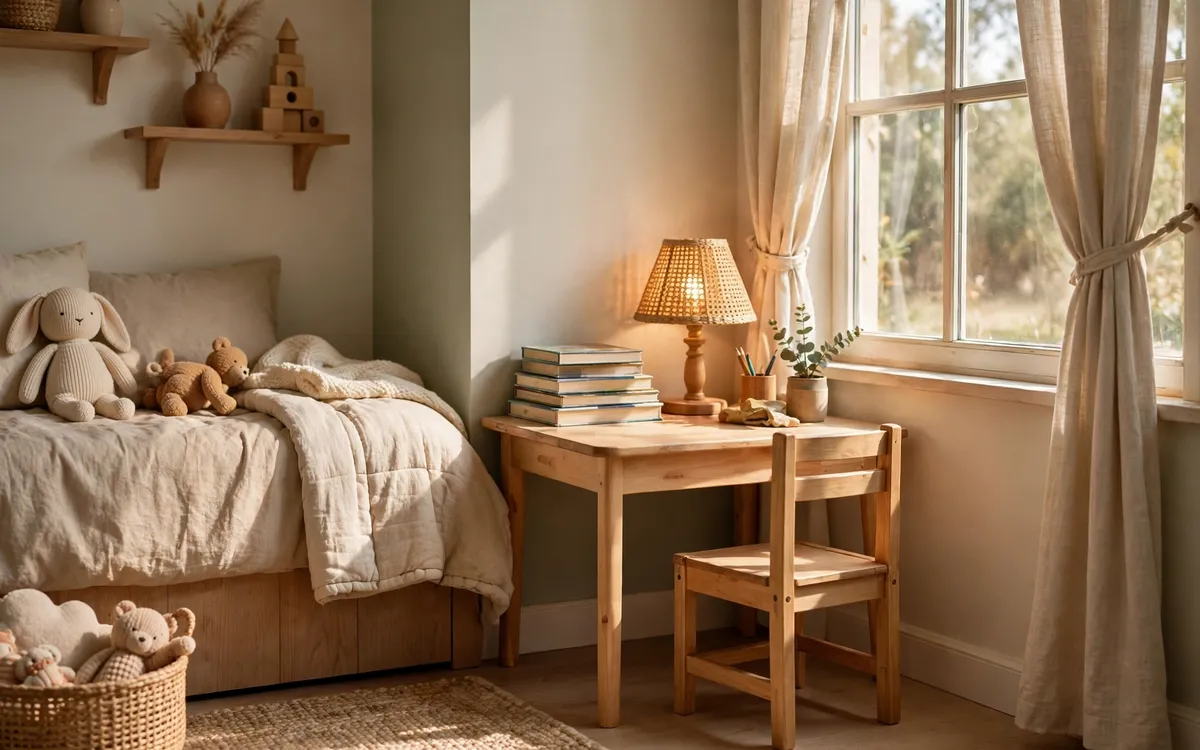
An adult desk at 29–30 inches fits a child only from about five feet tall. School-age desks run 21–24 inches for ages 5–8 and 24–26 inches for ages 9–12, with a top at least 36 × 20 inches for an open book beside a laptop. The fit test beats the age chart: knees, hips and elbows all at 90 degrees, feet flat on the floor — the 90-90-90 rule.
12. Fold the Desk Away When the Room Runs Out

A wall-mounted fold-down desk gives homework a home, then folds back to a few inches deep against the wall and returns the floor to play. Mount it at the height from idea 11, not at adult height, and the chair lives tucked under the bed or the loft while the desk is up.
13. Make a Reading Nook in Nine Square Feet

A reading corner needs about 3 × 3 feet and nothing more: a cushion or bean bag, the book ledge from idea 7 within arm’s reach, one warm light. Children are small; the nook that would feel like a cupboard to an adult is a private library at their scale — the cheapest zone in the room, and usually the most loved.
14. Lay a Washable Rug as the Play Floor

A low-pile washable rug around 5 × 7 feet under and beside a twin marks the play zone without a single piece of furniture, softens the floor the toys land on, and goes in the wash when the juice does. In a kids’ room every soft surface is eventually a spill surface; washable is the whole specification.
Zone D — Decor That Changes Its Mind
Everything in this zone is chosen to be outgrown gracefully: the walls hold the calm, neutral base that our cozy neutral bedroom ideas build for grown-ups — so when the theme years end, the room graduates into that one without repainting — while the child’s current passion lives only on the layers that peel, wash and swap. A room layered this way even takes a festive season in its stride: the same bed and walls wear their December theme in our Christmas bedroom ideas for kids.
15. Put the Theme on the Bedding
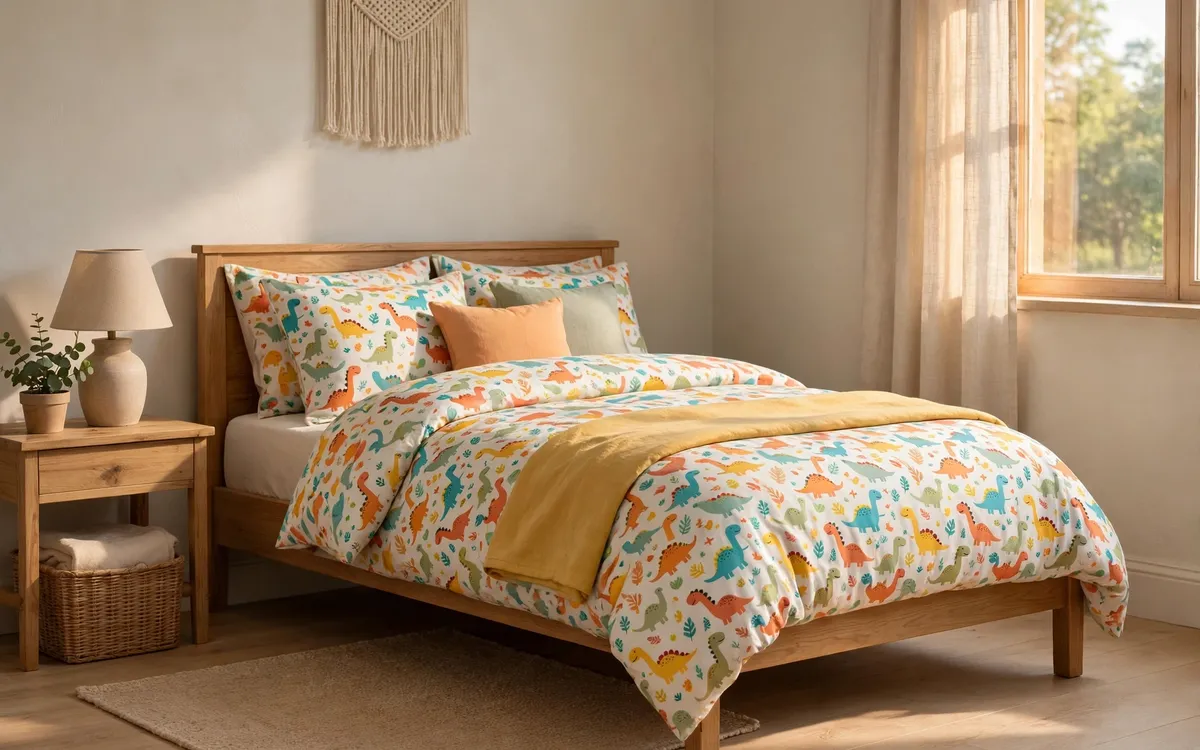
The theme a five-year-old loves is an embarrassment at eight, so it lives on the duvet cover, the cushion and one poster — a re-theme costs one bedding set. The walls stay a calm neutral the next theme can move into: this is the exact reverse of the painted character mural, and it is why the room never needs redecorating, only re-dressing.
16. Use Peel-and-Stick Decals as the Swappable Wall Layer

Decals and removable wallpaper carry the pattern the walls were spared: up in an afternoon, off without paint or damage when the interest changes — the renter-safe version of the theme, and the only wallpaper a small child’s room should get. One wall only; pattern on four walls shrinks a small room.
17. Hang the Gallery at the Child’s Eye Level
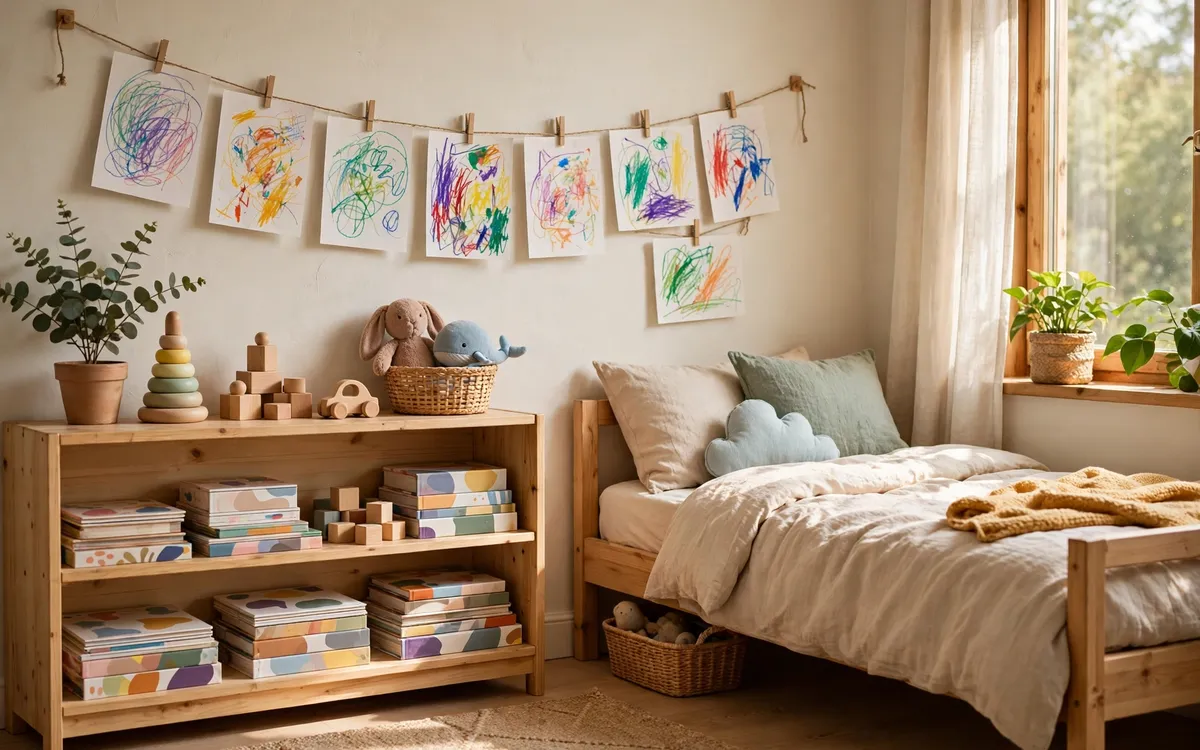
Art in a kids’ room is hung for its audience: a gallery centred around 36–42 inches high for young children, not the adult 57 inches — clip frames or a string with pegs, so the child’s own drawings rotate through it. Their artwork is the one decor item guaranteed age-appropriate forever, because it ages with them.
18. Layer Warm Light Without a Floor Lamp
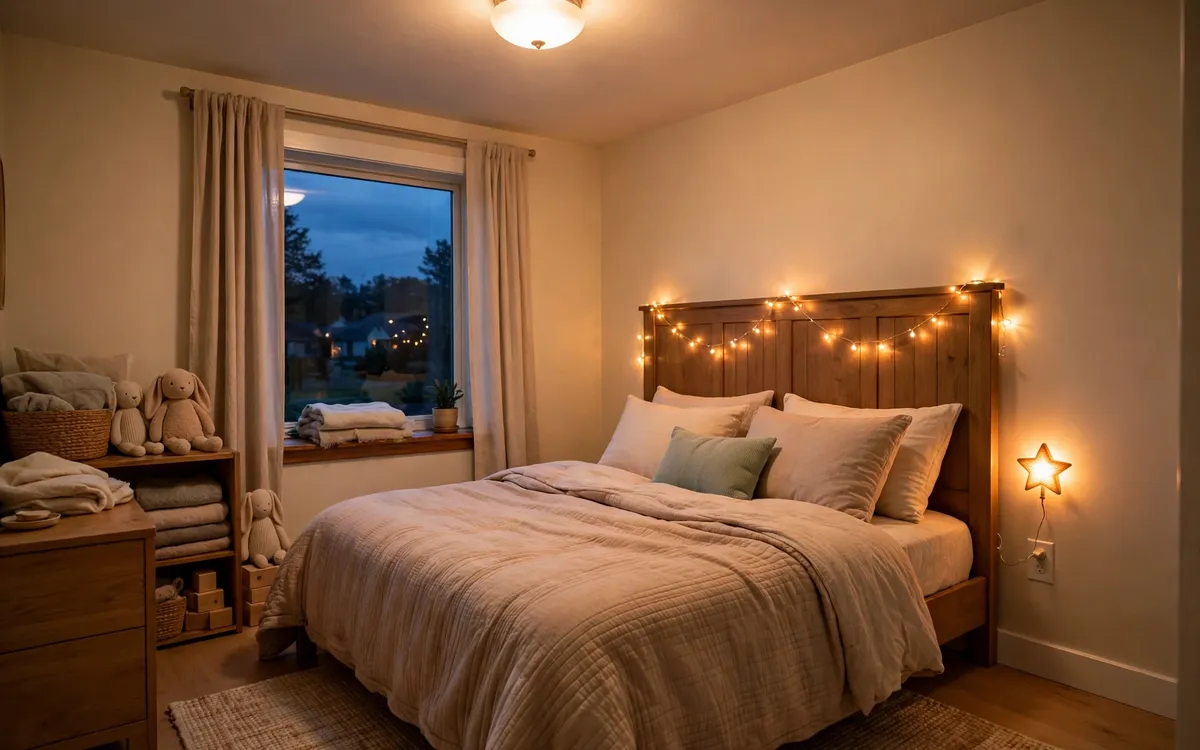
A floor lamp is a climbing frame with a cord; light comes from above and from the wall instead: the ceiling light for play, a low warm night-light for the bed, battery fairy lights only — never a mains cord draped over a bed. Warm bulbs, roughly 2700K, keep the room sleepy at the edges of the day.
Zone E — Sharing the Room and Keeping It Working
The final zone is the room’s operating system: how two children share it without a border dispute, and how the tidiness survives contact with actual childhood.
19. Split a Shared Room Down the Middle
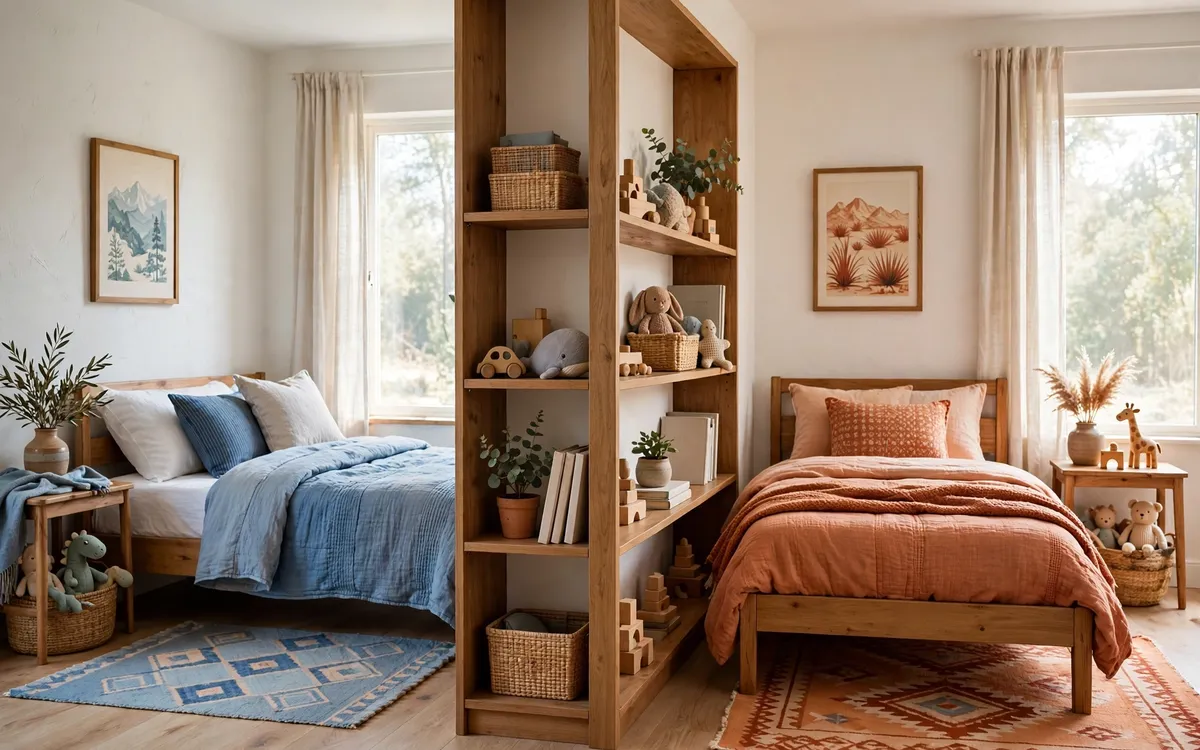
Siblings sharing get a boundary before they get anything else: a curtain on a tension line, or a low bookcase no taller than about 48 inches and anchored per idea 10, run across the room gives each child a side that is theirs — one bed, one bin, one shelf each. Shared rooms fail on fairness long before they fail on space.
20. Rotate the Toys on a Two-Week Cycle
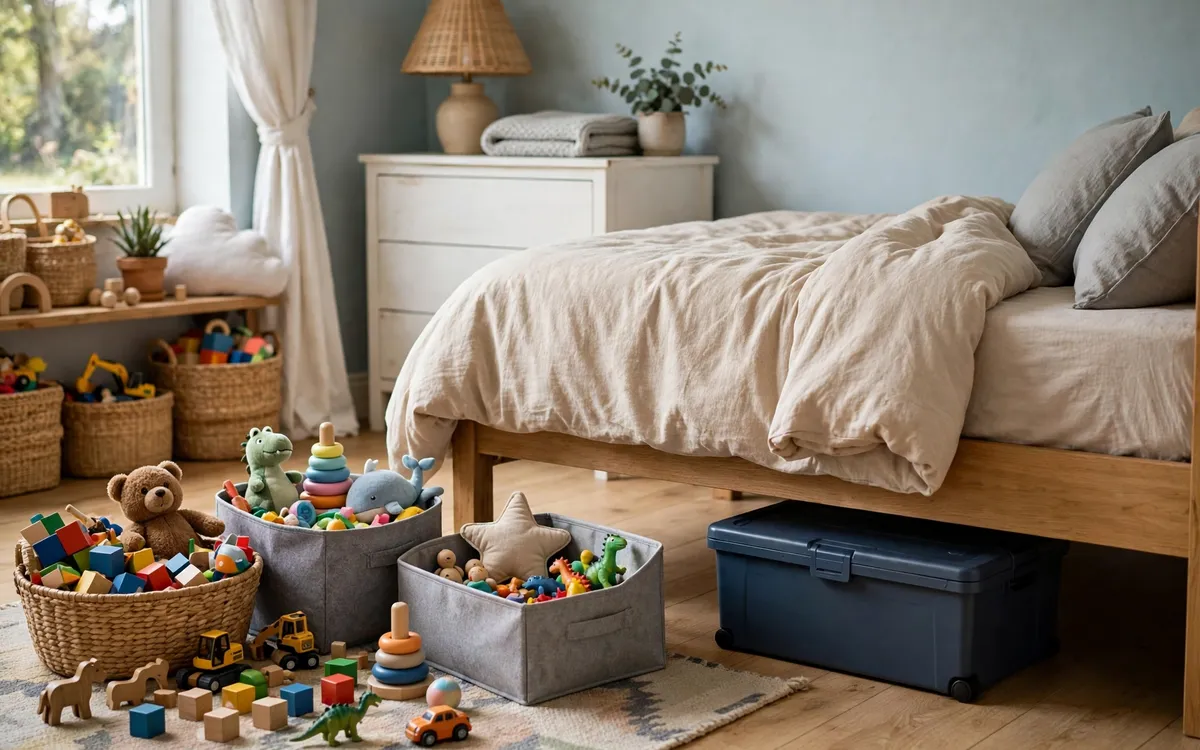
Half the toys live in a stored box — under the bed, per idea 8 — and swap with the half in play roughly every two weeks: the room holds half the mess, every swap day feels like new toys arriving, and the stored half proves the room’s problem was never space. It was inventory.
21. Reset the Room in Five Minutes Every Night
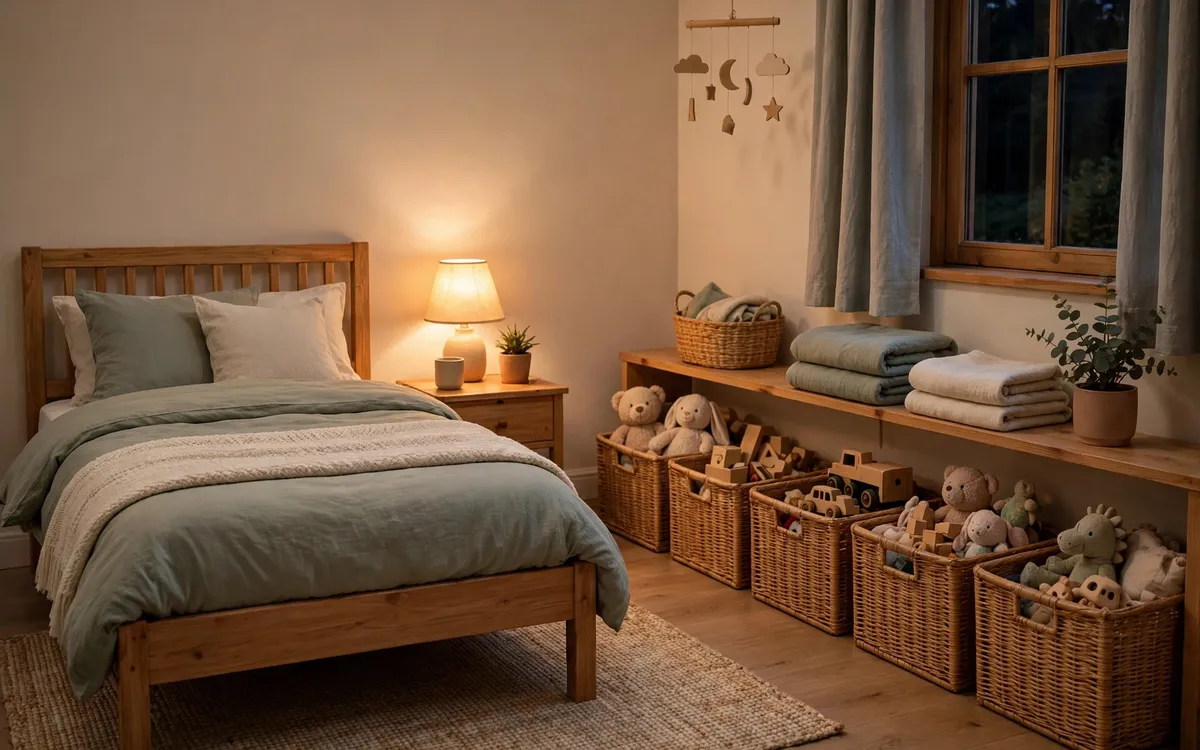
The system survives only if the reset is smaller than the child’s patience: everything has a home at the child’s own height, the bins take one job each, and a five-minute nightly reset — one song long — returns the day. A kids’ room is not tidied once; it is re-tidied nightly in miniature, which is exactly why it never again needs a weekend clear-out.
What It Costs: Three Ways In
The refresh tier (under roughly $100). The theme swap itself: a bedding set, peel-and-stick decals, open bins and picture labels, a shallow book ledge, a hanging door organiser and the anti-tip kits. This tier proves most small kids’ rooms are a measuring and sorting problem, not a shopping problem — and it changes the room the child actually sees.
The furniture tier (roughly $100–$500). A twin bed or trundle, low cube storage, a fold-down or child-height desk, a washable 5 × 7 rug — the pieces sized by the method’s numbers, bought once at the right size instead of twice at the wrong one.
The built-in tier (roughly $500–$1,500 and up). A bunk or loft system with its safety hardware, eaves or alcove built-ins fitted to the room’s awkward shape, a divider for siblings — the near-renovation moves that change what the room is, bought only when the age rules and the ceiling measurement both say yes.
7 Mistakes That Undo a Small Kids’ Bedroom
- Buying a full-size or queen bed “to grow into”. It eats the play floor for a decade to solve a problem a 38 × 75-inch twin never has — a twin fits the same child at sixteen that it fitted at six. Size the bed to the room in front of you.
- Putting a child under six on the top bunk. The safety guidance is unambiguous: under six means the bottom bunk or a low bed, however mature the child seems. And watch the mattress: a too-thick one quietly eats the guardrail’s 5 inches of protection — the mattress is part of the measurement.
- Storage the child cannot reach. Shelves and bins above roughly 40 inches for a young child are storage for adults in a child’s room — and a room only the adults can tidy is a room that stays untidy. Reach height is the tidy height.
- Skipping the anti-tip anchors. An unanchored dresser with its drawers open is a ladder leaning against nothing. The kit costs under $20 and fifteen minutes; the whole point of the CPSC’s Anchor It! campaign is that the alternative keeps hurting the smallest children most.
- Renovating the theme into the room. The painted mural, the themed built-in, the character wallpaper on four walls: all of it is outgrown in about two years and all of it costs real money to undo. Themes belong on bedding and decals — the layers that peel and wash.
- An adult-height desk for a small child. At a 29–30-inch desk a six-year-old’s shoulders climb to their ears and their feet dangle — homework posture ruined by furniture, not by the child. Desk height follows the 90-90-90 test, and it changes as they grow.
- Every toy out at once. A small room holding a child’s entire inventory at floor level cannot be tidied, only excavated. Half in play, half in rotation: the two-week swap is what makes the nightly five-minute reset possible.
FAQs
What size bed is best for a small kids’ bedroom?
A twin — 38 × 75 inches — for most children from about age three; a toddler bed on the 28 × 52-inch crib mattress for under-fives. Keep 24 inches of walkway on the climbing-in side, and let a trundle, not a bigger bed, solve sleepovers.
At what age can a child sleep in a loft bed or top bunk?
Six years old, per the CPSC and the American Academy of Pediatrics — plus the hardware checks: guardrails on both sides rising at least 5 inches above the mattress, no gap over 3.5 inches, and at least 30 inches between the mattress top and the ceiling.
How do you fit a desk in a small kids’ bedroom?
Either a compact desk with a top of at least 36 × 20 inches, or a wall-mounted fold-down that returns its floor when closed — set at the child’s height, 21–24 inches at ages 5–8 and 24–26 inches at 9–12, proven by the 90-90-90 test, not at adult 29–30 inches.
How can I decorate a small kids’ room on a budget?
Spend on the swappable layer only: a themed bedding set, peel-and-stick decals, open bins and a book ledge refresh the whole room for under roughly $100 — and skip anything permanent the child will outgrow, which is where kids’-room budgets actually go to die.
How do two kids share one small bedroom?
Stack the sleep — a bunk under the age rules — split the floor with a curtain or a low anchored bookcase, and give each child one bed, one bin and one shelf that is theirs alone. Fairness is the layout problem; space is only its symptom.
How do I keep a small kids’ room tidy once it is organised?
Three habits, all measured: storage at or below the child’s reach (roughly 36–40 inches for under-sixes), half the toys in a two-week rotation instead of all of them out, and a five-minute nightly reset — one song long — while the mess is still small enough for a child to beat.
One corner of a kid’s bedroom should be fitted rather than decorated — a homework station sized from the desk-height chart, with the desk and seat matched to the child’s age and everything stored inside its own footprint. Our homework station ideas for small spaces show how to fit that working corner so homework has a proper place of its own.
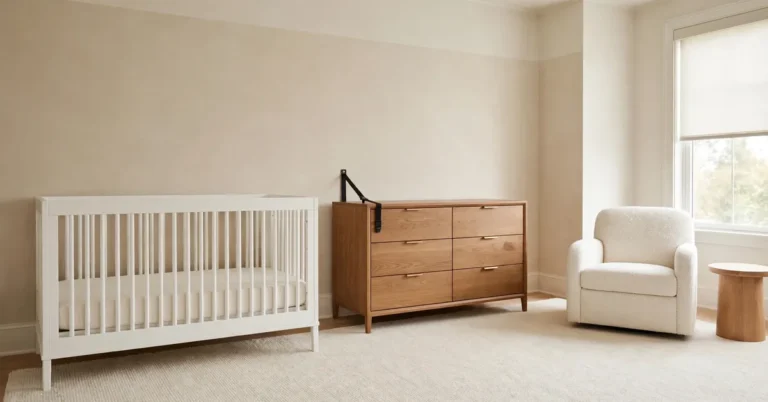
Before the kids’ room comes the nursery, and the same small-space thinking applies to a baby’s first room. Gentle neutrals, safe storage and a layout that works for both baby and parent turn a small nursery into a calm, practical space. Our neutral nursery ideas show how that first room is planned, so the ideas here pick up where they leave off.
For a child who is already looking up at the night sky, a theme can carry the whole room. Our space themed bedroom ideas keep the same grow-proof approach — the theme lives on bedding and decals — while stars, planets and soft glow turn bedtime into part of the adventure.
Conclusion
A small kids’ bedroom is three habits wearing furniture: measured once, zoned at child scale, and built to be outgrown gracefully. Work through these small bedroom decor ideas for kids in that order — size it, zone it, grow-proof it — and the room stops being outgrown and starts growing up with the child inside it. And when the theme years end, the same room is ready for its next life: the deep, cocooned teenager’s version of it lives in our moody bedroom ideas — the child grows up, and the room grows with them.



3 Comments