

21 Welcoming Outdoor Fire Pit Ideas for Cozy Nights Under the Stars
A fire pit is the backyard’s hearth: the one feature that turns a lawn into a room and a cool evening into a reason to stay outside. But the pits that work are not the prettiest ones in the photos — they are the ones that were measured before they were admired. These outdoor fire pit ideas are built on the numbers the inspiration pictures skip: how far the pit stands from the house, how wide it is built for the group it warms, and how the chairs ring it so everyone is warm and no one is smoked out. One thing a fire area cannot do for itself is hide from the neighbours — the screens, fences and planting that make an outdoor corner private are the subject of our apartment patio privacy ideas.
The Method: Place It, Size It, Ring It
Three decisions, made in order, before anything is bought or dug: where the fire may legally and safely sit, how big it should be for the people it serves, and how the seating rings it. Get the order wrong — buy the pit first, place it later — and the fire spends its life in the wrong corner of the yard, too small for its chairs and too close to the fence.
Step 1 — Place It: Flat, Non-Combustible, and Legally Clear
Choose level ground on gravel, pavers or another non-combustible surface — never bare grass and never a wood deck for a wood fire. Keep the pit at least 10 feet from the house, fences, sheds and overhanging branches: that is the common minimum in many local codes, and some towns require up to 25 feet, so check your own rule before the spot is fixed, not after. Then read the wind on two or three evenings: smoke should drift away from the seating and the house, not across them. Landscape designers also suggest roughly 30–60 feet from the back door — close enough that carrying chairs and drinks is no chore, far enough that the fire feels like a destination.
Step 2 — Size It: The Pit Is Sized to the Group, Not the Yard
A built pit’s inside diameter of 36–44 inches is the working range: smaller and the fire cannot warm a circle of chairs, larger and the seats are pushed too far apart for conversation. Its walls stand 12–14 inches high — or 18–20 inches if guests will sit on the pit’s own edge. Match the fuel to the space while sizing: wood needs the full clearance, a propane table is typically rated 40,000–60,000 BTU, and a smokeless steel pit comes in 15, 19.5 and 27-inch sizes by group size. More than any style choice, outdoor fire pit ideas stand on this sizing — and Family Handyman’s step-by-step DIY brick fire pit build shows the full construction behind these numbers.
Step 3 — Ring It: The Seating Circle Is the Real Room
Chairs sit in a circle of 7–8 feet outside diameter, which seats four to six Adirondack chairs with knees in the warmth and voices in easy range. The finished fire area runs to about 15–16 feet across in total, because the surface should extend roughly 3 feet behind the chairs so people can walk past seated guests without squeezing through the heat. Finish the room with two things: a non-combustible surface under everything, and light above it — one run of string lights is enough — so the circle reads as a room after dark.
Zone A — Choose the Fire
Every fire area begins with one decision: what burns, and in what. Stone or steel, wood or gas, smoky or smokeless — the five fires in this zone cover almost every yard and budget, and each is sized by the same 36–44-inch logic from the method.
1. Build a Classic Round Stone Pit
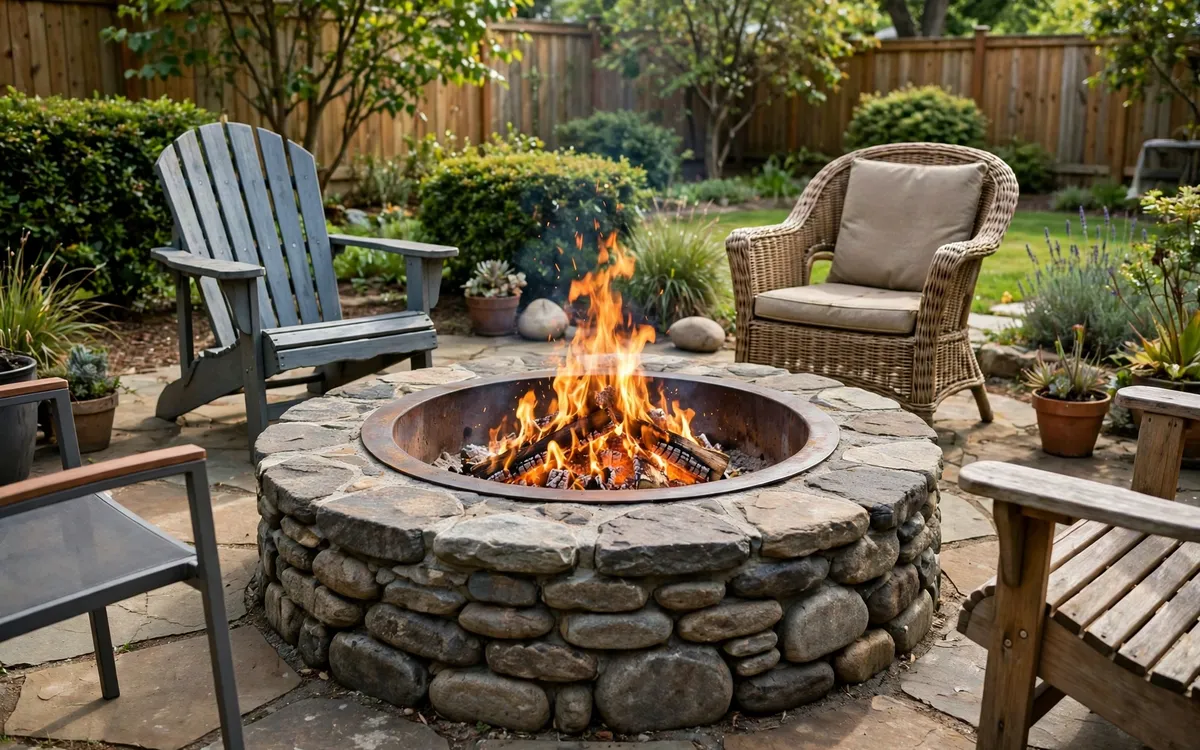
The DIY benchmark: retaining-wall blocks or stone laid in a ring at 36–44 inches inside diameter, walls 12–14 inches high. Line it — a steel ring or firebrick inside the wall is not decoration, because ordinary blocks can crack under heat and a liner takes the punishment instead. Build it once, on the sized circle, and it outlasts every chair around it.
2. Dig an In-Ground Fire Pit
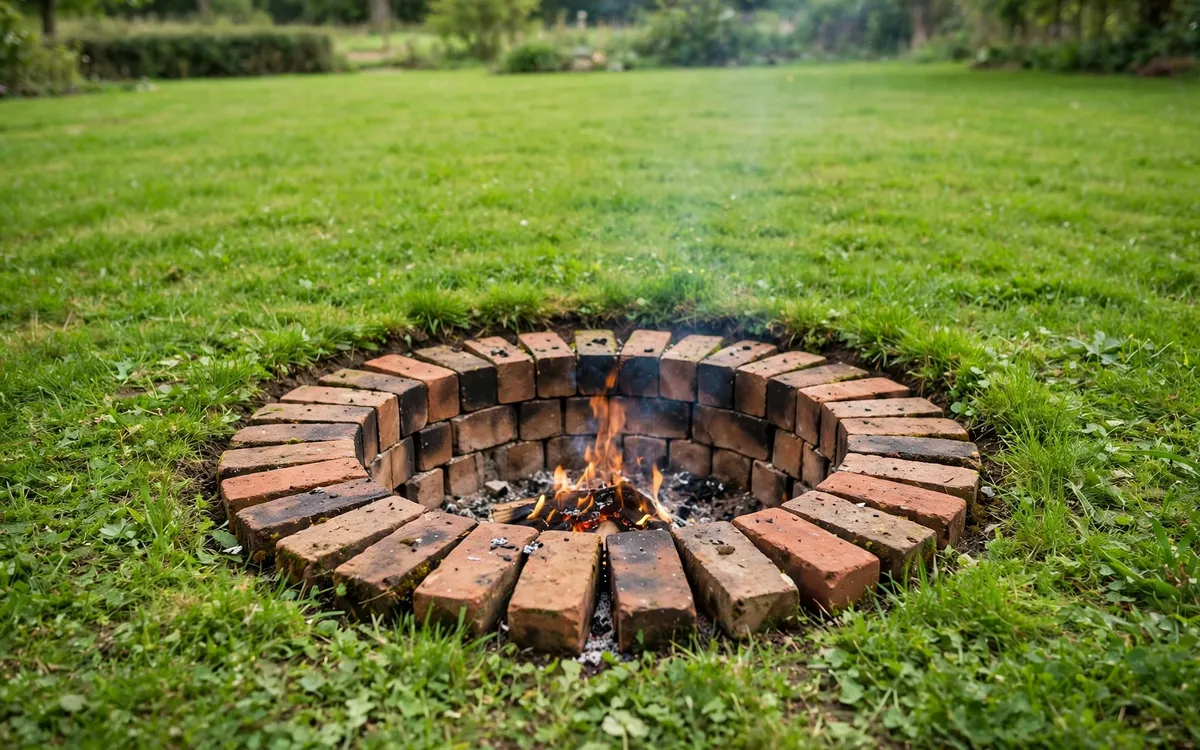
A flush pit, level with the lawn, keeps sightlines open across a small or view-led yard — nothing stands between the house and the garden. Excavate, line the walls with firebrick, and finish the rim mow-safe so the mower passes over it without scalping. Family Handyman’s reference build is a 3-foot-diameter in-ground pit: modest, permanent, and entirely below the horizon line.
3. Choose a Smokeless Steel Fire Pit

Double-wall steel pits reburn their own smoke in a secondary burn, so the fire is wood-fired but clothes stop smelling of campfire. Size by group, the way the makers sell them: 15 inches for two to four people, 19.5 inches for four to six, 27 inches for eight to twelve. Feed any pit dry hardwood — wet wood smokes in the cleverest pit ever welded.
4. Set a Propane Fire Table on the Patio
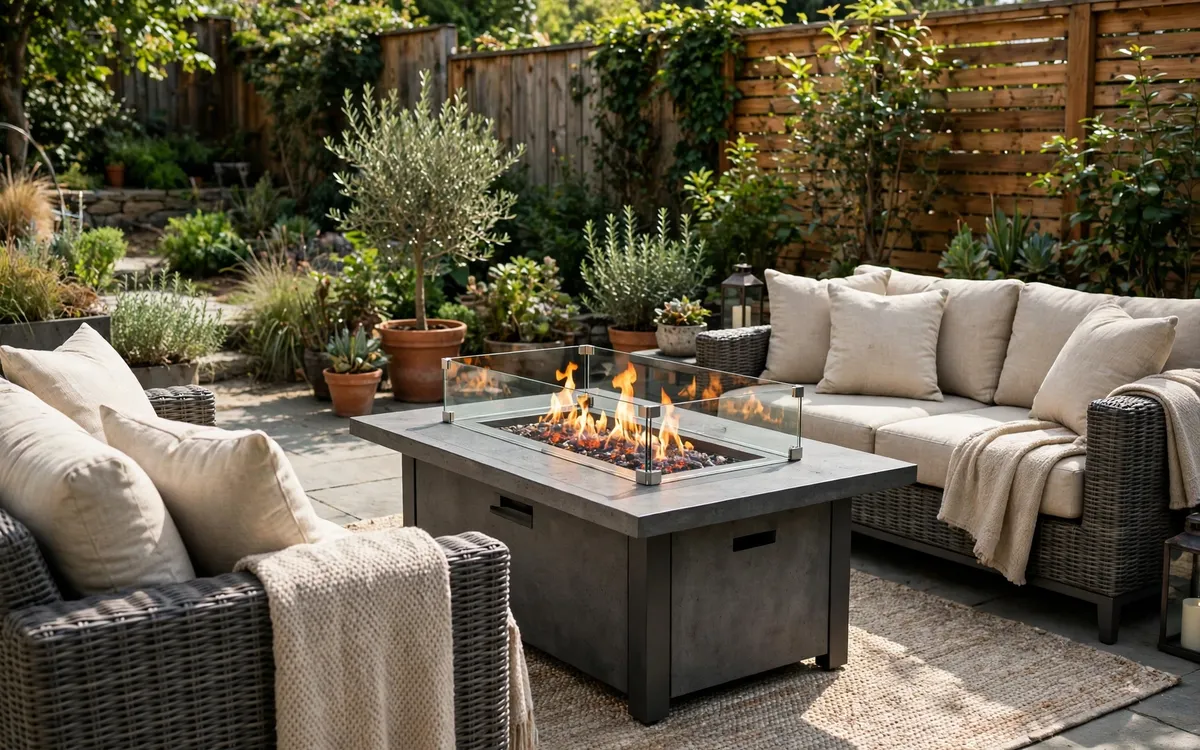
Instant on, instant off, no sparks and no ash: the fire table is the patio’s fire, usable on surfaces where wood could never go — where the manufacturer allows it, with its stated clearances respected. Most tables are rated 40,000–60,000 BTU, and a standard 20-lb tank runs a 50,000 BTU burner for roughly 8 hours on high, which is a whole season of evenings for most households.
5. Tuck a Chiminea Into a Small Corner

The front-loading, chimney-topped chiminea is the small yard’s answer: it throws its heat forward toward two chairs and sends its smoke up and away from them, on a footprint a fraction of what a ring of chairs needs. Set it on a non-combustible pad, face the opening into the corner’s seating, and a dead corner becomes the warmest seat in the garden.
Zone B — Set the Ground and the Ring
The fire was chosen in Zone A; this zone builds the floor it stands on and the first ring of permanent seating. The porch at the front of the house gets its own version of this treatment for cool evenings — our fall porch decor ideas — while this zone is the backyard’s: ground first, then the ring that never moves.
6. Lay a Pea Gravel Circle

The classic base, and still the best value in the whole article: a circle about 15 feet across, gravel roughly 3 inches deep over landscape fabric. It is non-combustible, it drains after rain instead of puddling, feet stay clean, and the circle’s edge draws the room’s boundary for almost no money. Rake it level twice a season and it looks intentional forever.
7. Pave a Paver Ring Around the Pit
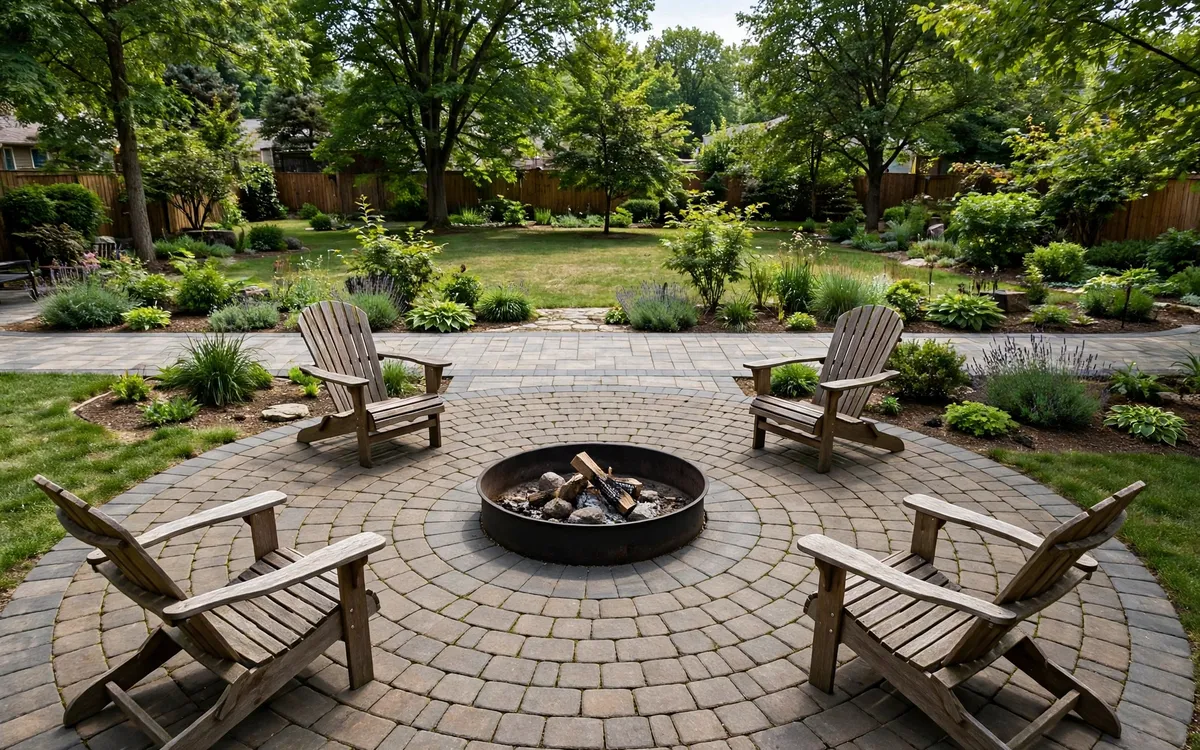
Where gravel feels too loose underfoot, pavers give the same room a finished floor. Run the paving the full width of the method’s rule — about 3 feet beyond the backs of the chairs, so the walk-behind space is paved too — and pitch the whole ring a fraction away from the pit so rain runs off instead of pooling around the fire’s base.
8. Build Curved Built-In Bench Seating
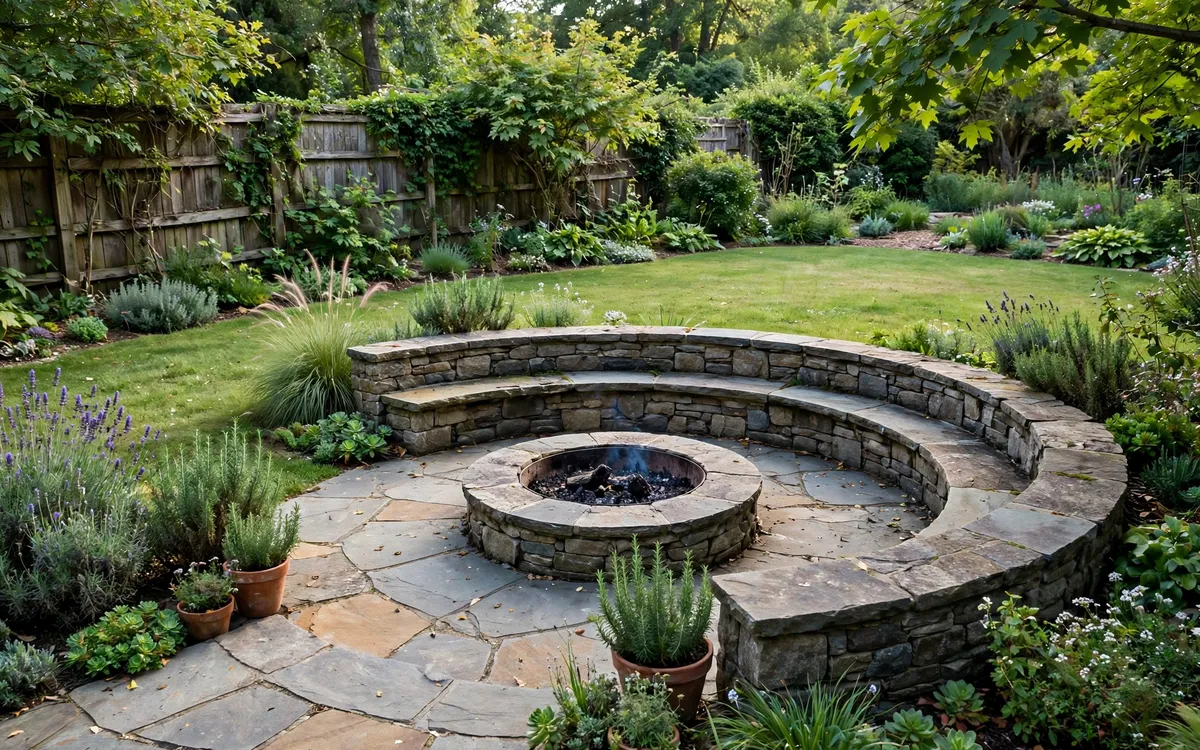
A low curved bench following the pit’s own arc turns seating into architecture: always there, always the right distance from the fire. Build the seat 18–20 inches high — comfortable sitting height, the same number as a sit-on pit wall — and cap it wide and flat enough to double as a ledge for drinks. Cushions come out in season and store away in winter; the bench simply stays.
9. Seat the Ring With Boulders
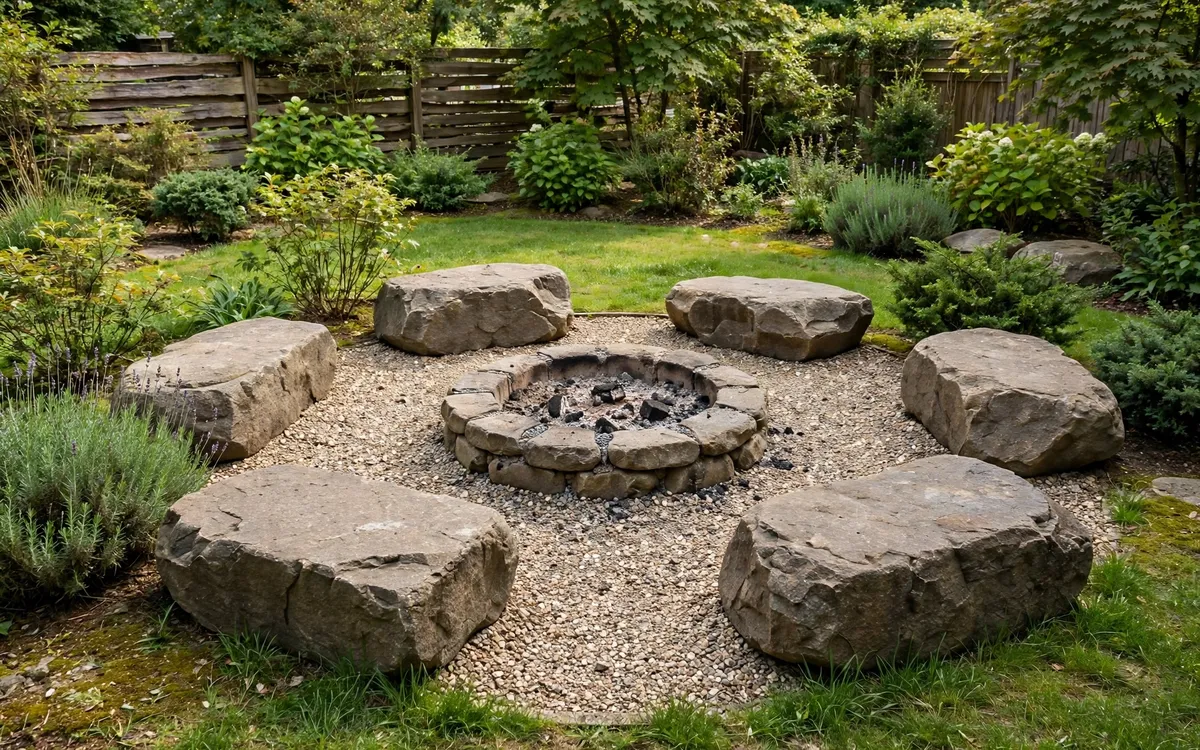
For big groups and rustic yards, flat-topped boulders are permanent seats that never rot, fade or blow over. Choose each stone for a level top at sitting height, and set it stable — bedded into the ground, not balanced on it. A wobbling seat beside a fire is the one detail in this zone that has to be got exactly right, so test every boulder with full weight before the first fire.
10. Sink the Pit Into a Sunken Sitting Area
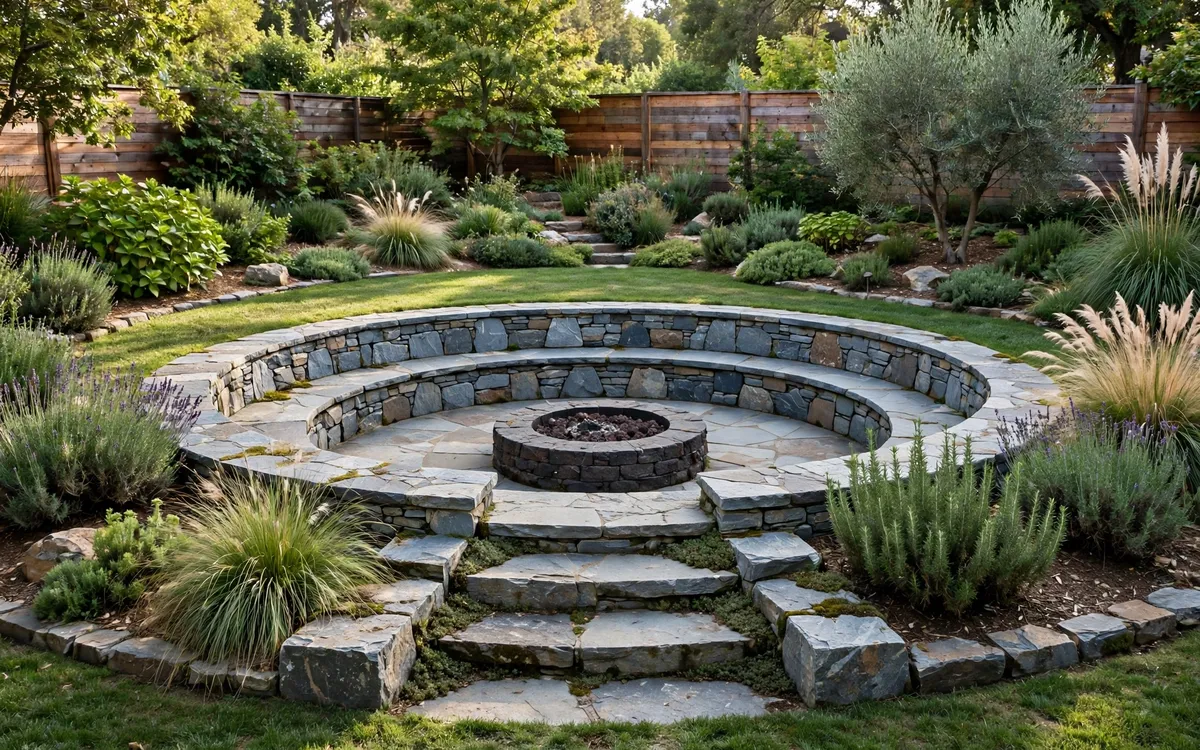
Two or three steps down into a retained circle and the fire becomes an amphitheatre: sheltered from wind, hidden from the street, and warm in a way a flat patio never is, because the surrounding ground holds the heat in. Plan drainage before anything else — a sunken circle without a drain is a pond waiting for its first storm.
Zone C — Seat People Comfortably
Permanent benches and boulders are one answer; movable seating is the flexible one. This zone fills the 7–8-foot circle with chairs and sofas that can be pulled closer on cold nights and spread wider in summer — plus the comfort station that keeps everyone fed, warm and supplied without trips indoors.
11. Ring It With Adirondack Chairs
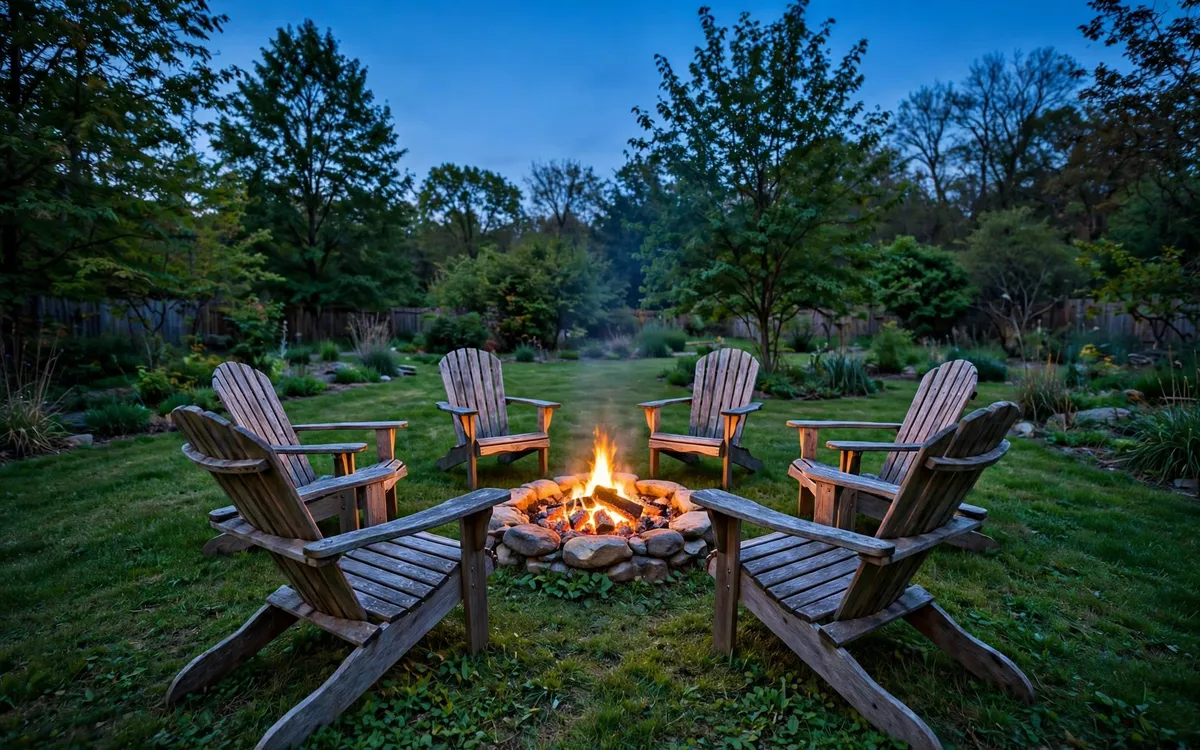
The default, done by numbers: four to six Adirondack chairs inside the 7–8-foot circle. Their low recline is made for a pit with 12–14-inch walls, putting faces and knees at exactly the fire’s height, and their wide arms hold a drink securely — which is why, around a fire, side tables become optional. Angle each chair a few degrees toward its neighbour and conversation does the rest.
12. Face Outdoor Sofas Into a Lounge Circle
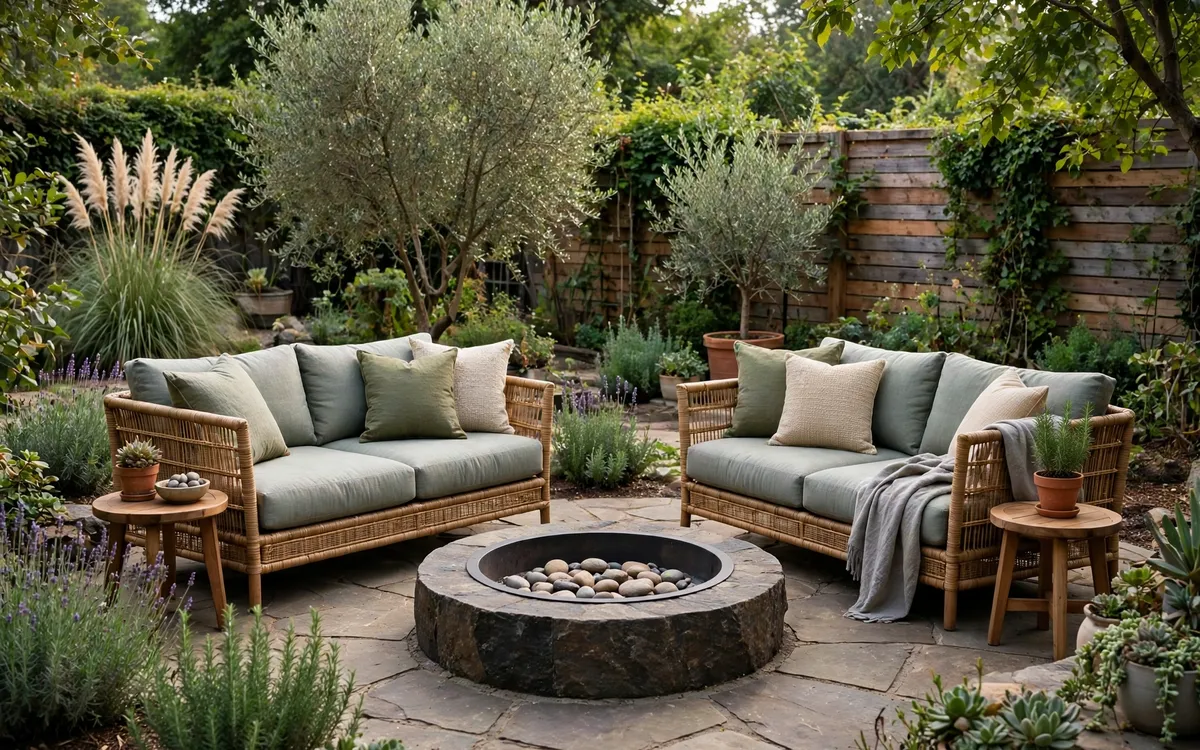
Deep seating for long evenings: two outdoor sofas, or a sectional split in two, facing each other across a round pit, with a small side table at each corner. Keep fabrics at the manufacturer’s stated distance from the flame, and choose cushions that can be stored dry — a fire circle is used hardest exactly in the damp months, and mildewed cushions empty it faster than cold does.
13. Hang Egg Chairs From a Pergola
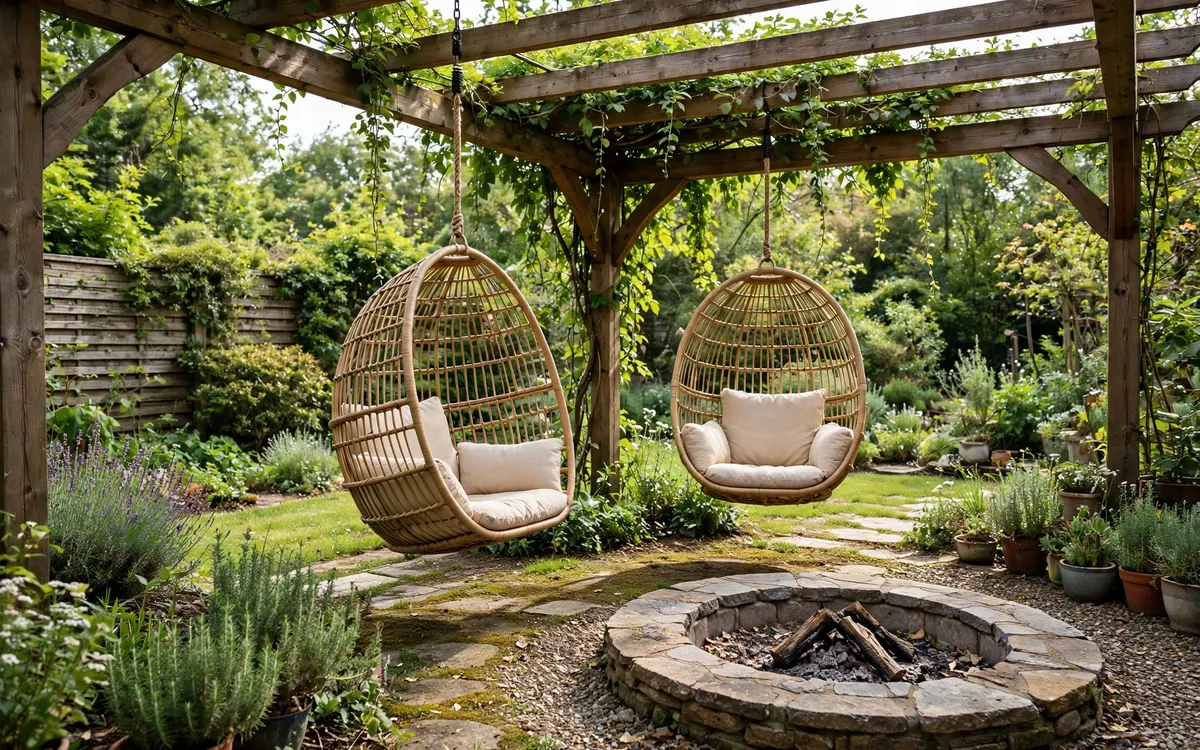
One or two hanging egg chairs at the circle’s edge bring the playful seat — a gentle swing, a cocoon to curl into, and a view of the fire from just outside its warmth. Allow the chair’s full swing clearance behind it, hang it only from a pergola beam rated for a seated adult’s moving weight, and place the pair at the circle’s coolest edge, where swinging and sparks never meet.
14. Keep Logs and Blankets at the Edge
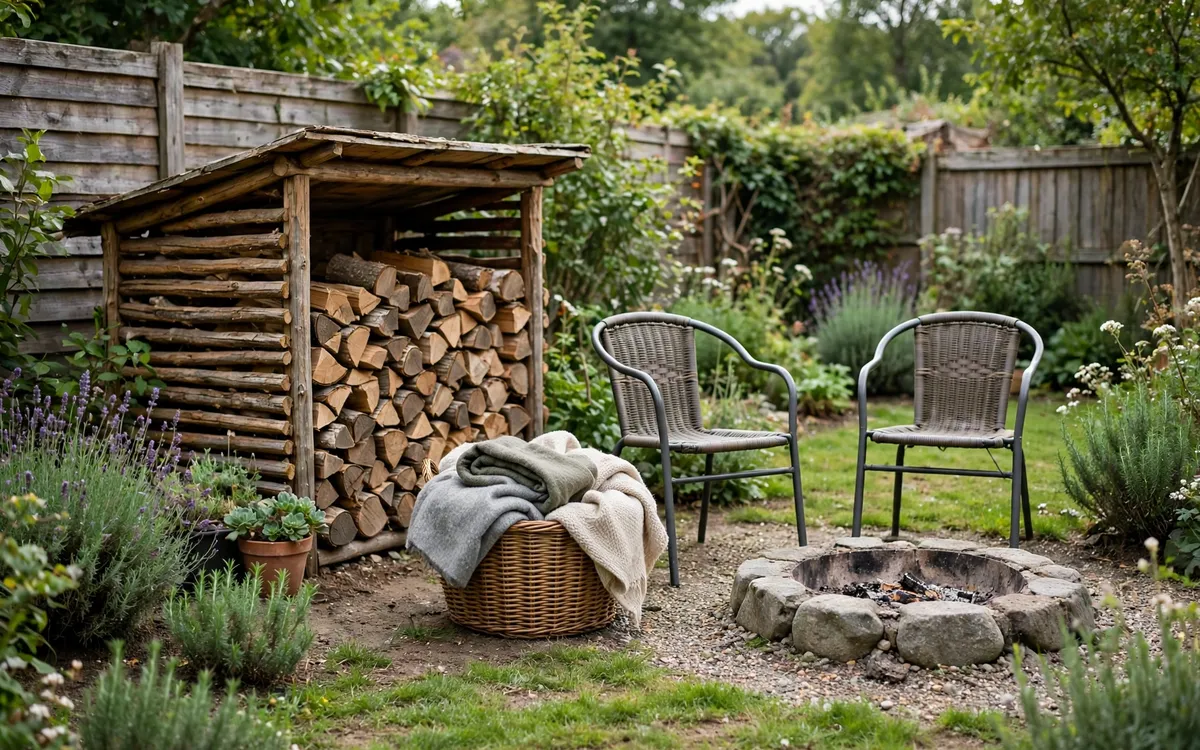
The comfort station: a log store and a lidded basket of blankets parked just outside the seating circle — inside arm’s reach of the host’s chair, outside the heat and spark zone. Wood stored off the ground and under a lid stays dry, and dry wood is cleaner wood: less smoke, easier lighting, fewer sparks. The blankets are what actually extend the evening past ten o’clock.
Zone D — Light and Atmosphere
A fire lights its own circle from the middle; this zone lights everything around it — the space above, the path in, and the green edges — so the area reads as a finished room at night instead of a bright hole in a dark garden.
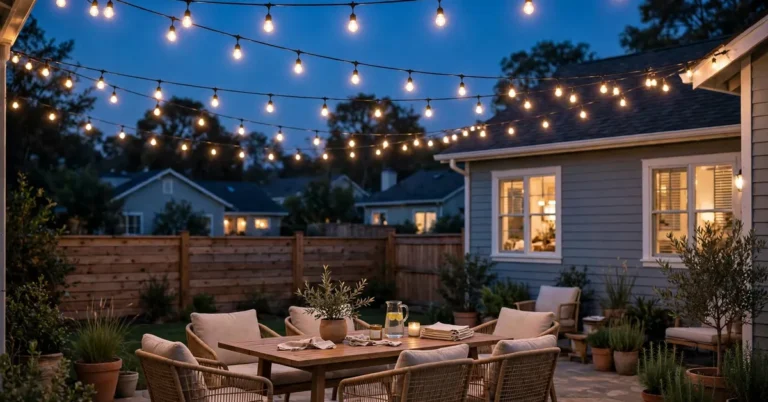
15. String Festoon Lights on Posts Over the Area
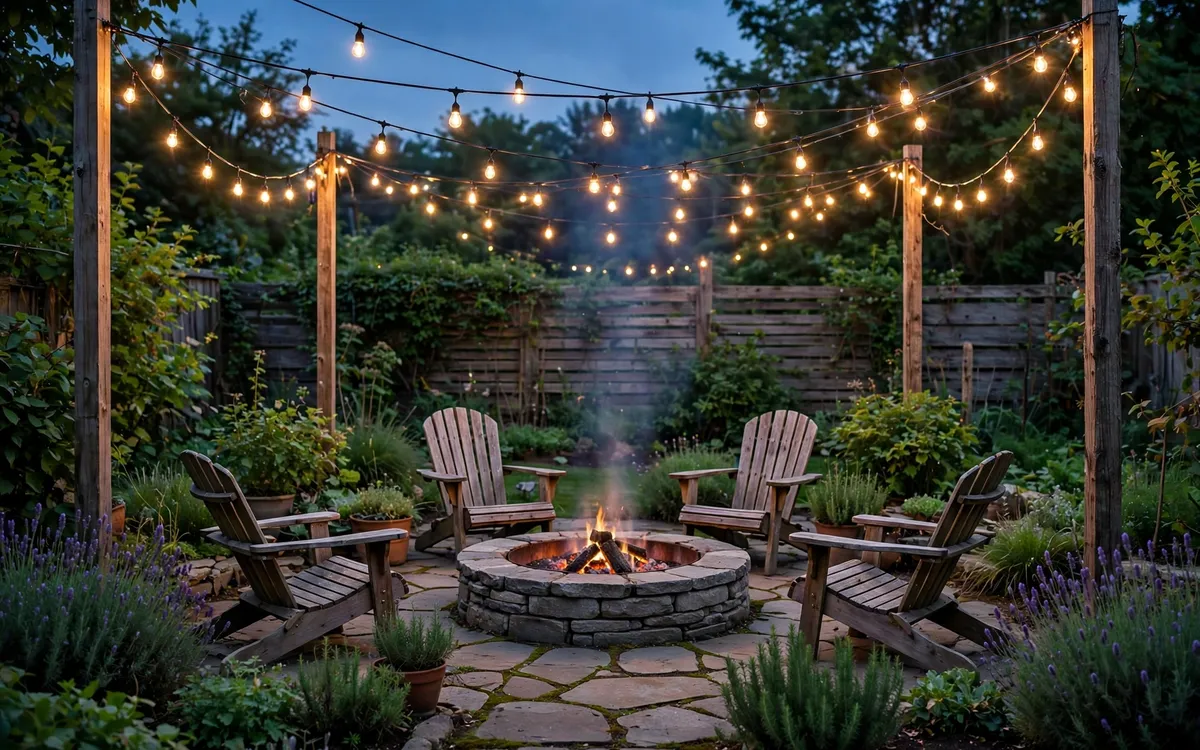
One run of festoon lights does the whole job: posts set at the circle’s edge where no tree or wall exists to hang from, swags kept high enough that the lowest dip stays above head height. This is the finishing layer that makes the area read as a room after dark — and for what string lights over a yard look like in their fullest, most festive form, our outdoor Christmas decor ideas take the same idea to its holiday limit.
16. Set Up a Movie Night Beside the Fire
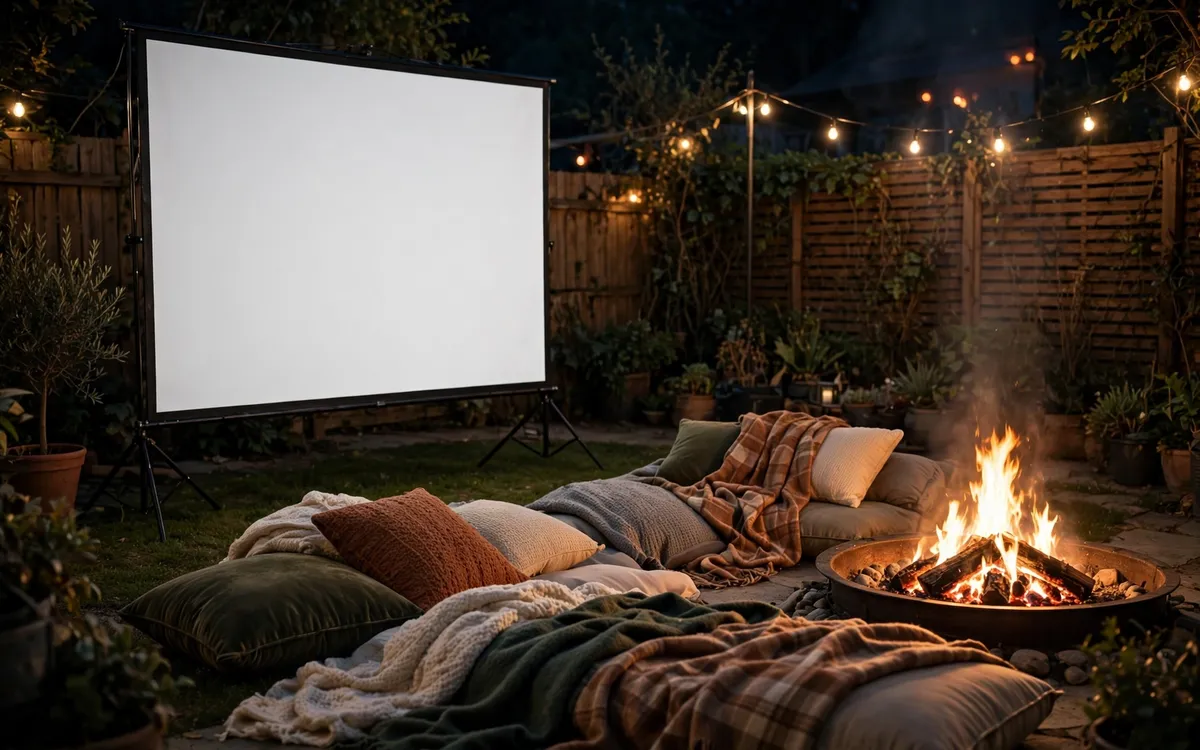
The fire circle doubles as a cinema with one addition: a screen at the circle’s open side, the seating between screen and fire, so the audience warms its backs while it watches. Keep the screen and projector well outside the spark zone and set the whole arrangement downwind — smoke drifting across a projector beam writes itself across the film, charmingly once and annoyingly ever after.
17. Light the Path With Solar Stakes

A low line of solar stake lights from the back door to the fire circle is the cheapest atmosphere in this article: guests find the route without a phone torch, drinks arrive unspilled, and the lit path makes the fire feel arrived-at rather than stumbled into. Space them evenly, keep them out of the mower’s line, and let them charge a full day before the first gathering.
18. Plant the Edges With Grasses and Shrubs

Ornamental grasses and shrubs planted just outside the gravel or paver edge soften the circle into the garden and give the fire area its green walls. Keep every plant — and especially its mulch — outside the clearance zone, and let the planting do double duty as part of the wind break: a sheltered fire burns steadier, smokes less across the seats, and warms the circle it was built for.
Zone E — Gather and Graze
The last zone feeds people. A fire that only warms is half-used; a fire with a grate, a dessert station and fuel within reach becomes the reason dinner happens outside — and the reason nobody has to keep going back into the house.
19. Add a Swing-Away Cooking Grate
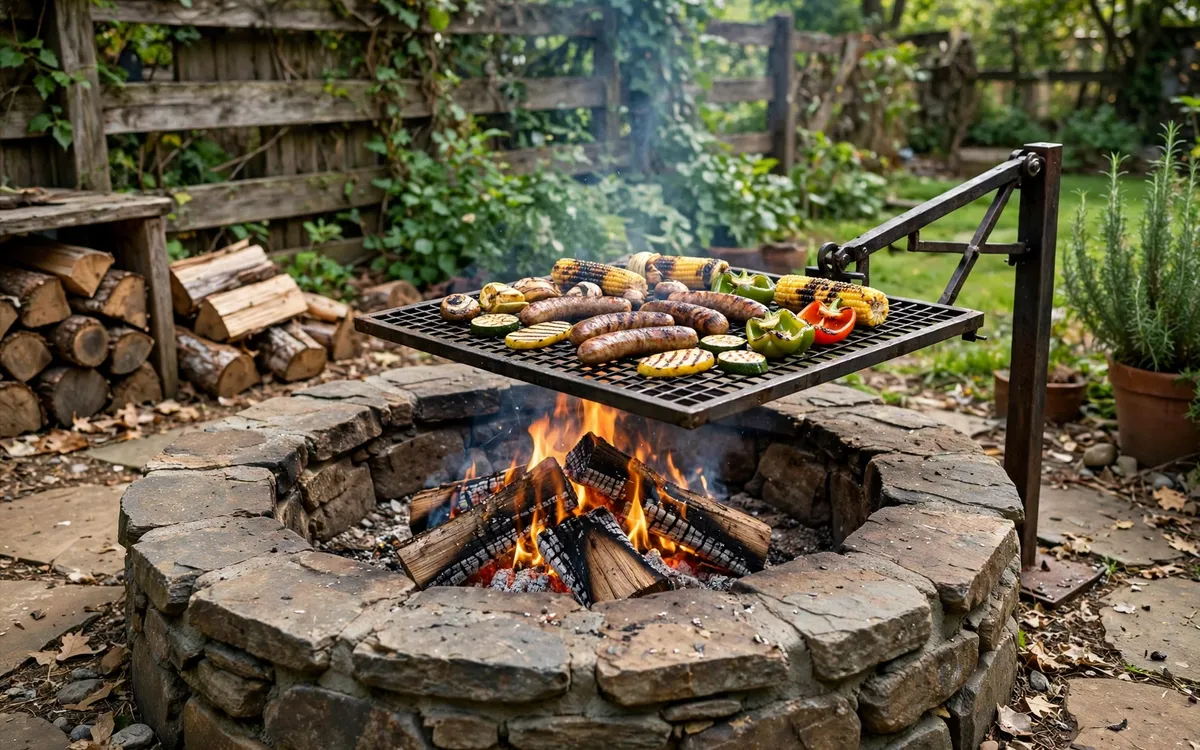
A height-adjustable grate over a wood pit turns the fire into dinner: swing it on loaded, swing it off to serve, and raise or lower it to govern the heat the way a grill’s lid never can. Size the grate a few inches wider than the pit’s inside diameter so it rests securely on the walls, and keep a clear patch of ground at its swing side for the cook to stand on.
20. Set Up a S’mores Station on a Bar Cart
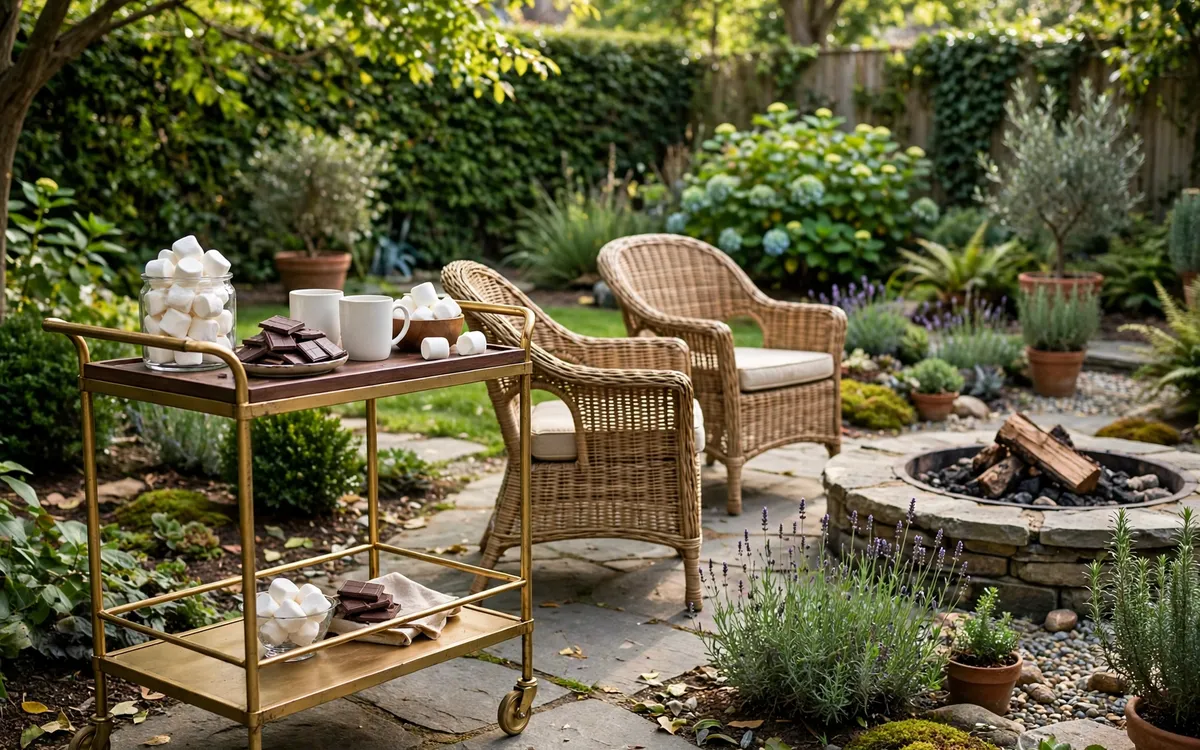
A small bar cart parked at the circle’s edge — marshmallows, chocolate, biscuits, skewers, mugs — turns dessert into a place instead of a process. One station ends the constant trips back to the kitchen, keeps food and sticky hands out of the ash zone, and gives children a base that is safely outside the heat while still inside the occasion.
21. Finish With a Log Store That Doubles as a Side Table
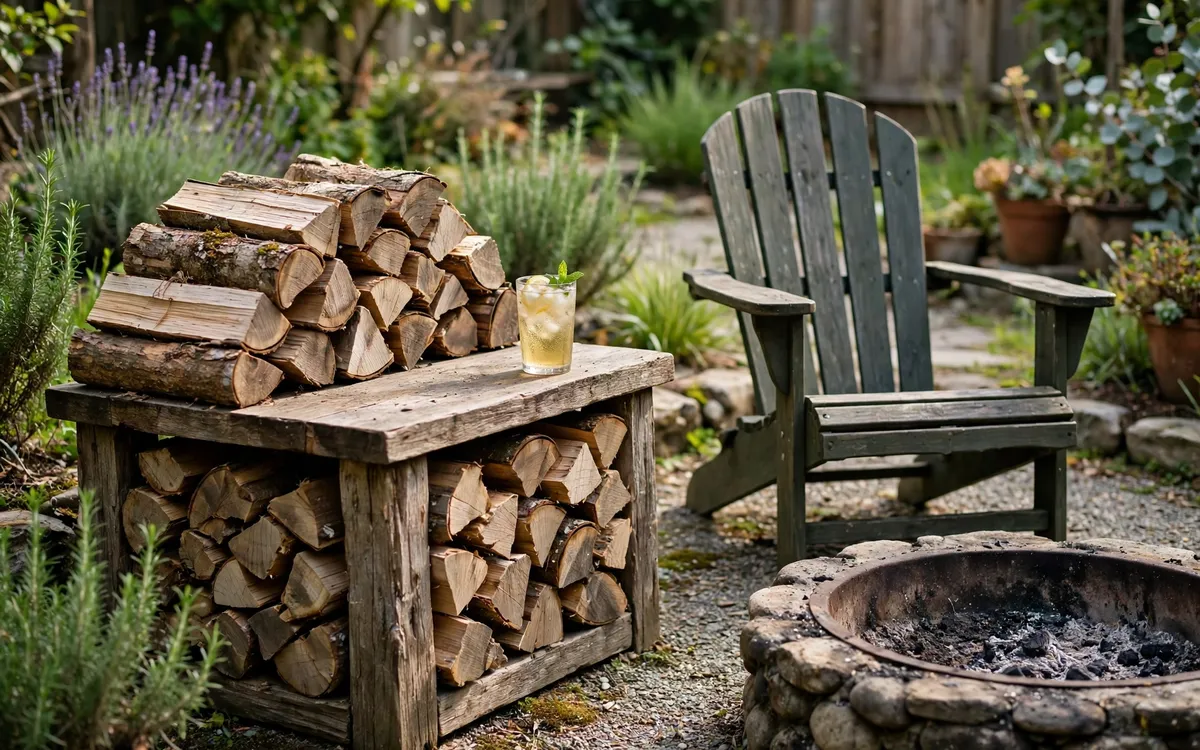
The host’s corner, finished properly: a flat-topped log store beside the host’s chair — fuel within reach without leaving the seat, a level top for a drink and the fire tools, and the working side of the circle looking styled instead of stacked. Keep it under a lid or a roof edge so the top layer of wood — the layer tonight’s fire burns — is always the driest.
What It Costs: Three Ways In
The gravel-and-bowl tier (under roughly $150). A steel fire bowl or a small smokeless pit, a pea-gravel circle over landscape fabric, chairs already owned, one run of string lights. The method’s numbers do the work; this tier buys almost nothing permanent and still gets the placement, size and circle right.
The built-weekend tier (roughly $150–$600). A DIY block-and-liner pit at 36–44 inches (a brick build runs around $400 in materials), a paver or full gravel patio about 15 feet across, four to six Adirondack chairs, festoon lights on posts — the complete room, built over a few weekends.
The statement tier (roughly $600–$2,500 and up). A built-in stone pit with curved bench seating or a sunken circle, a large 27-inch smokeless pit or a quality propane fire table, a pergola with hanging chairs — the near-landscaping moves that make the fire area the garden’s main room.
7 Mistakes That Ruin a Fire Pit Area
- Building before checking the local rules. Many places require at least 10 feet from structures, some require up to 25, and some require a permit or ban fires on dry, windy days. The check takes one phone call; moving a built pit takes a weekend.
- Sizing the pit to the yard instead of the group. Under 36 inches inside diameter the fire cannot warm a chair circle; over 44 inches the seats drift too far apart to talk across. The group decides the size — the yard only decides the spot.
- A wood fire on a wooden deck, or under branches and roofs. Overhead clearance matters as much as sideways clearance. Gas belongs on a deck only where the manufacturer approves it, on a heat-proof base, with its stated clearances respected — and wood belongs on neither.
- Chairs at the wrong distance. Hard against the pit means sparks and scorched shins; too far back means a cold circle watching a small fire. The 7–8-foot seating circle exists because both errors are so common.
- No non-combustible surface. Sparks scorch lawns and, on mulch or decking, are a genuine risk. Gravel, pavers or a proper fire pad go down before the first fire — not after the first scorch mark.
- Building with ordinary bricks and no liner. Regular bricks can crumble under heat and, holding trapped moisture, can even crack violently. A steel ring or a firebrick lining is not optional decoration; it is the part that takes the heat so the wall does not have to.
- Ignoring the wind. A pit placed where the prevailing breeze crosses the seating smokes out every guest in rotation. Two or three evenings of watching smoke drift from a cheap test fire beats one permanent mistake set in stone.
FAQs
How far should a fire pit be from the house?
At least 10 feet in many local codes, and up to 25 feet in others — and fences, sheds and overhanging branches count as structures, not just the house itself. Because the rule is local, check your town’s or fire department’s requirement before fixing the spot; it is a five-minute check that decides where the whole area can go.
How big should a fire pit be?
For a built pit, 36–44 inches of inside diameter warms a circle of chairs without pushing them apart. Around it, plan a seating circle 7–8 feet across for four to six chairs, and a total fire area of about 15–16 feet across once the roughly 3 feet of walk-behind space behind the chairs is counted.
Can you put a fire pit on a deck or on grass?
A wood-burning pit does not belong on a wooden deck, and it should not sit straight onto lawn you care about — sparks scorch grass and can smoulder in mulch. Use gravel, pavers or a rated fire pad underneath. Gas fire tables are the deck option, and only on decks and surfaces the manufacturer approves, with the stated clearances kept.
What do you put under and around a fire pit?
A non-combustible base: gravel about 3 inches deep over landscape fabric, pavers, or a rated fire pad — extending across the whole fire area, including about 3 feet behind the chairs. Keep everything flammable — mulch, furniture cushions not in use, stored wood beyond the night’s supply — outside the clearance zone.
Which is better: a wood, gas or smokeless fire pit?
Wood is the cheapest and most atmospheric, and asks the most: full clearance, a non-combustible base, and smoke managed by placement. Gas is instant and spark-free — tables run 40,000–60,000 BTU and a 20-lb tank lasts roughly 8 hours on high at 50,000 BTU. Smokeless steel keeps the wood fire and reburns most of its smoke, in 15 to 27-inch sizes matched to the group.
Do I need a permit for a backyard fire pit?
Often the fire is allowed but regulated: distance rules, a spark screen, and no-burn days in dry or windy weather are common, and some towns and homeowners’ associations do require a permit. One check with the local fire department or the city website settles it — and settles the clearance number at the same time.
Once the fire circle is finished, sit in it and look at the fence behind you: the yard only reads as complete when its boundary is planted with the same care as its centre — trunks set at half their mature spread, rows stepped down towards the lawn and the screen chosen by its adult height. Our landscaping along fence ideas work through that planting, so the edge of the garden feels as considered as the fire pit itself.
Once the seating circle is set, the garden around it still needs something to look at in daylight. Our raised garden bed ideas show how to place beds at a comfortable reach and height, so the planting near the fire pit feels tended and productive rather than left over.
After dark, the fire is not the only light in the garden. Our outdoor string light ideas show how to run festoon lights over the seating circle at a safe height, so the area stays usable and welcoming once the flames die down.
By day, the same garden draws a different kind of visitor. Our DIY bird bath ideas show how to build a shallow, stable bath near the seating circle, so birds have a safe place to drink and bathe while the fire is cold.
Conclusion
A fire pit area is a room with a fire in the middle, and it is built like one: placed where the rules and the wind allow, sized to the group it warms, and ringed with seating at the distance where everyone is warm and no one is smoked. Work through these outdoor fire pit ideas in that order — place it, size it, ring it — and the backyard gains the room the house was missing; it is the same conversation circle, pulled around one warm centre, that our cozy living room ideas arrange indoors.


6 Comments