
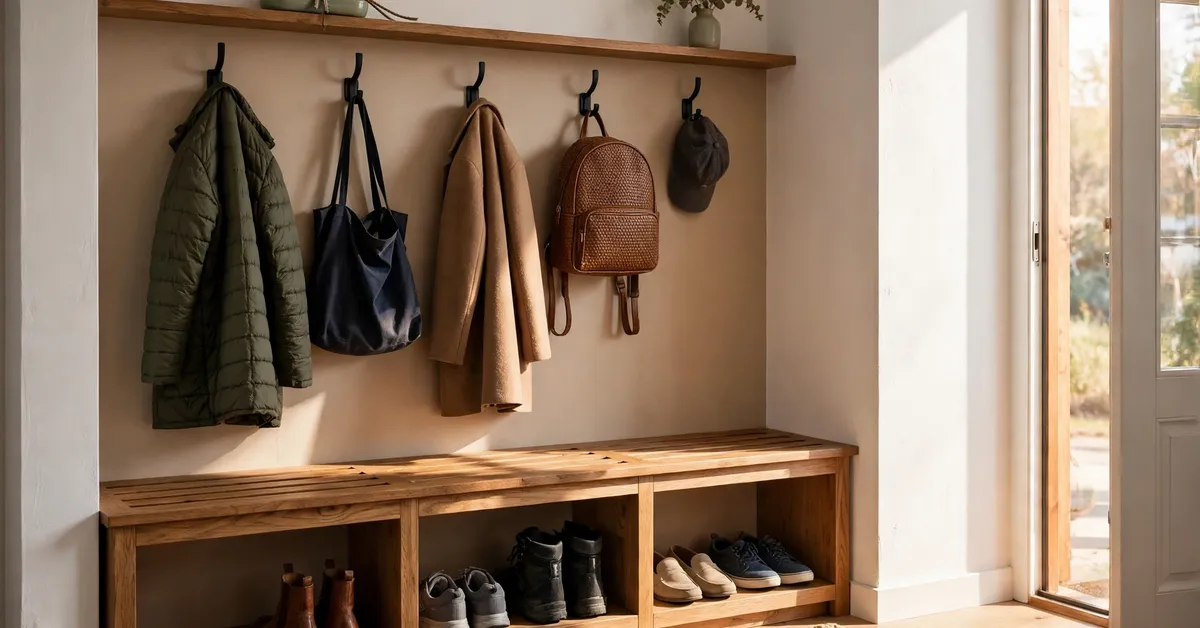
21 Ingenious Drop Zone Ideas for an Entry That Catches Everything
Every home has a place where the day lands: the keys, the bag, the shoes kicked off, the mail nobody opened. In most houses that place is an accident, a chair, a counter corner, a pile beside a door, because nobody ever designed it. These drop zone ideas design it. A drop zone is the small, deliberate system at the door you actually use, sized to the load your household actually carries, and its rules are measurements, not moods: hooks at the height of the person using them, a bench at true sitting height, one small tray instead of a wide inviting surface, and a clear path defended through all of it.
Be clear about what it is not. It is not a styled entry table; that surface, with its mirror and its lamp, has its own decor system in our guide to entryway table decor ideas, and a drop zone that tries to be a vignette fails at both jobs. It is not the hallway beyond the landing either; the passage has its own discipline. A drop zone is a working station for the ninety seconds when a person crosses the threshold carrying six things, and it succeeds or fails on whether each of those six things has a home within arm’s reach of the door.
The load is predictable, which is what makes it designable. A household of four puts twelve to sixteen pairs of everyday shoes at its main door, a coat and a bag per person, backpacks that can weigh ten to twenty pounds loaded, and a daily trickle of paper that never stops. None of that is clutter in the moral sense; it is inventory without shelving. Give the inventory sized shelving, at the door where it arrives, and the pile simply never forms.
The Method: Claim It, Catch It, Clear It
Every drop zone that still works in month six was built the same three ways, in the same order. Claim the right spot first, on the path the household truly walks. Catch the load second, one sized home per category, nothing homeless and nothing doubled. And keep it clear third, the swing, the walkway and a two-minute reset, because a system that cannot be reset in two minutes will not be reset at all. Here is the system, move by move.
Step 1: Claim It — The Real Door, Measured Honestly
Start where the pile already is, because the pile is the household voting with its feet. Most families live through a back door or a garage entry and keep the front door for guests and parcels; a drop zone built at the formal door is furniture, and the mess simply continues at the real one. Measure the claimed wall honestly: 24 to 36 inches of wall is the minimum viable zone for one person, about 5 feet carries two people passing, and a family wall runs 4 to 6 feet. Then tape the door’s swing arc on the floor; a standard door sweeps a full quarter-circle, and nothing the system adds may live inside it.
Step 2: Catch It — One Sized Home per Category
The daily load sorts into four categories, and each gets exactly one home, sized to it. Hang it: hooks at 60 to 66 inches for adults, a second row at 36 to 48 inches for children, at least one hook per person and two where coats and bags both ride. Park it: shoes in cubbies 12 to 15 inches wide per person, under a bench 18 inches high that an adult can actually sit on. Drop it: keys and pockets into one small tray, about 8 by 12 inches, deliberately too small to become a pile. Process it: mail standing in a two-slot sorter, in and act, and out of the house the same day it is dealt with.
Step 3: Clear It — Defend the Path, Reset Nightly
Last, the discipline that keeps the system a system. About 36 inches of clear walkway survives everything added, because this floor is also the home’s exit path. Storage depth is what is left after that walkway is defended: 6 to 12 inches in a tight entry, and no apology for it. Then the reset: two minutes each night, shoes paired into cubbies, bags on hooks, paper into the sorter, the tray emptied back to keys. The guides that measure these stations properly, Home Channel TV’s mudroom drop zone guide among them, work to the same arithmetic of per-person cubbies and defended walkways.
Use the drop zone ideas below by your door, not all at once. Renters and small entries start in the no-mudroom zone, where the whole system fits on two feet of wall. Families start with the hooks and the shoe maths, because that is where the volume is. And everyone starts by claiming the right door, since a beautiful zone at the wrong door is just another room to tidy.
Claim the Spot: The Right Door, the Right Wall
1. Read Your Real Entry Path First
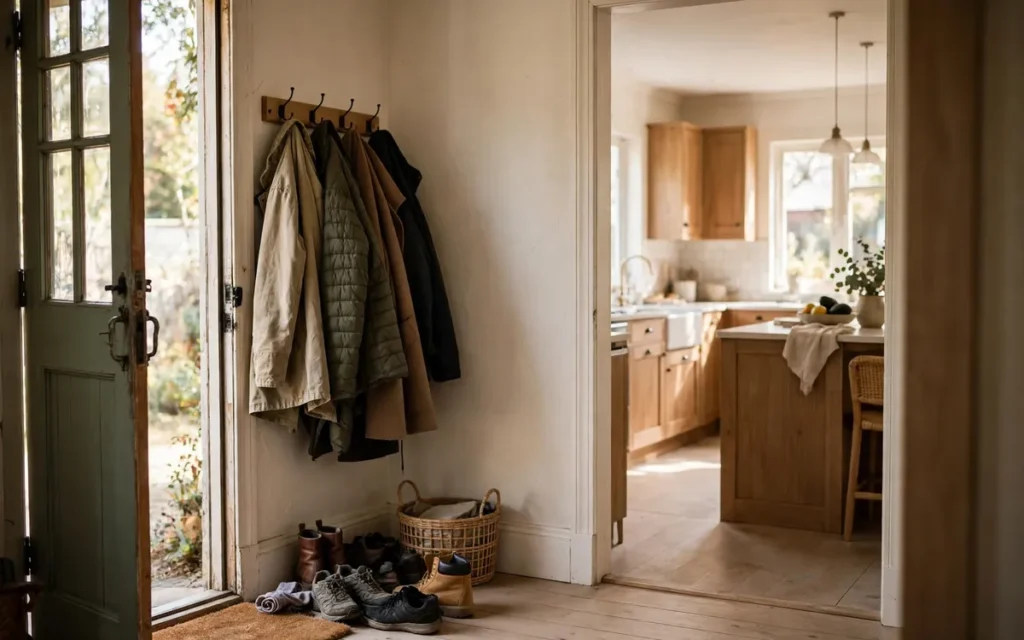
Before buying a single hook, watch the traffic for one ordinary day. Which door does the household actually come through, where do shoes stop, where does the first flat surface collect the mail? That map, not the floor plan, is where the zone goes. Families routinely discover their true entry is the garage door or the back door into the kitchen, while the front hall they had been planning for serves guests twice a month. Build where the path is; the path will not move to the furniture.
2. Take the Wall Beside the Door You Actually Use

The working wall is almost always the stretch beside the real door, on the side the door opens towards, where a person stands in the first three steps inside. Claim 24 to 36 inches of it at minimum; that slice honestly holds hooks, a shoe tray and a small shelf for one or two people. Mark the door’s swing arc on the floor with tape before fixing anything: the zone lives beside the swing, never inside it, and the walkway past it keeps its roughly 36 clear inches.
3. Steal the Garage-Entry Wall
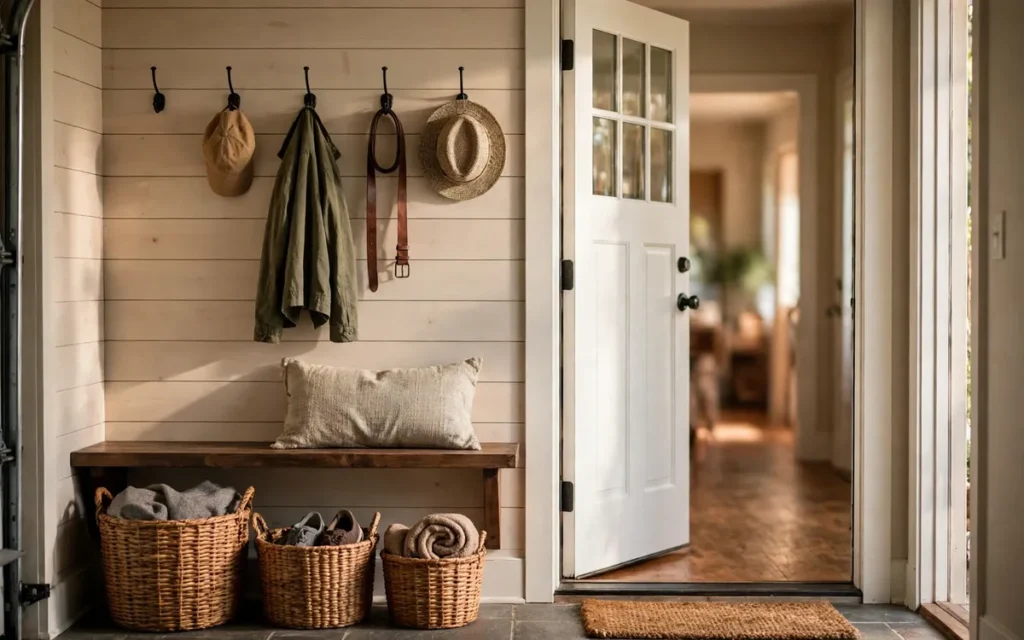
In many houses the best drop zone is not in the house at all, but on the garage wall beside the door in. Coats, boots and sports bags can land there, in a space that tolerates mess and mud, and only the smalls, keys, phones and paper, cross the threshold into the home. Fit it like any zone: hooks at two heights, a bench or step to sit on, baskets for the season’s gear. It is the view from inside of the same arrival whose outside face, the door, the numbers and the mat, is dressed in our front door decor ideas.
Hang It: Hooks at Honest Heights
4. Hang Adult Hooks at 60 to 66 Inches

Hook height is the whole ballgame, because a hook at the wrong height is a floor pile with extra steps. Set the adult row 60 to 66 inches from the floor: high enough that a long coat clears the bench and the shoes below, low enough that nobody reaches on tiptoe with full hands. Fix every hook into a stud or with rated anchors; a hook is a lever loaded daily, and plasterboard alone will eventually hand the whole row back to you, coats and all.
5. Add a Low Row Kids Can Reach Themselves

The second row is what makes the system self-running. Set it at 36 to 48 inches, scaled to the smallest person expected to use it, and a child can hang a coat and a backpack without help, which means without the bag landing on the floor “for now.” One hook per child at this height, sturdily fixed: a loaded school backpack runs ten to twenty pounds, and it swings onto that hook at speed, twice a day, all school year.
6. Run One Hook Rail, Two Hooks Per Person

A rail beats scattered individual hooks for one reason: spacing discipline. Mount one board or rail along the claimed wall and set two hooks per person along it, one for the coat, one for the bag, so each person’s whole load hangs in a single column above their cubby. In a four-season climate the second hook is not a luxury; the winter coat and the gym bag are both daily. Rail and hooks go into studs wherever the studs fall, and the spacing follows the studs, not the other way round.
7. Give Backpacks a Hook of Their Own
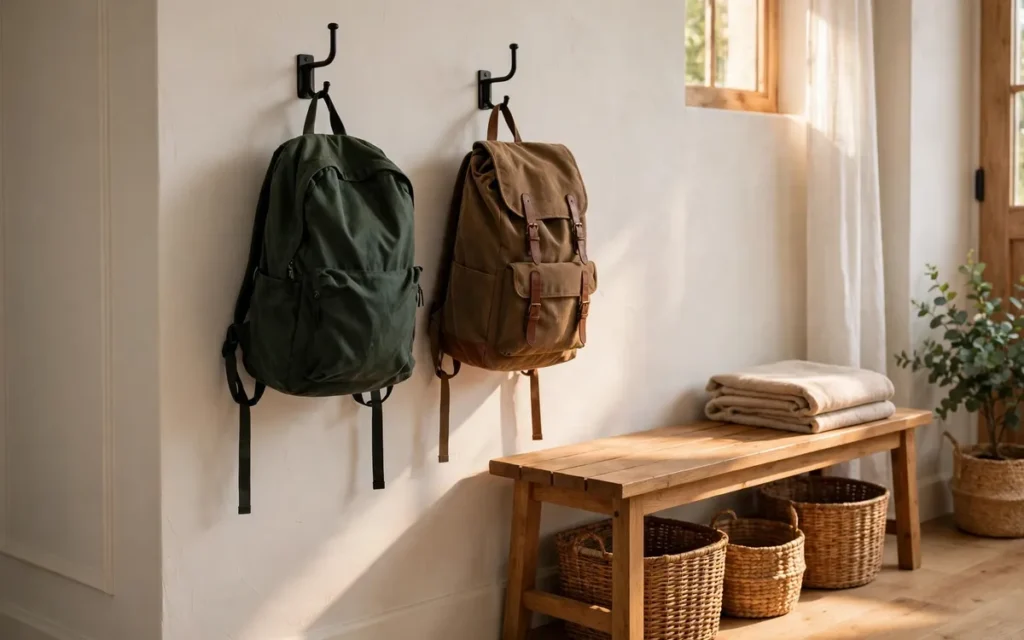
Backpacks are the single biggest floor item in a family entry, and they fail on shared hooks because they are bulky, heavy and hung by their smallest loop by tired people. Dedicate one strong hook per backpack, on the low row for children and the adult row for commuters, positioned where the bag clears the floor by an inch or two. A bag that hangs fully off the floor stops shedding its contents across the walkway, and the morning search for it ends, because it is always on the same hook.
Park the Shoes: Benches, Cubbies and Wet Boots
8. Set a Bench at True Sitting Height

The bench is the zone’s anchor and its most-used seat: sat on twice a day by everyone who laces shoes. True sitting height is about 18 inches, with a depth of 15 to 18 inches so a person sits fully rather than perching on an edge, and a length of at least 36 inches, with 48 inches the family starting point. Sturdiness here is a safety specification, not a style one: the bench takes a person’s full weight, mid-balance, on one foot, every single morning.
9. Size Cubbies at 12 to 15 Inches Per Person
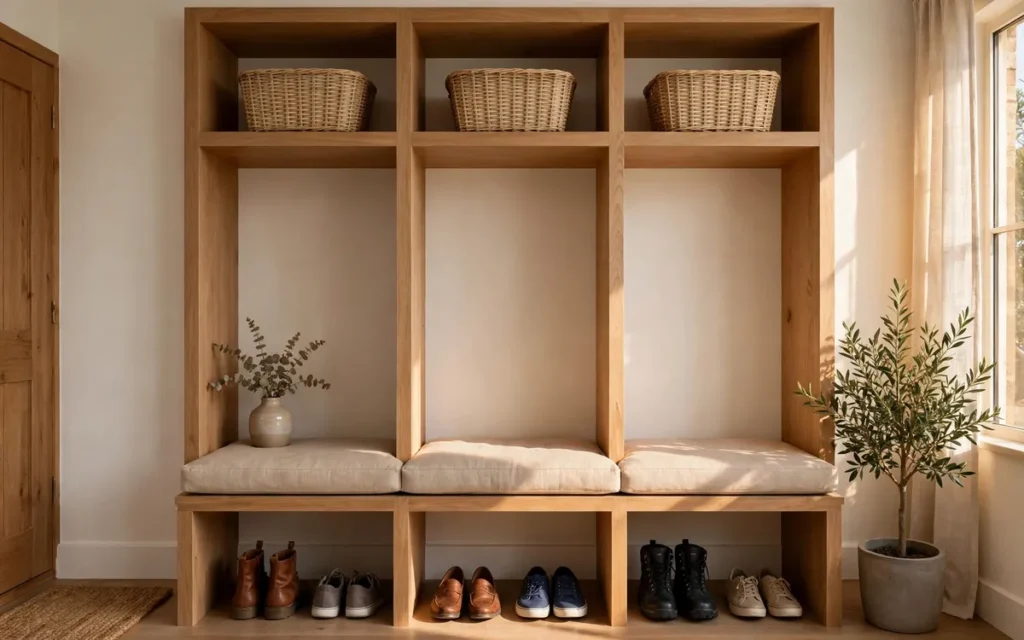
Per-person cubbies are how a shared zone stays sorted: one column per household member, 12 to 15 inches wide and 14 to 16 inches deep, holding that person’s shoes below and a basket for their small gear above. A 12 by 12 by 12 inch opening takes one or two pairs of smaller shoes, or one pair of adult boots. The column system scales honestly: two people need two columns, and when a fifth person arrives, the wall, not the floor, is where the argument happens.
10. Choose a Slim Shoe Cabinet for a Narrow Entry

Where the entry cannot spare cubby depth, the tilt-out shoe cabinet is the honest alternative. These run as shallow as 7 to 12 inches deep, several pairs per tilting compartment, shoes hidden behind a flat front that doubles as nothing, which is exactly the point: a closed shoe front reads as furniture, not storage. Keep the count real though; the cabinet holds the daily pairs, two per person, and the rest of the shoe collection lives in bedroom closets where it belongs.
11. Add a Boot Tray for the Wet and Muddy
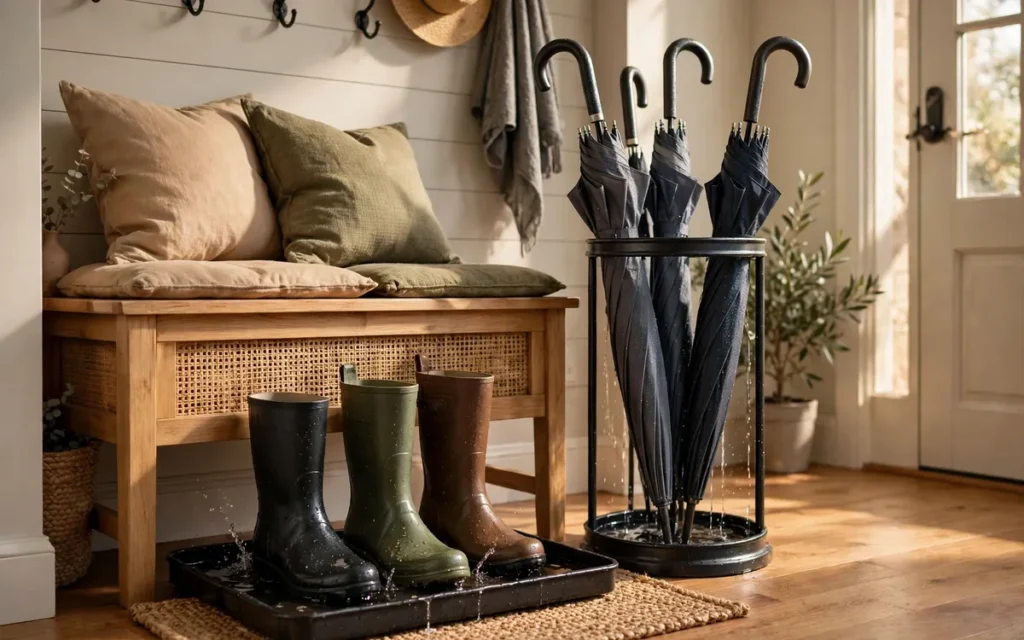
Every zone needs a wet plan, or the first rainy week redraws it. A simple boot tray, lipped on all sides, parked under the hooks or beside the bench, catches the melt and the mud in one washable place. Size it to the household’s wet pairs, usually two to four, and keep an umbrella stand or a tall basket at its end. In snow country this tray, not the bench, is the zone’s hardest-working piece from November to March.
Drop the Smalls: Keys, Mail and Phones
12. Keep One Small Tray for Keys, Only One

The landing tray obeys a paradox: the smaller it is, the better it works. A tray around 8 by 12 inches holds keys, a wallet and sunglasses, and then it is full, which is the message. A wide, generous surface invites the pile it was bought to prevent, and within a week it is a landscape of receipts and loose change. One small tray, at the zone, emptied back to its three things nightly: that is the entire discipline, and it is enough.
13. Sort the Mail at the Door, Not the Counter
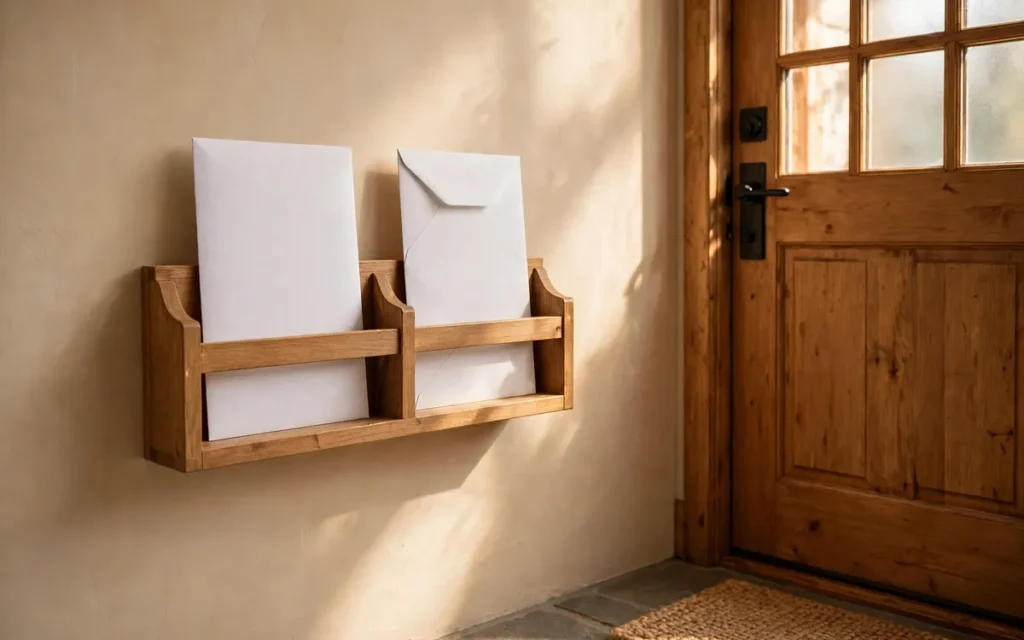
Paper is the load that never stops arriving, so it is processed where it enters, not carried to a kitchen counter to fossilise. Mount a simple upright sorter at the zone with two slots, in and act, and give junk mail a third destination that is not a slot at all: the recycling, on the way in, unopened. Standing paper stays visible and current; a flat stack hides its bottom layer for months. What gets acted on leaves the house the same day it is dealt with.
14. Add an Outgoing Basket for Returns and Library Books

Half of entry clutter is traffic in the other direction: parcels to return, library books, the bag for the charity shop, tomorrow’s gym kit. Give it one basket by the door, sized to a shopping bag, and stage outgoing things there the night before instead of on the floor by the shoe rack. When someone leaves, the basket is checked the way the tray is checked for keys. An empty outgoing basket is the sign of a zone running on schedule.
15. Park Phones on a Charging Shelf, Cords Contained

Phones land where keys land, so give them a shelf of their own at the zone instead of a counter across the house: one small shelf or cubby near an existing outlet, with a short cable per phone, contained inside the cubby. The rules are physical: cords never trail across the walkway, and no power strip sits on the floor where wet shoes land. Charging at the door also returns the phones to the zone each night, which is where the morning needs them.
No Mudroom, No Problem: The Small-Space Zone
16. Build the Whole Zone on a Two-Foot Wall Slice

The minimum viable drop zone is genuinely small: 24 inches of wall carries two hooks at adult height, a tiny shelf with the key tray on it, and a slim shoe cabinet or tray below. That slice is the renter’s zone and the apartment zone, and it works because it honours the whole system at small scale: one home per category, nothing homeless, the swing and the walkway untouched. Where that slice ends and the passage beyond begins, the hallway takes over under its own rules in our hallway decor ideas; the landing hardware stays landing hardware.
17. Move the Zone Inside the Coat Closet Door

No spare wall at all? The inside of the entry closet door is a wall the house already owns. Over-door hooks take coats and bags, a hanging organiser with pockets takes gloves, mail and dog leads, and the closet floor takes a shoe tray where coats already drip. The door must still close fully, so everything mounted on it stays slim, and the heaviest bags stay on the closet’s interior wall hooks. Closed, the zone disappears; opened, everything is at hand.
18. Use a Hall Tree Only Where the Width Pays for It
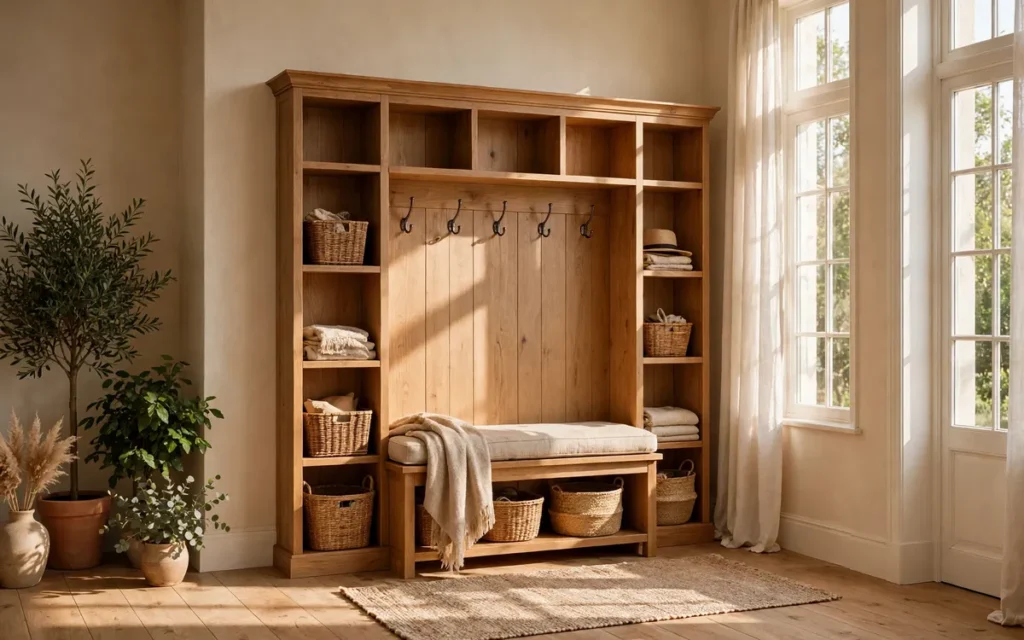
The hall tree, bench, hooks and cubbies in one freestanding frame, is the zone bought in a single purchase, and it is honest only where the floor can pay its depth. These pieces run 15 to 18 inches deep; in an entry that leaves less than about 36 inches of clear walkway in front of it, the tree does not fit, whatever the catalogue says. Where the width pays, anchor it to the wall behind: a loaded hall tree is tall, narrow and climbed by children, which is a tipping specification as much as a furniture choice.
Keep It Working: The Reset and the Cap
19. Run the Two-Minute Nightly Reset
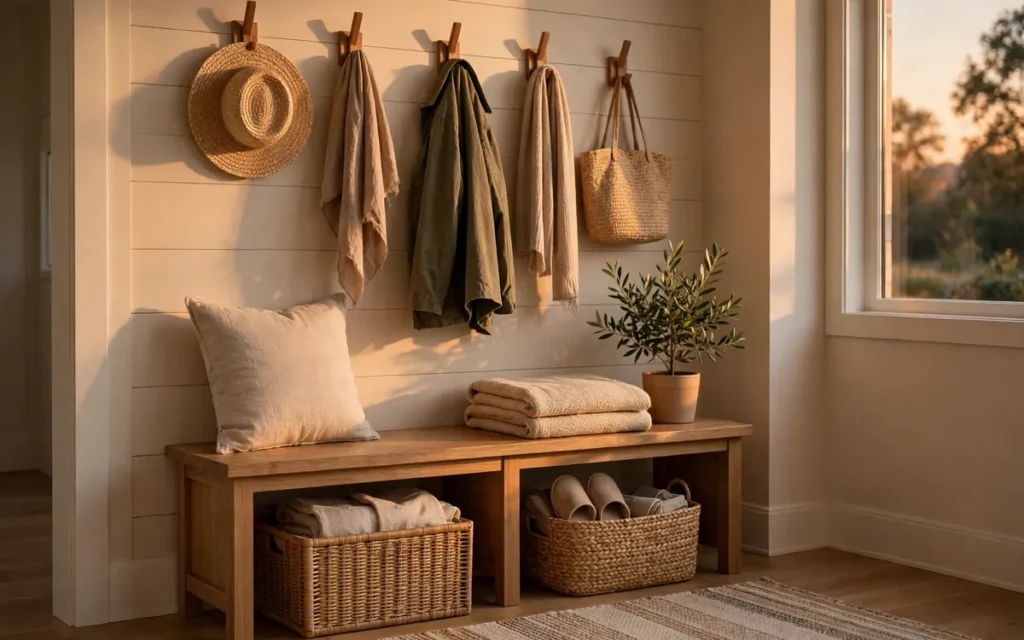
The reset is the system’s heartbeat, and it is deliberately small: two minutes, one pass. Shoes pair up into their cubbies, bags swing onto their hooks, the tray returns to keys and wallet, paper stands in the sorter, the outgoing basket is staged for the morning. Done nightly, the zone never accumulates enough to need a weekend rescue. Skipped for a week, it becomes the pile again, which is how you know the reset, not the furniture, was the real product all along.
20. Cap It: When the Zone Is Full, Something Leaves
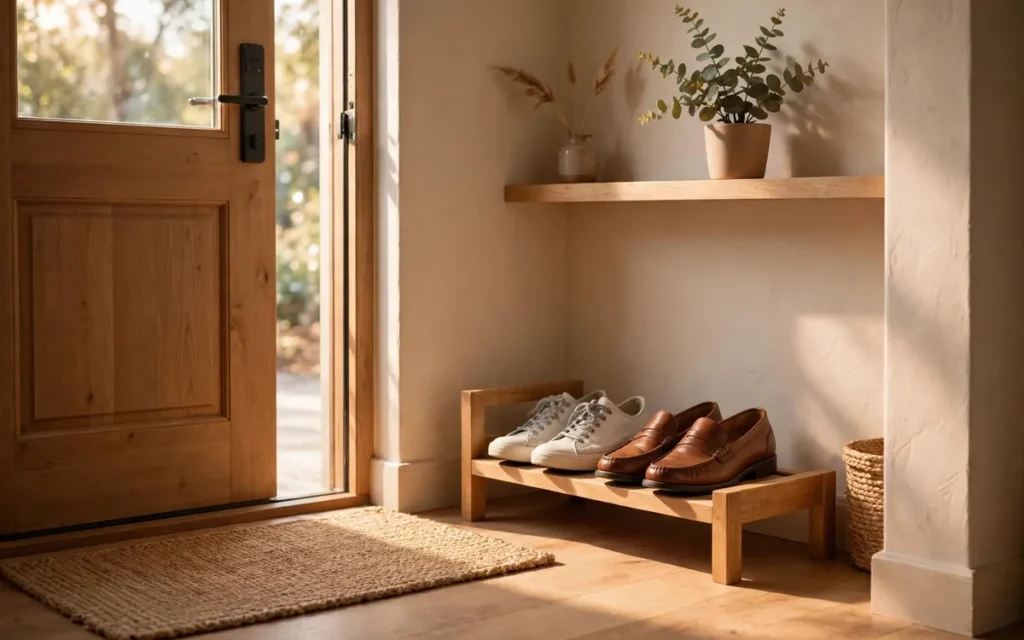
A drop zone works because it is finite, so give it a cap and enforce it kindly. Two pairs of daily shoes per person at the door; when a third pair migrates in, a pair moves to the bedroom closet. One coat per hook in the season; the out-of-season coat lives elsewhere. The cap is what separates a system from a storage unit: the zone holds the current rotation, and its fullness is information, a signal that something’s home is somewhere else in the house.
21. Swap One Layer With the Season
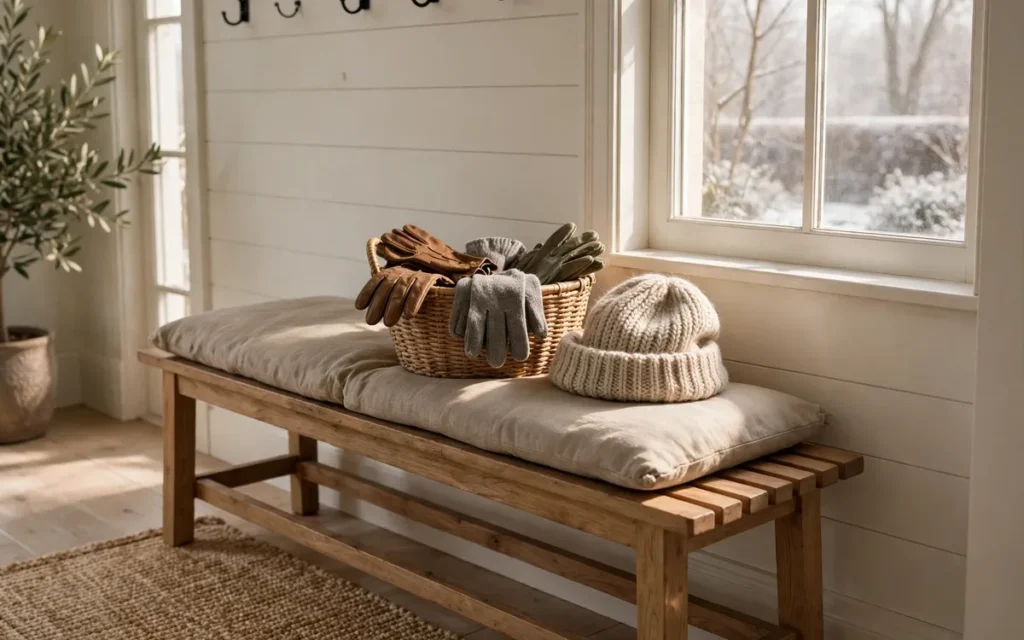
The hardware never changes; one layer does. Winter brings the glove-and-hat basket onto the bench and the boot tray to the front; summer swaps in the sunscreen, sunglasses and cap basket, and the tray dries out in a cupboard. Five minutes, twice a year, and the zone tracks the household’s actual life. When December comes, the entry’s full festive dress is a bigger production, garlands, wreath and all, in our christmas entryway decor ideas; this swap is the other eleven months’ version.
What It Costs: Three Honest Levels
A drop zone is cheap as systems go, because its expensive ingredient is mostly decisions: the right door, the right heights, the caps. Spend in the order the method works: fixings and hooks first, shoe storage second, the bench, the one piece sat on daily, last and best.
Free: Use What You Already Own
Audit before buying. Tape the swing arc, measure the wall, and re-hang the hooks you already own at the correct two heights; hooks at the wrong height are the commonest fault in existing entries, and the fix costs a screwdriver. A bowl from the kitchen becomes the first key tray, baskets migrate from other rooms, and the shoe cap alone, two daily pairs per person, clears most door piles without a single purchase.
Low Cost: The Working Kit
The hook rail and rated anchors, a boot tray, a two-slot mail sorter, per-person baskets and the small landing tray. This kit, fitted to a measured wall, is a complete system for most homes, and it should be lived with for a month of real comings and goings before anything larger is considered.
Worth Spending On: The Bench and the Built-Ins
If money goes anywhere, it goes to what bodies use hardest. The bench is sat on, stood on by children reaching hooks, and loaded daily; buy it sturdy, solid wood or properly rated, at true sitting height. In a permanent home, built-in cubbies sized per person are the second honest spend: they use every inch of an awkward wall that furniture never quite fits, and they stay with the house, working, for decades.
7 Drop Zone Mistakes to Skip
- Building it at the front door nobody uses. The pile forms at the real door instead, and the beautiful zone stays empty. Fix: watch one day’s traffic and claim the door the household actually lives through, front, back or garage.
- Hooks at one height for everyone. A single row at 60 inches is over a small child’s head, so bags land on the floor beneath it. Fix: two rows, adults at 60 to 66 inches, children at 36 to 48 inches, one hook per person minimum.
- A landing surface that is too big. A wide tabletop becomes the pile it was meant to prevent within a week. Fix: one small tray, about 8 by 12 inches, for keys and pockets; styled surfaces belong to decor, working landings stay small on purpose.
- Furniture inside the door swing. The door strikes it daily, finishes suffer, and the walkway narrows below its safe width. Fix: tape the swing arc on the floor before placing anything; the arc and roughly 36 inches of walkway are no-storage zones.
- No cap on the shoes. Sixteen pairs at the door means the zone has already failed, however tidy the rack. Fix: two daily pairs per person at the door, the rest in closets, and a boot tray as the only wet overflow.
- Flat mail stacking. Paper laid flat hides its bottom layer for months and migrates to every counter. Fix: mail stands upright in a two-slot sorter at the door, junk goes to recycling on the way in, and acted paper leaves the same day.
- Hooks on weak fixings. Drywall anchors alone pull out under a loaded backpack, and the row comes down with the coats. Fix: hooks and rails into studs or with properly rated anchors; a school bag can weigh ten to twenty pounds.
A Quick Safety Note
A drop zone stands on the home’s exit path, and everything in it is specified with that in mind. The door swing and the roughly 36 inch walkway stay clear at all times: no shoe overflow creeping across the floor, no basket migrating into the path, because this is the route everyone uses in the dark, in a hurry, and in an emergency. Hooks and rails are fixed into studs or with rated anchors, since a falling loaded rail is worse than no rail. A freestanding hall tree is anchored to the wall behind it against tipping.
The electrical and the small things follow the same care. Charging cords stay contained in their cubby, never trailing across the walkway, and no power strip sits on the floor where wet shoes land. And think about heights for the smallest residents: medication, coins, keys with button batteries, anything hazardous that rides home in a bag, lives in the adult-height tray and the high basket, never in the children’s row or the open cubbies at toddler height. A zone that catches everything should catch the dangerous things highest of all.
Drop Zone Questions, Answered
What is a drop zone in a house?
A small, deliberate station at the door the household uses every day, where the daily load lands on arrival: coats and bags on hooks at the right heights, shoes in cubbies or on a tray, keys in one small tray, mail in a standing sorter. It is defined by having a sized home for each category of thing, within arm’s reach of the door, rather than being a particular piece of furniture.
Is a drop zone the same as a mudroom?
No. A mudroom is a room, usually with a door, plumbing sometimes, and space for the whole operation. A drop zone is a system that can live in a mudroom but does not need one: the same hooks, bench, cubbies and tray fitted onto a few feet of wall at whatever entry the household uses. Most drop zones exist precisely because the house has no mudroom to spare.
How much space do you need for a drop zone?
Less than most people expect. The minimum viable zone is 24 to 36 inches of wall with 6 to 12 inches of depth: two hooks, a small shelf and tray, a slim shoe cabinet or tray below. A family wall runs 4 to 6 feet, and about 5 feet lets two people pass and unload comfortably. What cannot shrink is the roughly 36 inches of clear walkway in front of it.
Where should a drop zone go if you don’t have a mudroom?
At the door the household actually uses, which is often the back door or the garage entry rather than the front door. The standard fits are a two-foot slice of wall beside that door, the inside of the entry coat closet, or a stretch of garage wall beside the door in. Build it on the real entry path; a zone at an unused formal door catches nothing.
What belongs in a drop zone, and what doesn’t?
The daily load only: the coats and bags in current rotation, two pairs of everyday shoes per person, keys, the mail in process, the current season’s gloves or sunscreen, and outgoing things staged for tomorrow. What does not belong: out-of-season clothing, the full shoe collection, archives of paper, sports gear between seasons, and anything without a named home in the system. Those live in closets and storage, and the cap rule sends them there.
How do you keep a drop zone from looking cluttered?
By arithmetic rather than tidying. One home per category, hooks at heights people can actually use, a landing tray deliberately small, shoes capped at two daily pairs per person, and a two-minute nightly reset that returns everything to its home. Closed storage, the tilt-out cabinet, lidded baskets, hides the visual noise that remains. A zone that needs a weekly rescue was undersized or uncapped; the fix is in the system, not in more effort.
That same one-home-per-category discipline pays off in the laundry room, too. If the wash piles up where the coats land, our Small Laundry Room Ideas show how to give detergents, baskets and folded washing their own measured homes, so the drop zone stays clear and the laundry has somewhere sensible to go.
The drop zone catches the school bag at the door — but where does it go after it lands? The homework station is the desk its contents travel to, spotted on the bag’s own route from the door and reset in two minutes a day. Our homework station ideas for small spaces show how to fit that desk so the school afternoon runs itself.
The same honest fixings that hold a loaded backpack will hold a deck on the wall: our skateboard wall decor ideas show how to hang boards level, at a height that survives daily use, without the fixings pulling out. A wall that can carry the school run can carry a little art, too.
Conclusion
A drop zone is the smallest system in the house and the one used most often. Work the drop zone ideas above in their order: claim the door you truly live through, give every category of the daily load one sized home at the right height, and defend the swing, the walkway and the two-minute reset. Do that, and the entry stops being where the day piles up and becomes what it should have been all along, the place the house catches you, coming and going.




One Comment