21 Perfect Entryway Table Decor Ideas for a Warm, Working Welcome
The front door is where a house shakes your hand, and the entryway table is where that handshake lands. It is also where keys, mail, sunglasses and shopping bags land, which is why most entryway tables end up as dumping grounds with a lamp on top. These entryway table decor ideas fix both jobs at once: a table that greets you warmly and still catches real life without looking buried. Everything below runs on one measured system, and the highest-impact moves on the list cost nothing at all.
Start by being honest about what this one small surface has to do. It has to look finished when a guest walks in, hold the handful of things you carry through the door every single day, and survive being bumped by coats, bags and shoulders more often than any other furniture in the house. Decor that ignores the second and third jobs lasts about a week. So this article sizes the table before it styles it, gives every idea a number you can measure with a tape, and saves the pretty layer for last, where it belongs.
It helps to think of the entry as two rooms sharing one small table. The first room is the one a guest sees for about ten seconds, and it is judged entirely on how the wall and the surface look together. The second room is the one the family uses ten times a day, in the dark, with full hands, and it is judged on whether the keys are where the hand expects them. A styled entry that ignores the second room gets quietly dismantled by real life within the month. One that serves both rooms stays styled on its own, because staying tidy is built into how it works.
The Method: Hang It, Light It, Land It
Every good list of entryway table decor ideas is secretly the same three moves, done in the same order. Hang the styling on the wall so the surface stays usable, light one side so the welcome works after dark, and give the everyday clutter exactly one place to land. Here is each move with the measurements that make it work.
Step 1: Hang It — Size the Table, Then Hang the Anchor
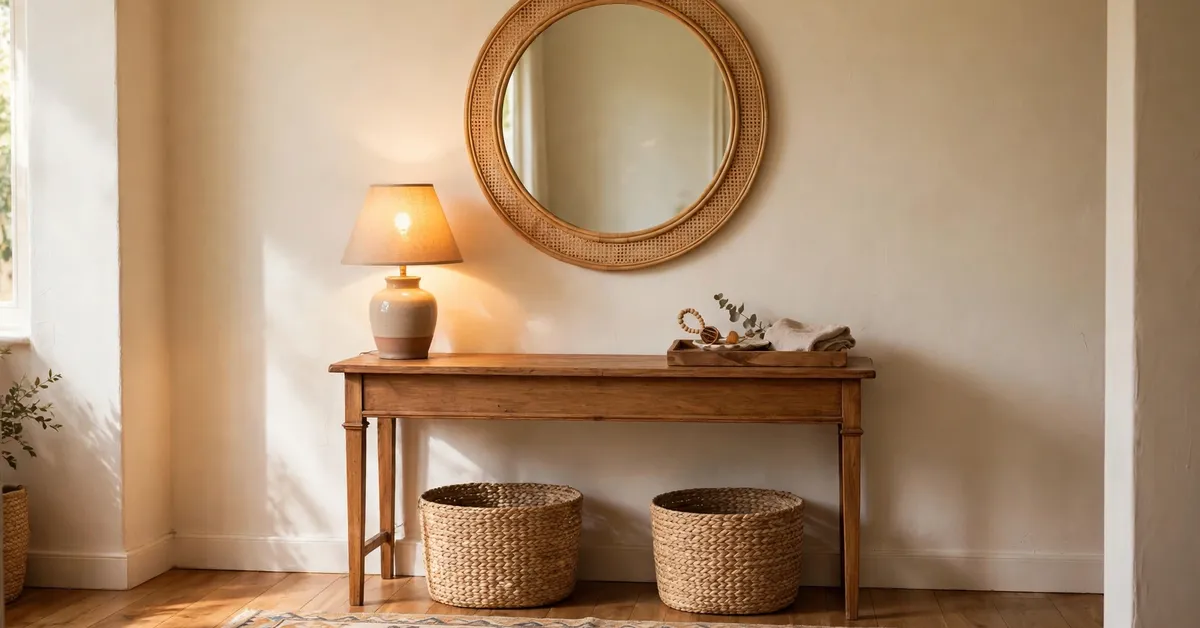
Measure before you decorate. A good entryway table stands 30 to 33 inches tall, about waist height, so keys land on it without bending. Depth matters more: 12 to 16 inches suits a normal entry, 10 to 14 inches is the range for a narrow hall, and the table should never take more than about a third of the hall’s width. Whatever size you choose, keep at least 30 inches of clear walkway in front of it, 36 inches where the hall allows, and check the door swing before anything is placed. Then hang the anchor: a mirror or artwork about two-thirds as wide as the table, its bottom edge 4 to 6 inches above the top and its centre roughly 57 to 60 inches from the floor. The stylists at Hernest’s console table styling guide use the same two-thirds rule, because the wall doing the styling is what leaves the surface free to work.
Step 2: Light It — One Lamp, One Warm Pool of Light
One lamp is enough. Choose one 24 to 30 inches tall, set it toward one end of the table, and fit a warm bulb, around 2700K, so coming home after dark feels like a welcome instead of an interrogation. Balance the other end with height of a different kind, tall branches or a small stack of books, so the top steps down in a loose triangle: tall, middle, low. Nothing at one height, and nothing blocking the walk to the door. Run the cord behind the table from day one, not across the floor where feet and the door will find it.
Step 3: Land It — One Tray, One Third Left Empty
Last, give the clutter a legal home. One shallow tray at the door-side end of the table catches keys, sunglasses and the wallet, the exact group you carry in and out daily. Mail stands upright in a slim sorter instead of spreading flat, and the ugly small stuff, chargers, coins and spare batteries, hides in a lidded box or the drawer. Then stop. About a third of the surface stays deliberately empty, because a table with no empty space has no room to do its job, and a table doing its job is what keeps the styling alive past the first week.
Use the ideas below by zone, not all at once. Hang the anchor first and live with it for a week, because the wall does more work than anything you can buy for the surface. Add the lamp second and the tray third, and only then pick from the zones that follow: the wall above, light and height, the landing zone, underneath, and the floor. If your hall is narrow, your honest starting points are ideas 17 to 19. If the top already works and the entry still feels unfinished, the runner at idea 20 is usually the missing piece.
The Wall Above the Table
1. Hang a Mirror at Two-Thirds Width
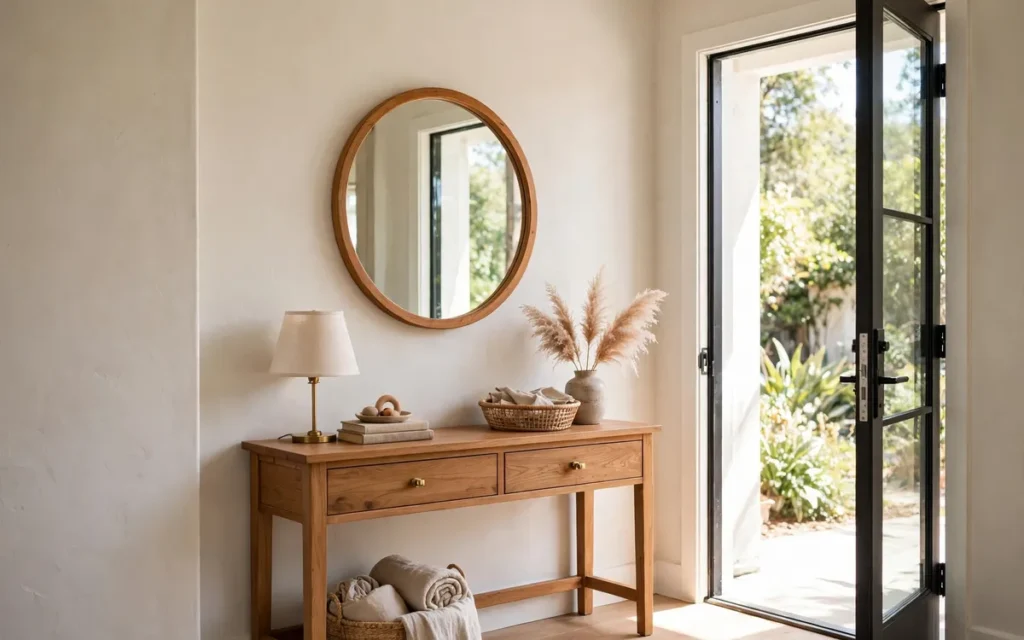
A round or arched mirror about two-thirds as wide as the table is the hardest-working anchor there is: a 36 to 48 inch console takes a 24 to 32 inch mirror. Hang it with its bottom edge 4 to 6 inches above the top, and it earns its place twice, once as the last check before you leave and once by doubling whatever light the lamp gives off in the evening.
2. Swap the Mirror for One Large Print
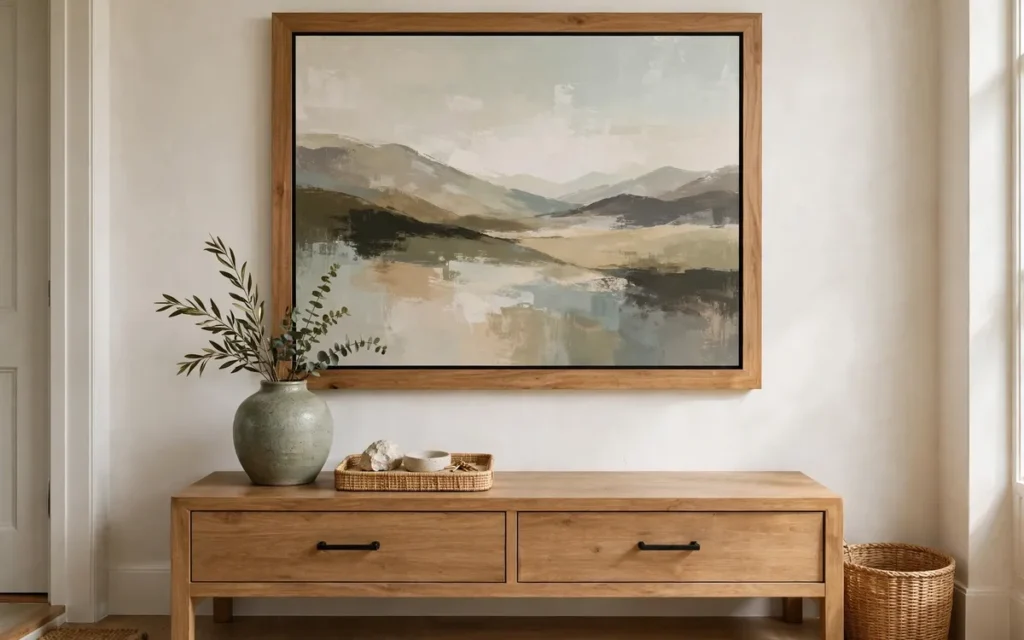
If the entry already has a mirror nearby, or the wall faces a bright window, one large framed print does the anchor’s job instead. Keep the same two-thirds rule and the same 4 to 6 inch gap above the top. Lean it against the wall if your walls will not take fixings, hang it properly if they will, and let one strong image do what a cluster of small ones cannot.
3. Build a Small Gallery Inside the Table’s Width
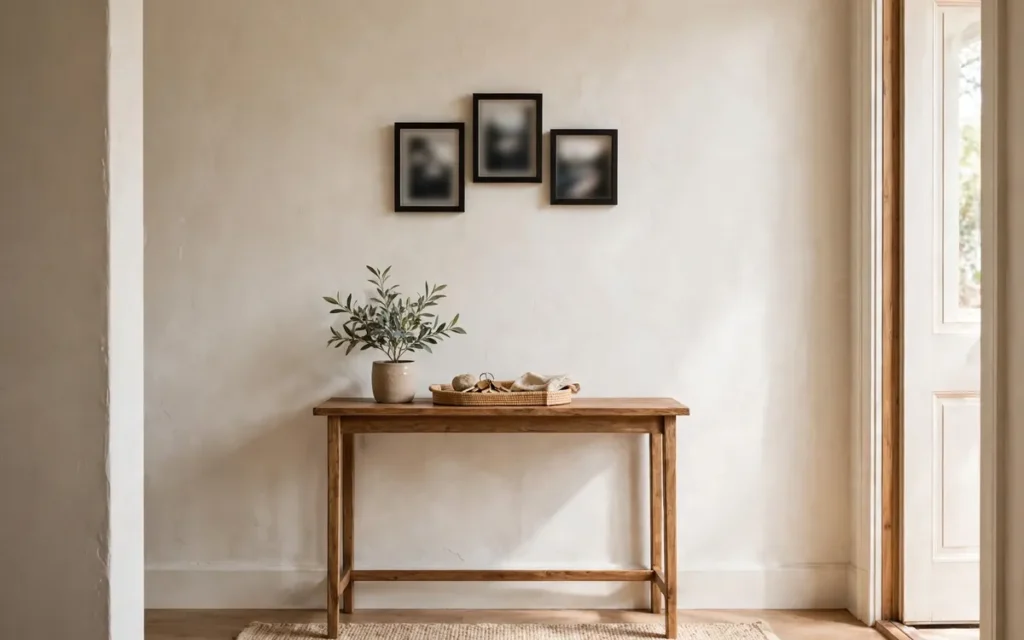
Two to four small frames, grouped inside the table’s footprint, make the wall personal where a mirror makes it bright. Keep the group narrower than the table itself, the lowest frame 4 to 6 inches above the top, and the spacing between frames even, about 2 inches. Family photos belong here: the entry is the one wall every guest passes slowly, twice a day.
4. Give the Mirror a Seasonal Wreath Hook

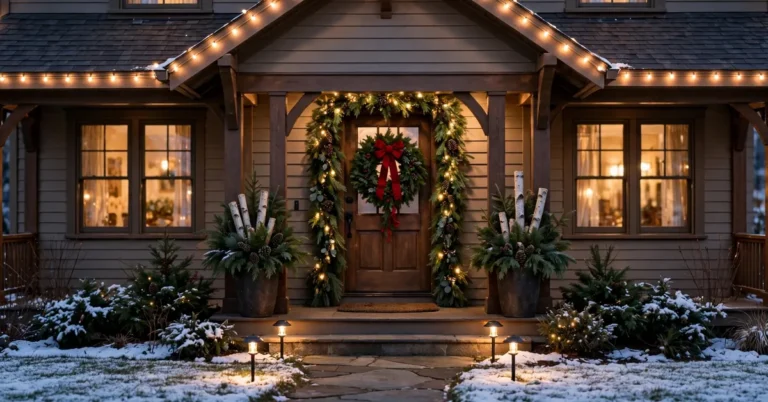
Fit one small hook, or a simple ribbon point, above the mirror once, and it works all year. In December a wreath hangs there in thirty seconds; in January the wall goes back to plain with nothing to repair. It is the year-round half of the festive version in our guide to Christmas entryway decor ideas, and it means the seasonal layer never needs new holes in the wall.
Light and Height
5. Put One Lamp on One Side
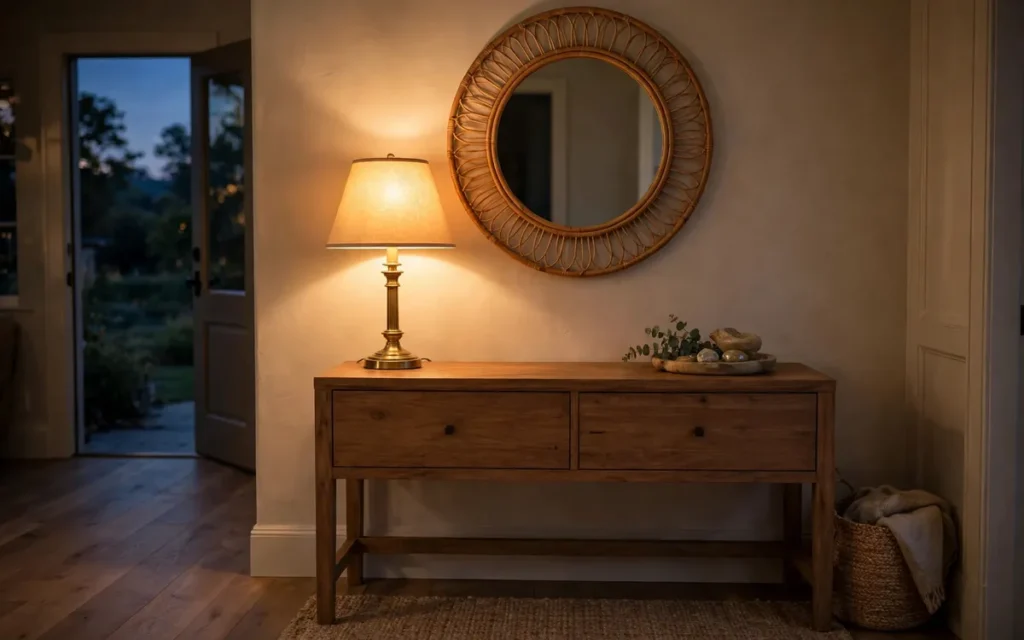
Place the lamp toward one end of the table, not in the middle, and let the other end carry the tray. A 24 to 30 inch lamp on a 30 to 33 inch table puts the shade near eye level without looming, and the glow lands where you actually stand to sort keys. Keep the switch reachable, and the cord behind the table, clipped along the skirting if it wants to wander.
6. Stand Tall Branches in a Heavy, Narrow Vase

Branches give height with almost no footprint, which is exactly what a shallow table needs. Cut or buy them at about one and a half times the vase’s height, and choose a vase with a genuinely heavy base, stoneware or thick glass, because the entry table gets bumped more than any other surface in the house and a light vase will not survive the month.
7. Use a Flat Book Stack as the Riser
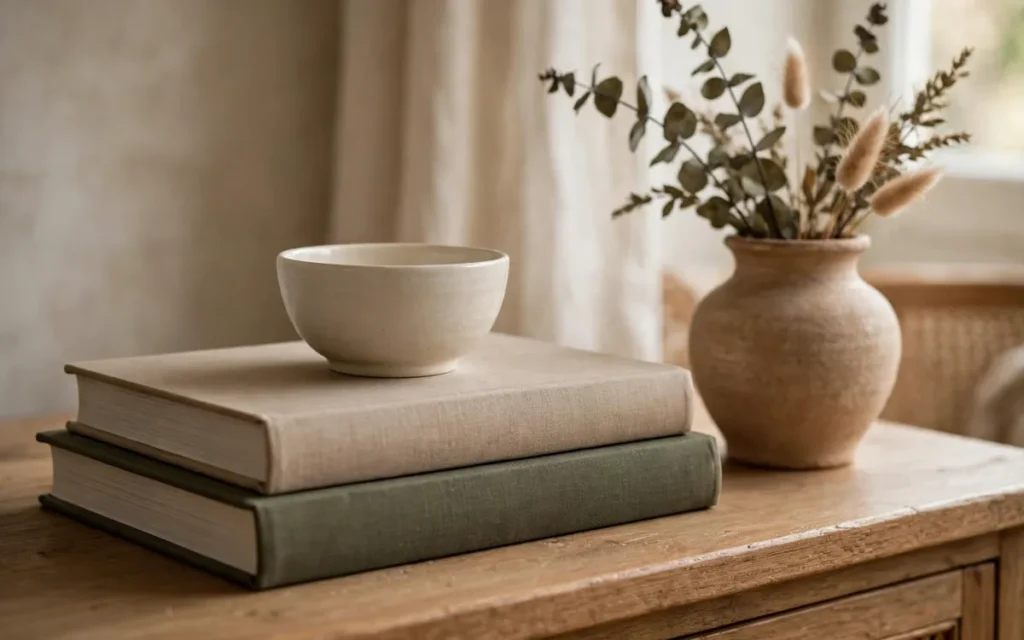
Two or three hardcover books laid flat are the cheapest riser in decorating. Set a small bowl, a plant or a flameless candle on top and it rises into the middle height of the composition instead of disappearing behind the tray. Keep the stack to one spot, line the spines up neatly, and choose books whose colours you are happy to see every day.
8. Vary the Skyline: Tall, Middle, Low

This is the composition rule the whole list leans on. One tall piece, one middle piece and one low piece, stepped across the top, reads as styled from the doorway. Everything at one height reads as storage, no matter how pretty the pieces are. When a table feels flat and you cannot name why, check the skyline first: it is almost always three objects politely standing at the same level.
The Landing Zone
9. Give Keys and Sunglasses One Tray

One shallow tray, placed at the door-side end, sized to the nightly group and nothing else: keys, sunglasses, wallet, watch. The moment the tray is the only legal landing spot, the rest of the top stays styled by default. It is the same group-what-stays discipline that works for kitchen counter decor ideas, moved to the busiest doorway in the house, and it only works if the tray is small enough to fill up fast.
10. Hide the Small Stuff in a Lidded Box
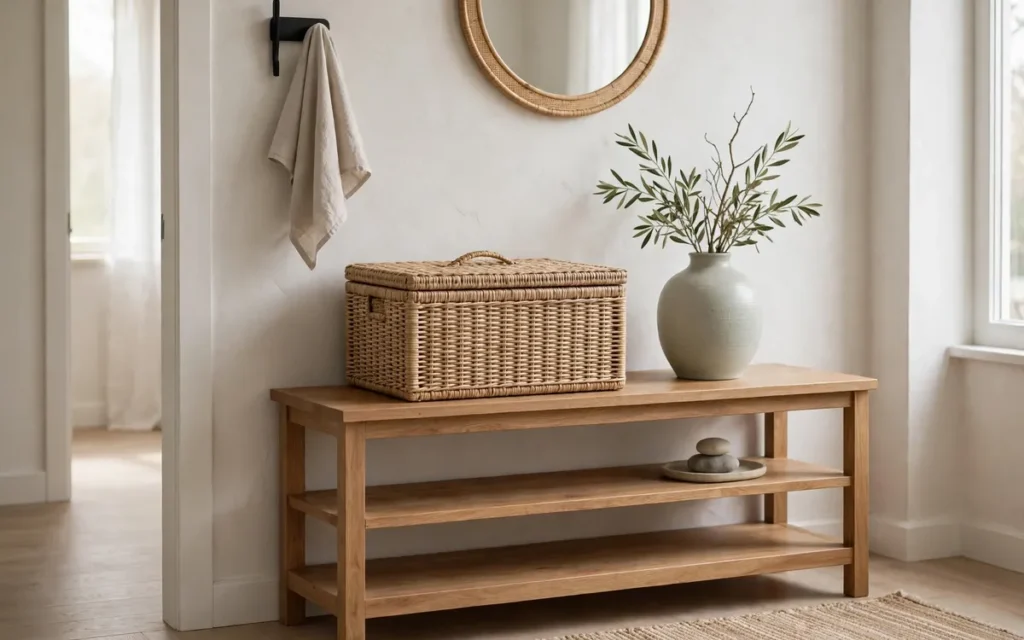
Chargers, coins, hair ties, spare batteries and the dog’s spare lead all need a home that is not the tabletop. Give them one lidded box or basket on the top and the lid does the decorating: closed, it reads as a calm woven accent; open, it swallows the mess. Size it to the real pile, and if the pile outgrows the box, the answer is a clear-out, not a bigger box.
11. Stand Mail Up in a Sorter
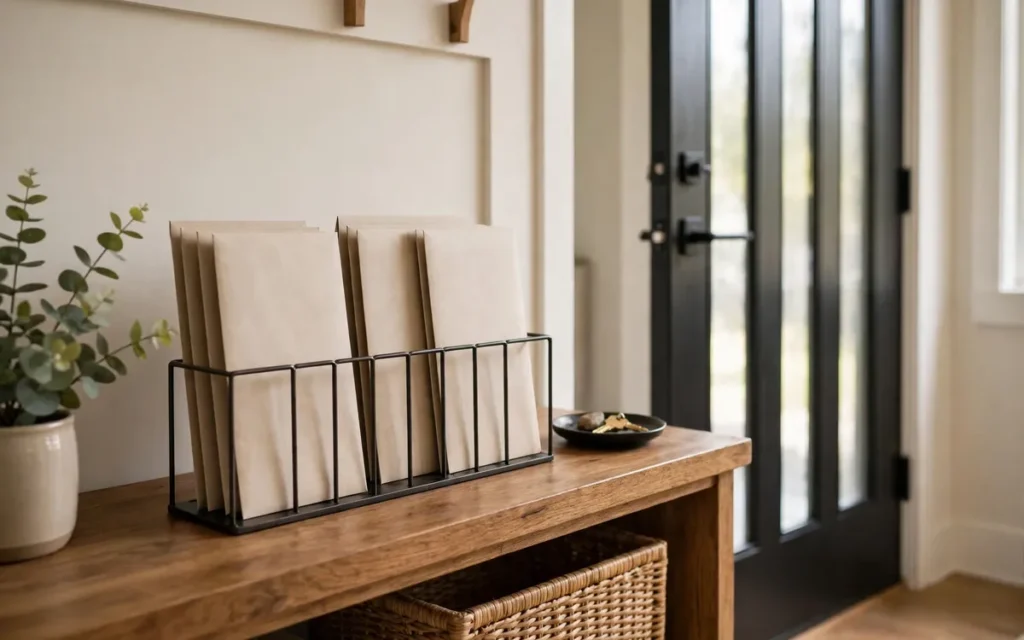
Paper that lies down spreads; paper that stands up gets dealt with. A slim upright sorter or a wall pocket beside the table holds the day’s letters vertically, visible and finite. Give it one rule to match the tray: when the sorter is full, something leaves the house or the filing drawer the same day. Flat piles are how an entry table quietly becomes an office.
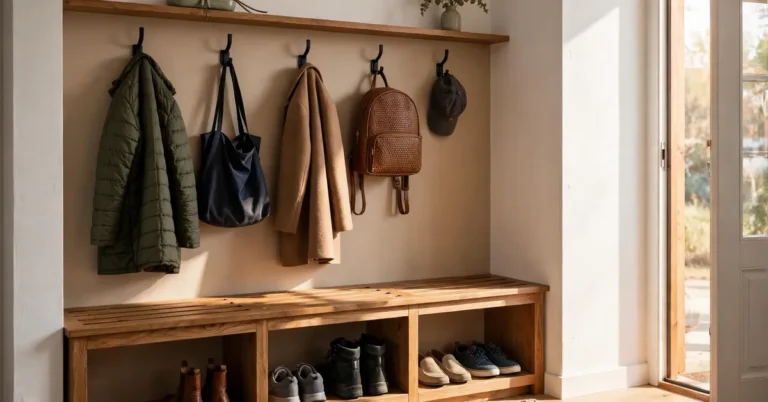
12. Add Hooks Beside the Table
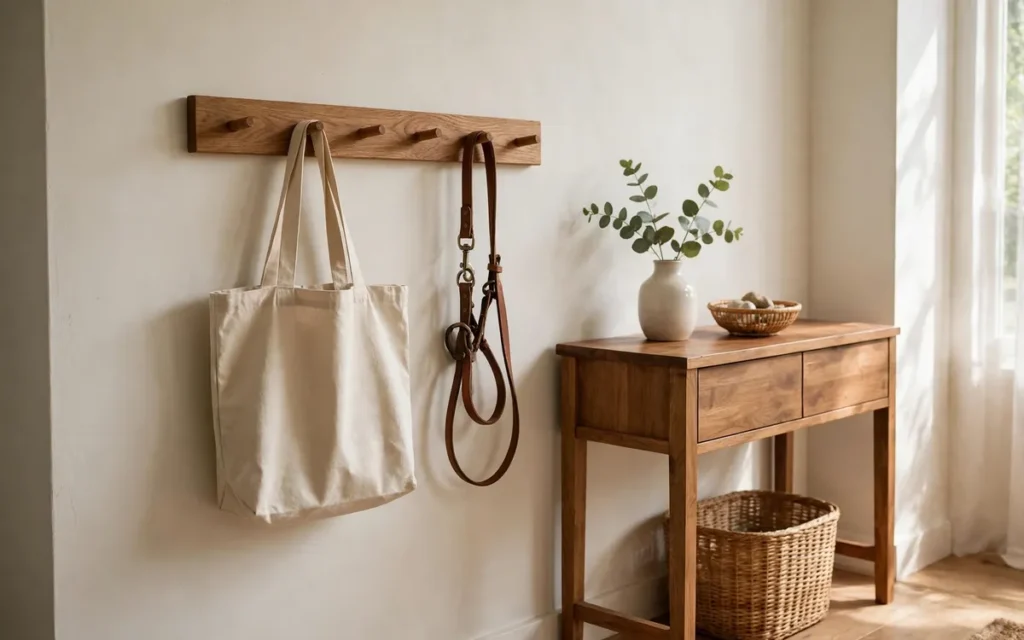
Two hooks or a short peg rail on the wall beside the table, at about shoulder height, catch what styling cannot: the tote bag, the dog lead, the cap, the guest’s jacket. Beside, not above, matters, because bags hung over the table swing into the lamp and the vase. Four inches of wall beside the table saves the whole surface on the table.
Underneath the Table
13. Tuck Two Baskets Under the Table
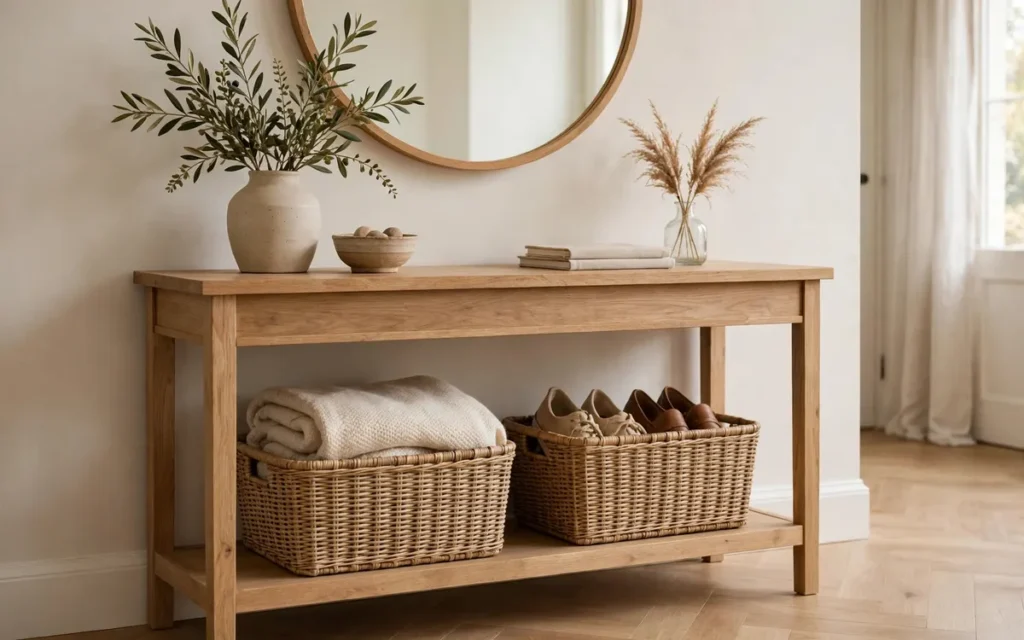
Measure the opening under the console first, then buy baskets that fit it, leaving about 2 inches of air above the pair so they read as calm instead of stuffed. One takes shoes, the other takes scarves, gloves and the folded throw. It is the same measure-first basket move that rescues the space under a vanity in our small bathroom ideas, scaled up for the hall.
14. Slide Stools Under for a Seat
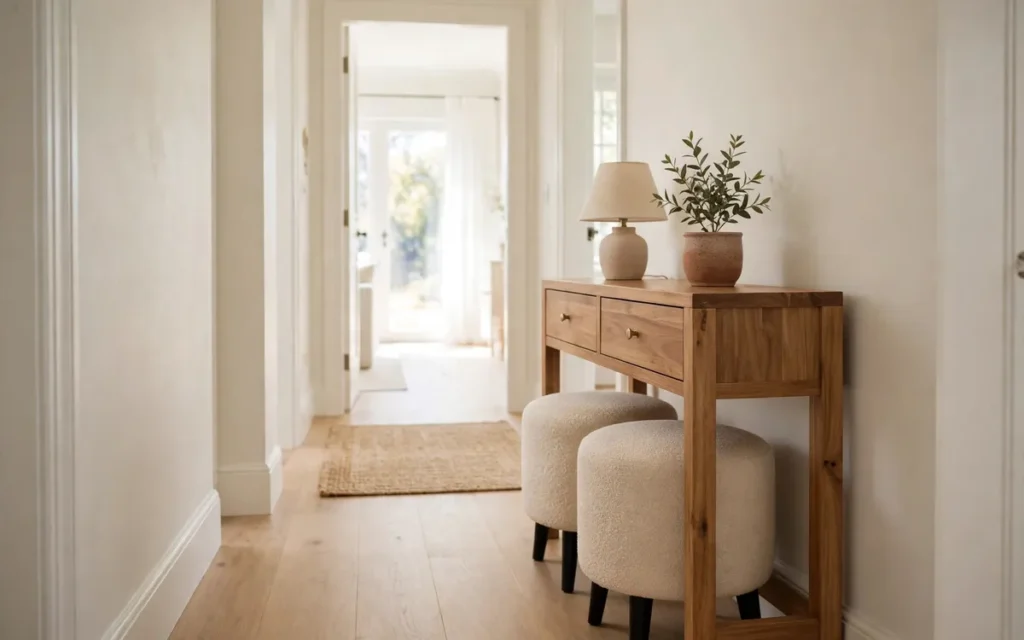
Two low stools or ottomans, tucked fully under the console, turn dead space into the most useful seat in the house: the one where shoes go on. Choose stools a couple of inches narrower than the opening and no taller than the space beneath the apron, then push them back flush after use so the walkway in front of the table stays its full, clear width.
15. Park a Boot Tray at the Wet End
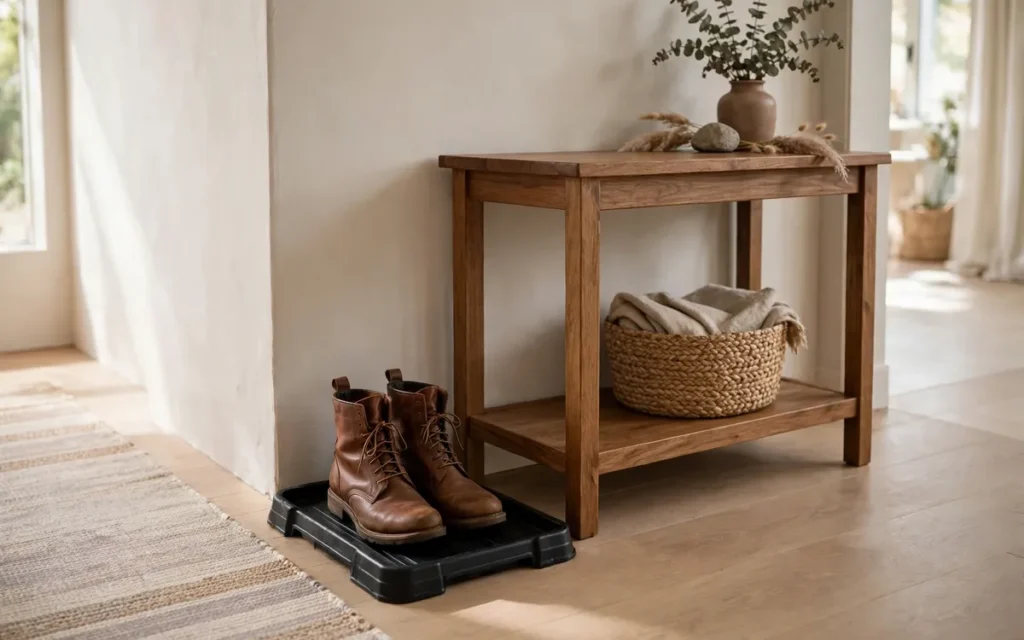
A low boot tray under the door-side end of the table, or just beside it, catches drips, mud and melting snow before they reach the runner. In dry months it earns its keep holding the dog towel and spare leads instead. Buy it a few inches wider than your largest boots, and empty it weekly; a boot tray that is never emptied becomes the smell by the door.
16. Let a Drawer Be the Real Drop Zone
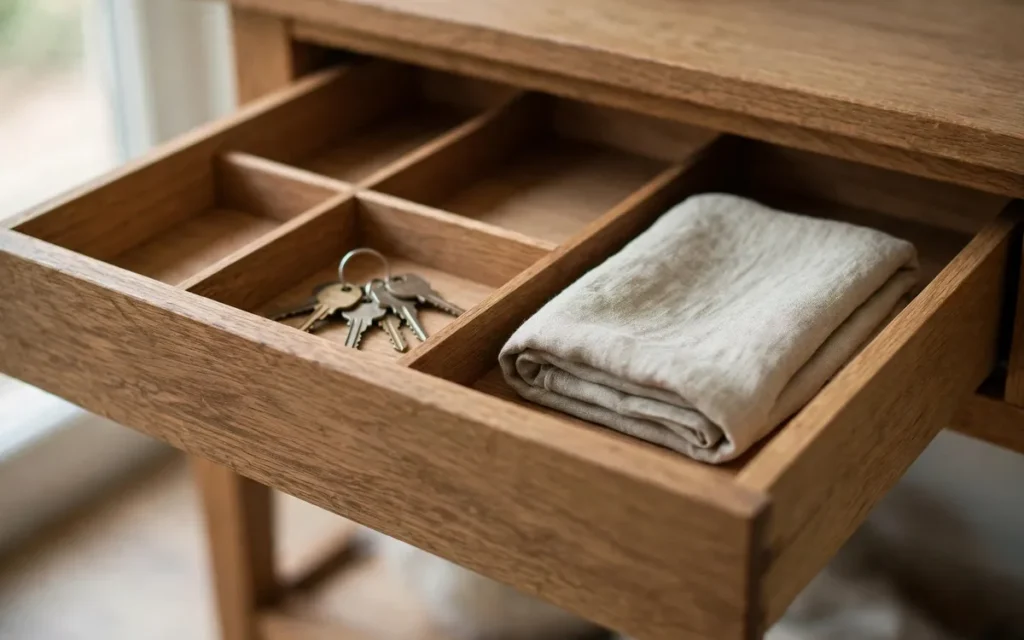
If your console has a drawer, fit one simple divider and let the mess live in there instead of on show. Chargers, pens, stamps and spare keys sit in compartments where nobody has to look at them, and a table with a working drawer needs a much smaller tray on top, or none at all. The styled surface is easy when the storage is honest.
Narrow and No-Table Entries
17. Choose a Slim Console, 10 to 12 Inches Deep
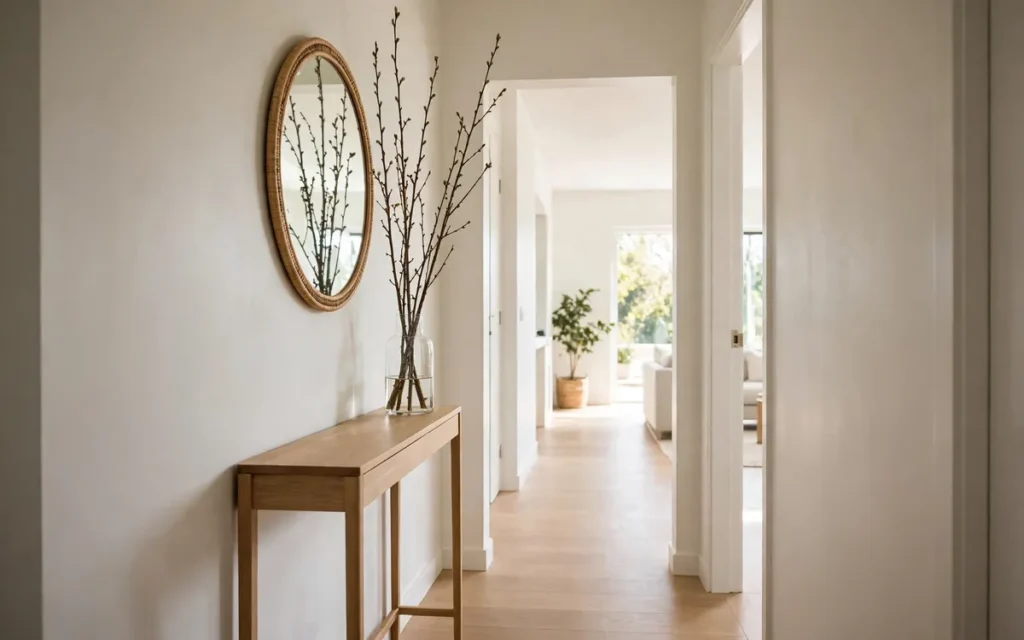
In a narrow hall, depth is the whole game. A console 10 to 12 inches deep takes no more than about a third of the hall’s width and keeps at least 30 inches of walkway clear, 36 if you can manage it. Then style vertically, because the surface will not forgive clutter: the mirror, the branches and the slimmest lamp you own, and the smallest tray that still holds the keys.
18. Float a Shelf Where No Table Fits
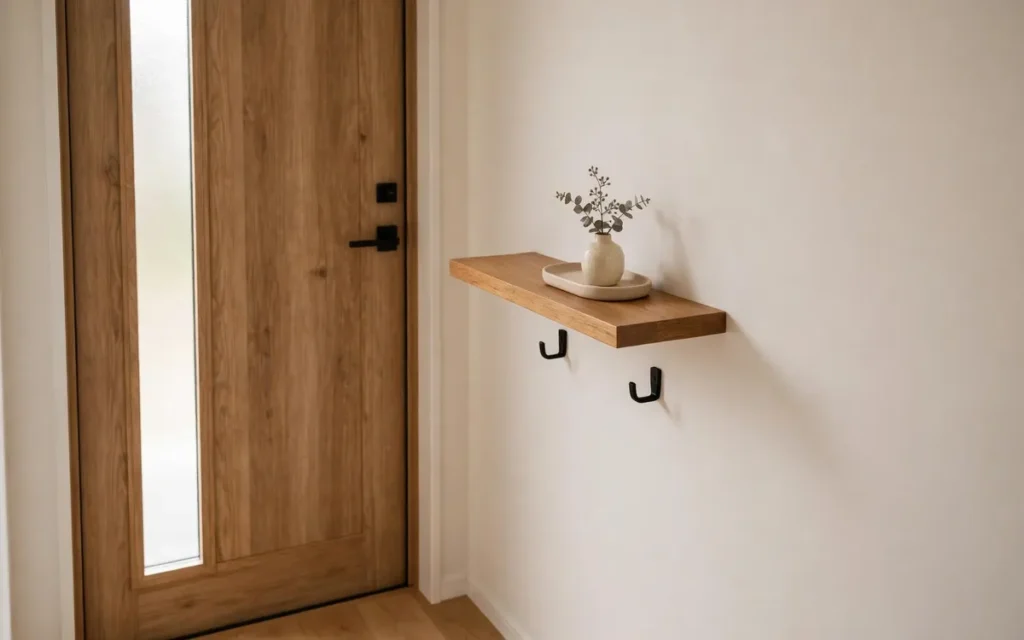
A wall-mounted shelf at about 30 to 32 inches high does the table’s job with no legs standing in the walkway. Fix it into studs or with proper wall anchors, never into plaster alone, and keep the load honest: the tray, one vase, nothing more. Hooks mounted below the shelf take the bags, and the floor stays completely clear for the door swing and passing feet.
19. Build the No-Table Entry: Mirror, Hooks, One Ledge
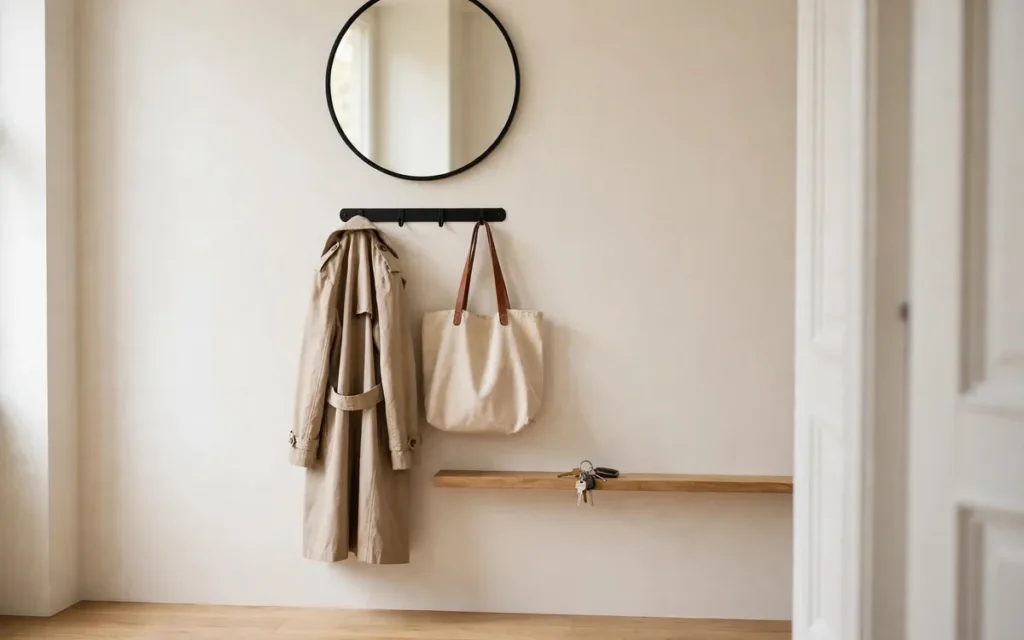
When even a shelf will not fit, put the whole entry on the wall. A mirror for the last check before leaving, a hook rail for coats and bags at shoulder height, and one narrow picture ledge, just deep enough for keys and a phone, mounted where your hand falls as you come in. The floor stays empty, the door swings free, and the entry still reads as finished.
Floor and Finish
20. Run a Runner That Stops Short at Both Ends
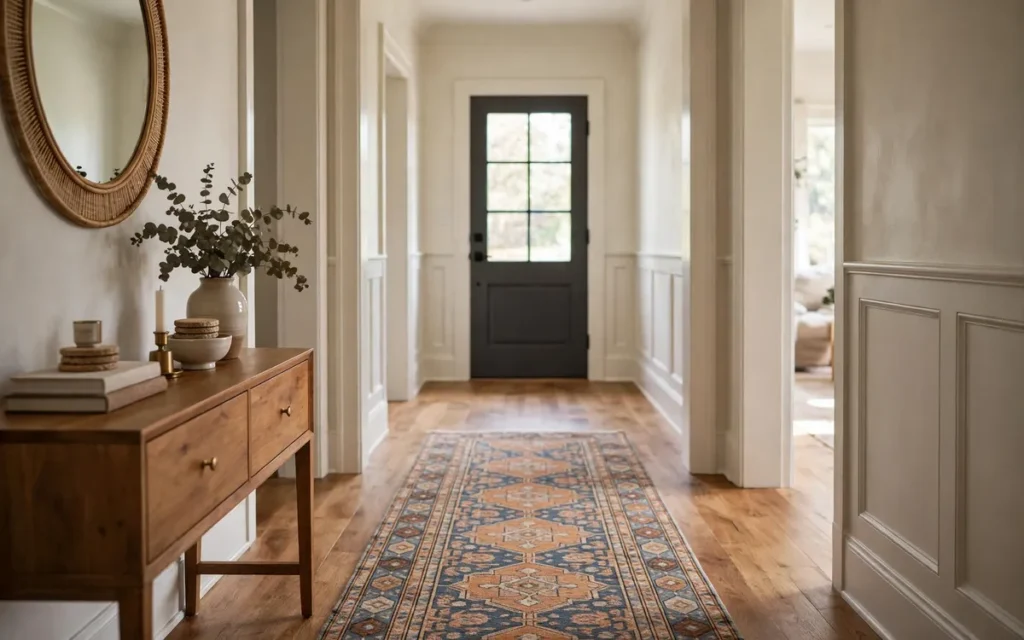
A runner finishes the entry the way a frame finishes a picture, but only if it fits the run. Choose one 2 to 2.5 feet wide and long enough to leave about 6 inches of bare floor at each end; a 2 by 6 foot runner suits most apartment entries. Lay it on a non-slip pad, and check the door swing: the door should pass over it, or clear of it, without ever catching the edge.
21. Make One Seasonal Swap, Not a Whole Redo

The finishing move is restraint. The mirror, lamp and tray never move; only the stems, the tray’s contents and one small accent change with the season, autumn branches and a small pumpkin in fall, fresh flowers in spring. Five minutes, one shelf in a cupboard, and the table feels new. The same door gets the bigger seasonal treatment outside, in our fall porch decor ideas.
What It Costs: Three Honest Levels
An entryway table is one of the cheapest surfaces in the house to fix, because the two moves that change it most, re-hanging the anchor at the right height and clearing the top, are free. Spend only where a wrong size is the actual problem.
Free: Use What You Already Own
Clear the top completely and put back only the tray’s worth. Re-hang the mirror or print you own at the two-thirds width and the 4 to 6 inch gap. Borrow a tray from the kitchen, and move a lamp in from a room that has two. Most dumping-ground entries are finished at this level.
Low Cost: Three Small Buys
One right-size tray, one lidded box for the small stuff, and a non-slip pad for the runner you already have. Add a slim mail sorter if paper is your household’s weak point. These four small things are the entire landing system; nothing else needs buying until they are in place and working.
Worth Spending On: The Lamp or the Mirror
If money goes anywhere, it goes to the two pieces that change the whole wall: a lamp in the 24 to 30 inch range with a warm, welcoming glow, or a mirror at the full two-thirds width. Buy one, live with it a month, and only then decide whether the other is still needed. It usually is not.
7 Entryway Table Mistakes to Skip
- A mirror too small, hung too high. A little mirror floating near the ceiling helps nobody. Fix: two-thirds of the table’s width, bottom edge 4 to 6 inches above the top.
- A table too deep for the hall. If people have to turn sideways to pass it, the table is furniture standing in a corridor. Fix: 10 to 14 inches deep in a narrow hall, and at least 30 inches of walkway kept clear.
- No landing zone at all. Without a legal place for keys and mail, the whole styled top becomes the drop zone by Friday. Fix: one tray, one sorter, one lidded box, and everything else lives elsewhere.
- Everything at the same height. A row of same-height objects reads as storage, not styling. Fix: tall, middle and low, stepped in a loose triangle across the top.
- Too many tiny things, all loose. Ten small ornaments scattered separately look like the contents of a drawer. Fix: group them on the tray or in the box, in odd numbers, or put half of them away.
- Baskets stuffed until they bulge. An overfilled basket creeps into the walkway and reads as clutter at floor level. Fix: size baskets to the opening, leave about 2 inches of air above them, and clear them out seasonally.
- Styling into the door swing. A tall vase inside the swing arc gets knocked weekly, and eventually broken. Fix: measure the swing before placing anything, keep heavy bases out of it, and let the door open fully in peace.
A Quick Safety Note
The entryway is the most bumped-into spot in the house, so fixings matter here more than anywhere. Hang the mirror or artwork on proper fixings rated for its weight, into studs or the correct wall anchors, never on a single hopeful nail. Choose a lamp with a heavy base, keep tall vases narrow, weighted and outside the door-swing arc, and anchor a top-heavy console to the wall with an anti-tip strap where toddlers climb or big dogs pass. A floating shelf carries the tray and one vase only, fixed exactly as its maker directs.
Trips and cords are the other half. The runner needs a non-slip pad under all of it and must sit clear of the door swing, so the door never catches its edge and lifts it into a trip hazard. Keep the walkway at 30 inches or more and never let stools, baskets or the boot tray creep into it, and run the lamp cord behind the table, clipped along the skirting, never across the walking path or under the runner. Keep lit candles off the entry table entirely, where coats, scarves and passing sleeves can brush them; a flameless candle gives the same evening glow by the door with none of the risk.
Entryway Table Questions, Answered
What size should an entryway table be?
For most entries, 30 to 33 inches tall, about waist height, and 36 to 60 inches long. Depth follows the hall: 12 to 16 inches in a normal entry, 10 to 14 inches in a narrow one, never more than about a third of the hall’s width, and always with at least 30 inches of clear walkway in front of it.
Is a console table the same thing as an entryway table?
More or less, yes. Console table is the furniture name for the long, shallow table shape itself, and an entryway table is simply a console table placed and styled for the front door. The same table can work behind a sofa or in a hall; what changes is the job you give it, and by the door that job includes the landing tray.
How big should the mirror above my entryway table be?
About two-thirds as wide as the table is the reliable rule: a 36 to 48 inch console takes a mirror of roughly 24 to 32 inches. Hang it with its bottom edge 4 to 6 inches above the tabletop, which usually puts its centre around 57 to 60 inches from the floor, and it will feel connected to the table instead of floating above it.
What should I actually put on an entryway table?
Less than you think, in a set order: one anchor on the wall above it, one lamp toward one end, height balanced at the other end, and one tray for the daily group of keys, sunglasses and wallet. Mail stands in a sorter, small clutter hides in a lidded box, and about a third of the surface stays empty on purpose.
How do I stop my entryway table becoming a dumping ground?
Give the mess one legal home and shrink it. A small tray that fills up fast, a sorter that forces paper upright, a lidded box for the ugly small stuff, and a two-minute clear-off once a week to evict anything that has migrated. Dumping grounds grow when the table has no rules; they shrink when everything that lands has exactly one place to go.
What can I do if my entryway is too narrow for a table?
Go vertical. A slim console of 10 to 12 inches deep fits more halls than people expect; where even that fails, a wall-mounted shelf at 30 to 32 inches high does the table’s job with no legs in the way. Narrower still, the no-table kit, a mirror, a hook rail and one slim picture ledge, puts the whole entry on the wall and leaves the floor completely clear.
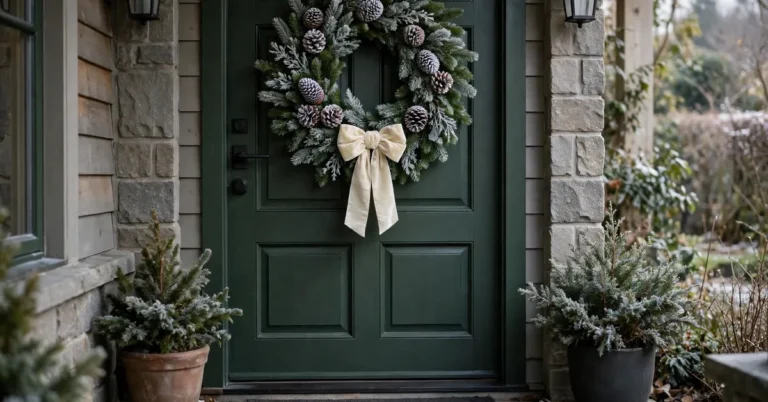
And the same door, seen from the street, does the greeting before any guest reaches this table: a wreath sized to the slab, a mat wide enough for it, numbers that can actually be read. Our guide to 21 Charming Front Door Decor Ideas for Instant Curb Appeal styles the outside half of this entry.
The entry table handles the first few feet; the passage beyond it is a different problem: a windowless run of walls, floor and ceiling that needs light in repeats, three straight lines and a defended clear width. Our hallway decor ideas treat that stretch on its own measurements, so the welcome the table starts actually continues down the hall.
This table is the styled face of the landing; the working system behind it, hooks at two heights, per-person cubbies, a bench you can sit on and one small tray at the door you actually use every day, is the drop zone, and it has its own measured system in our drop zone ideas.
Conclusion
An entryway table does not need more decor; it needs a system small enough to survive a busy Tuesday. Size the table to the hall, hang the anchor at two-thirds width, light one side warmly, and let one tray take the whole weight of daily life. Do those four things and the 21 entryway table decor ideas above stop being a weekend project and become the way the table simply stays. The handshake at your front door will feel like it.

6 Comments