
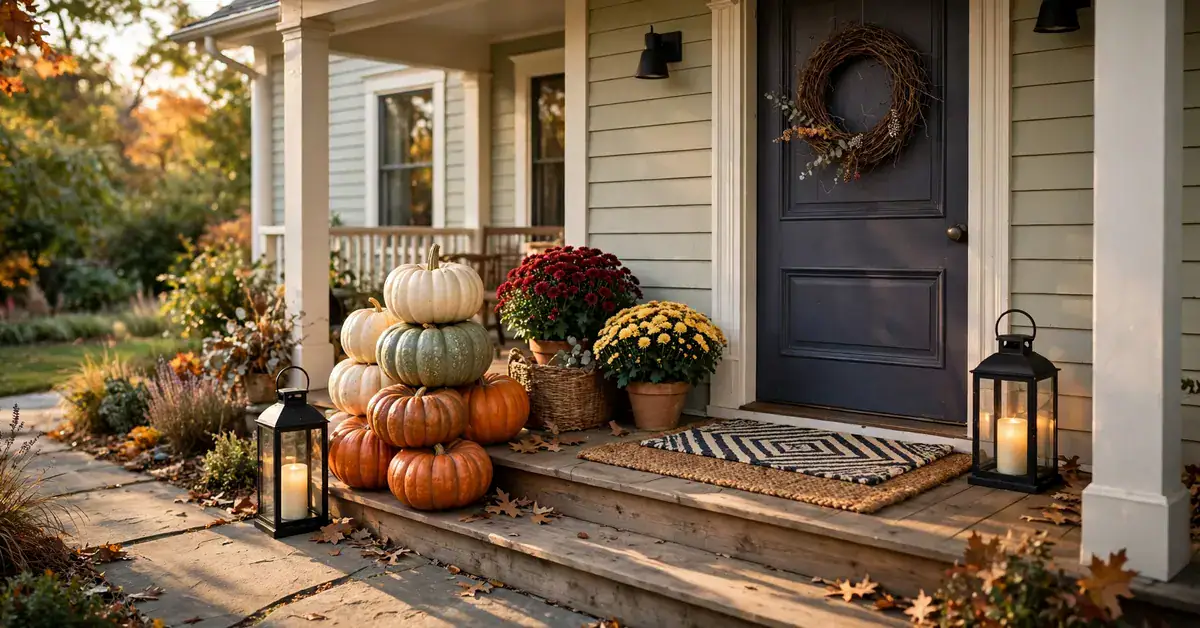
25 Stunning Fall Porch Decor Ideas to Boost Your Curb Appeal
As crisp autumn air arrives and leaves turn golden, your front porch becomes the bridge between outdoor beauty and indoor warmth. A thoughtfully decorated entrance does more than boost curb appeal — it creates an inviting greeting at the end of the day and sets a welcoming seasonal tone for holiday visitors.
Whether you have a spacious wraparound veranda, a classic suburban stoop, or a compact entryway landing, autumn offers one of the richest design palettes of the year. The styling that lasts is built in a deliberate order: frame the door by measure, compose the layers in triangles, and do the small care work that keeps everything handsome from late September straight through Thanksgiving.
That is the system behind these fall porch decor ideas — 25 of them: foundations first, then pumpkins, flowers, light, seating and vintage finds, plus what each level honestly costs, the mistakes that undo a good porch, and answers to the questions readers ask every autumn.
The Method: Frame It, Layer It, Make It Last
Three moves, in order, before anything is bought. Most fall porches disappoint for one of three reasons: the pretty pieces crowd the walk to the door, everything is lined up at one height, or the display rots, fades and blows over by mid-October. The steps below remove all three.
Step 1 — Frame It: Measure Before You Place
A polished porch starts with the path. Keep the walk to your front door at least 36 inches clear — the same 36 inches the ADA Standards and the residential building code use as the minimum clear path, borrowed here by analogy because groceries, packages and guests need exactly that room. With the path protected, give the door its anchors, sized to the door itself: a wreath of about 24 inches across for a standard 36-inch door; layered mats running an 18 by 30 inch coir mat (24 by 36 for a large door) over a base rug — 3 by 5 feet is the standard base for a 36-inch door — with a 6 to 12 inch border of rug showing on every side. Topiaries, urns and crates flank the door inside that frame, never narrowing the walk. Frame the fall porch decor ideas that follow this way, and every later layer has a structure to sit in.
Step 2 — Layer It: Compose in Triangles
Decor lined up in a flat row looks like a shop shelf; decor grouped in triangles looks designed. Work in odd numbers — clusters of three or five — and build each cluster from three heights: something tall (a cornstalk bundle at 5 to 8 feet, ornamental grasses, a topiary), a mid-height anchor (a potted mum, a lantern), and something low to ground it (a trio of pumpkins). Where pieces stack, let each new tier run at roughly 60 to 70 percent of the size below it, and the proportions stay believable. Vary the heights, and the eye travels through the porch the way it travels through a room.
Step 3 — Make It Last: The Care System
A fall display is mostly perishable, so the last step is the care that carries it to Thanksgiving. Pumpkins follow a short sequence: wash, dry, set raised off damp ground, and always lift by the body — the stem is a cork, and a broken stem is where rot starts. Mums are bought at about half bloom and watered at the soil, never over the flowers. Dried goods get distance: the NFPA’s rule is that dried flowers and cornstalks catch fire easily, so keep them away from open flames and other heat sources like light bulbs and heaters. Tall and hollow pieces get anchored, textiles are outdoor-rated or come in at night, and the 36-inch path stays clear to season’s end.
Essential Foundations for a Welcoming Entry
A compelling porch design starts at the threshold. Establishing strong architectural anchors around your door frame immediately draws the eye and gives smaller seasonal accents a cohesive base — this is Step 1, built piece by piece.
1. Layered Welcome Mats for Visual Depth

Frame your doorway by layering a natural coir mat over a wider, low-pile outdoor rug. A classic black-and-white buffalo check, muted houndstooth, or warm earth-toned stripes create instant contrast and tailored dimension against your porch flooring.
Size the pair to the door, not to the shelf you found them on. Retailer and design guidance puts the standard coir mat at 18 by 30 inches for a single door — 24 by 36 for a large one — spanning at least about 80 percent of the door’s width. The base rug goes bigger: 3 by 5 feet is the standard base under a 36-inch door, laid so a 6 to 12 inch border of rug shows around the coir mat on every side. On wide entries with sidelights, size the base rug to the full width, door plus sidelights.
2. Oversized Asymmetrical Grapevine Wreaths
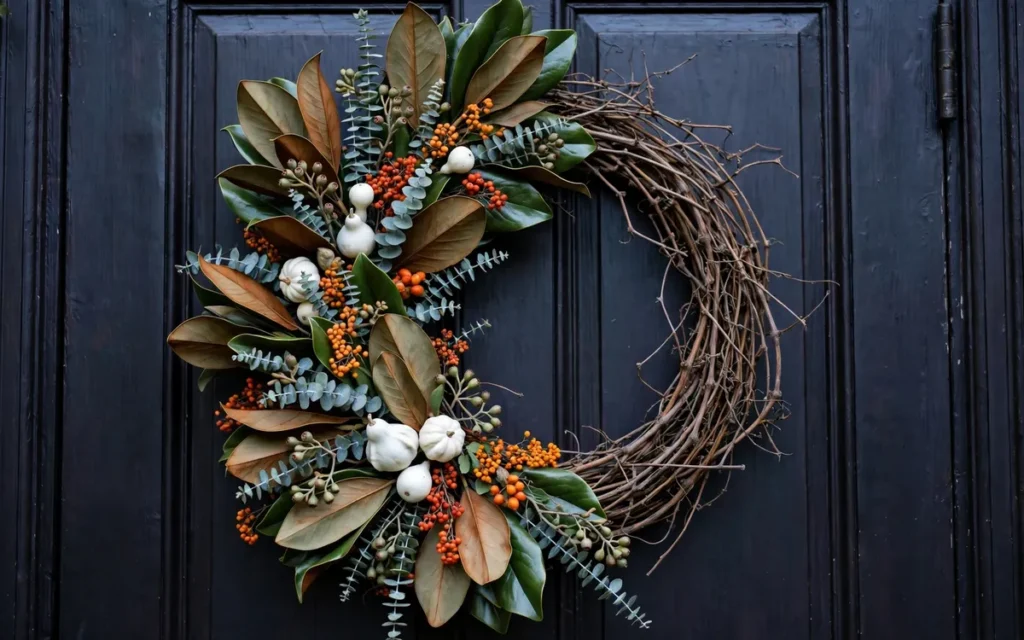
Swap the standard symmetrical wreath for an organic, asymmetrical grapevine base. Decorate one side with preserved magnolia leaves, seeded eucalyptus, mini white gourds, and bittersweet vines. Leaving part of the dark, twisted branch exposed adds refined rustic charm.
Size the wreath the way designers size it: about 24 inches across for a standard 36-inch door, leaving roughly 6 inches of door showing on each side — somewhere between half and two-thirds of the door’s width. Drop to 22 inches on a narrow or sidelight door, and on double doors hang a matched pair, one per door at the same height, rather than one oversized wreath straining across both. An asymmetrical design forgives a slightly generous size, because the bare grapevine side keeps it reading light.
3. Vintage Wooden Crates for Vertical Staging

Stack two weathered wooden orchard crates on their sides beside your doorway. This creates instant multi-level shelving where you can perch mini pumpkins, potted pansies, and antique stoneware jugs without taking up walking space.
The crates earn their place inside Step 1’s frame: beside the door, against the wall, never edging into the 36-inch walk. That placement lets a small stoop borrow height safely — the display climbs the wall while the floor stays clear. The two levels also hand you a ready-made triangle from Step 2: tall pot above, pumpkins at the base.
4. Flanking Topiaries Intertwined with Bittersweet
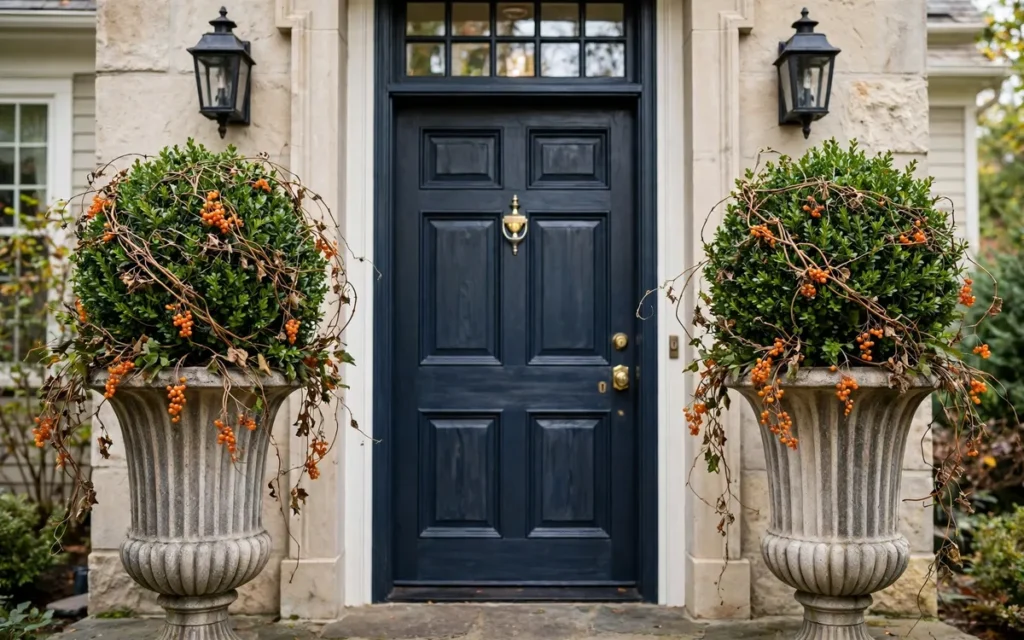
Frame your front door with matching boxwood or cedar topiaries in tall fluted urns. Weave dried bittersweet vine or faux amber berry garlands loosely through the foliage, infusing vibrant autumn color into an evergreen staple.
The pair is the other half of Step 1’s frame: wreath at the center, layered mats underfoot, matched height on both sides of the door. Symmetry does quiet work here — two urns of the same size tell the eye the entry was planned, where a single large plant reads as an accident. Keep the bittersweet loose rather than wound tight; a few amber strands drifting through green is the whole effect.
Statement Pumpkin & Gourd Displays
Pumpkins are the quintessential hallmark of autumn, but looking past standard carved orange varieties unlocks sophisticated, designer-grade arrangements. This is also the group that lives or dies by Step 3 — every display below lasts longer washed, dried, raised off the ground and handled by the body.
5. Stacked Heirloom Pumpkin Topiaries
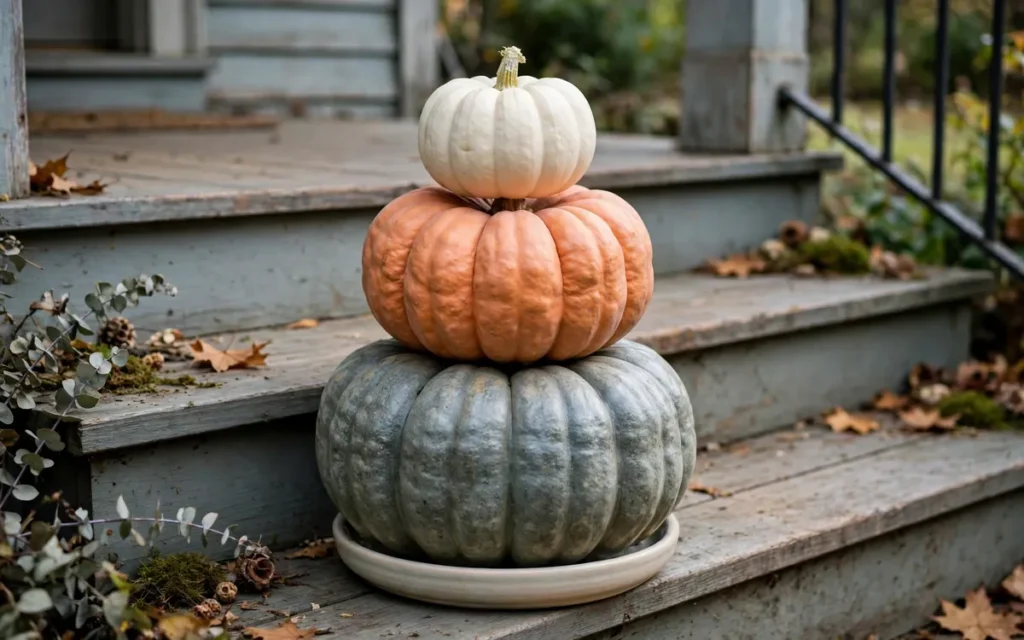
Create striking vertical focal points by stacking flat-topped heirloom pumpkins in descending sizes. Anchor the base with a broad blue-gray Jarrahdale, add a ridged peach Cinderella in the middle, and top with a pale white Casper.
The build experienced decorators rely on — practice, not a product standard — starts with the varieties: flat-bottomed heirlooms stack, round field pumpkins rock. Each tier runs at roughly 60 to 70 percent of the diameter below, and three tiers is the limit; a fourth almost always leans. The spine matters more than the stack: a stake or dowel of about 3 feet runs through the centers, anchored into a planter of packed soil or a gravel-filled bucket at the base, not merely skewered pumpkin to pumpkin. Cut stems flush so tiers sit level — knowing a cut stem is where rot starts first, one more reason to build on hard-skinned varieties.
6. Monochromatic White, Sage, and Champagne Cascades
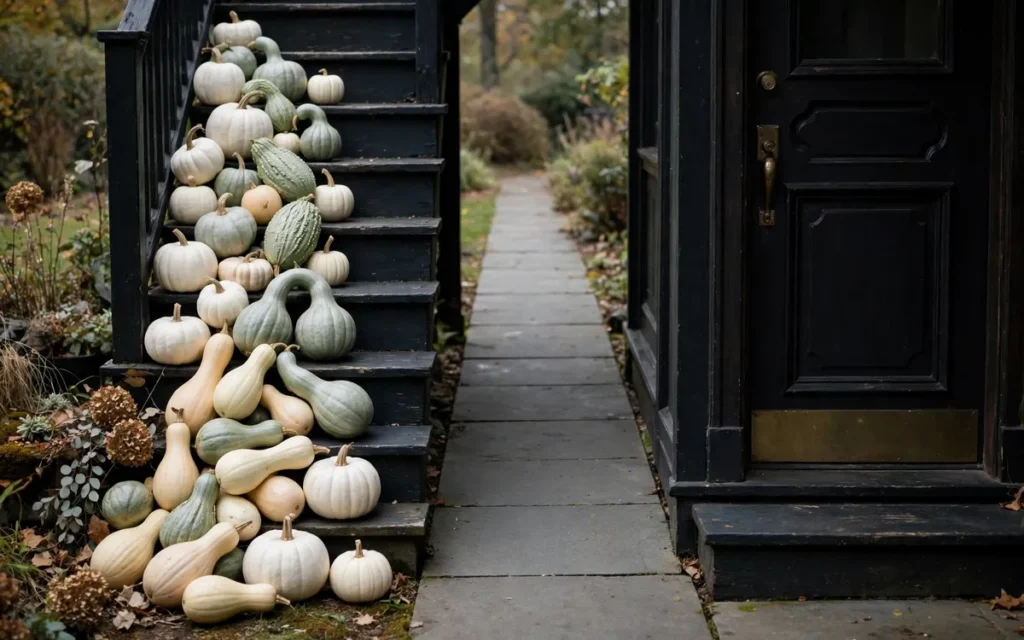
If bright orange clashes with your home’s exterior, embrace a soft neutral palette. Arrange a tumbling cascade of ghost pumpkins, pale sage gourds, and creamy champagne squashes down your steps. These muted tones look especially striking against dark doors or painted brick.
This is the no-orange palette at idea scale — the same move that fixes the all-orange mistake further down, applied before it can happen. The pale varieties are also the practical choice: the hard-skinned heirlooms in this family keep for several months in cool, dry shade, where a thin-skinned field pumpkin gives you weeks. Build the cascade on the edge of the treads, though — one that eats the middle of the steps is a trip hazard wearing a pretty palette, and the walking line stays clear.
7. Hand-Painted Botanical and Geometric Gourds

Add personalized artisanal charm by hand-painting smooth craft pumpkins. Use deep olive, charcoal, or muted gold to paint delicate botanical sprigs, minimal pinstripes, or subtle checks. They hold up all season without rotting and provide a bespoke touch.
Think of the painted set as the display’s zero-care layer. Everything real on the porch is on Step 3’s clock — washed, raised, watched — but a painted craft pumpkin asks for nothing after the paint dries, making it the right filler for the spots you check least: the far corner, the high crate. Keep the motifs simple and the colors inside the porch’s palette, and painted gourds read as intentional rather than crafty.
8. Hollowed Pumpkin Planters with Trailing Ivy
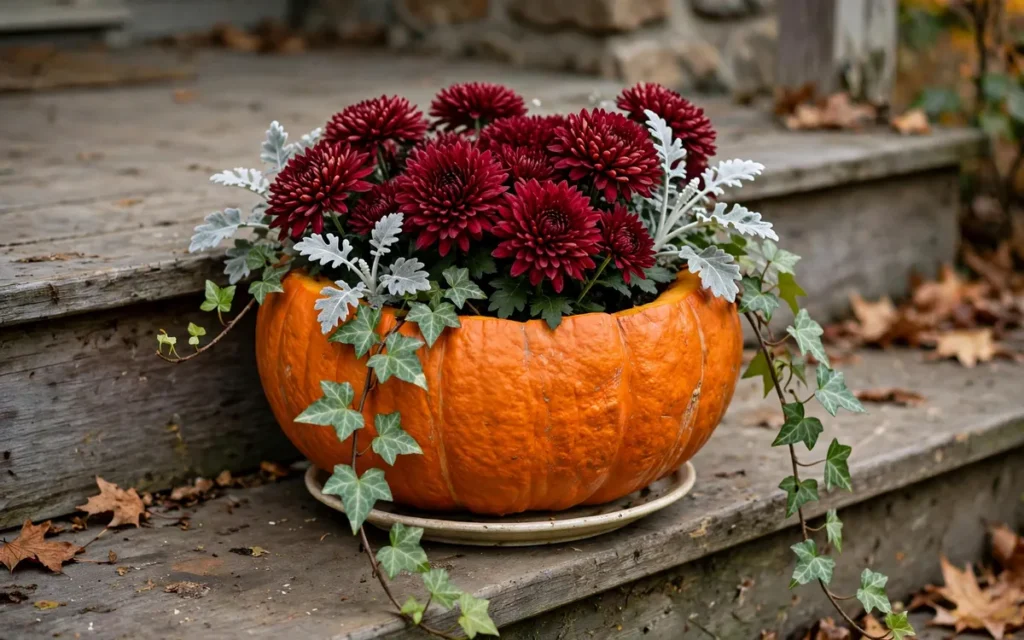
Hollow out medium real or realistic resin pumpkins, line them with saucers, and use them as seasonal planters. Fill them with deep wine chrysanthemums, silver dusty miller, and English ivy trailing gracefully over the edges.
Be honest about which version you are building. A hollowed real pumpkin is a short-lived planter — the shell softens as the weeks pass — so plant it near the start of the display’s best weeks. A realistic resin pumpkin with the same planting carries the identical look from September to Thanksgiving, which is why many long-season porches quietly use resin here. Either way, the saucer lining is non-negotiable, and the stem rule applies every time you move one: lift by the body, never by the stem.
9. Mini Pumpkin Clusters in Galvanized Olive Buckets

Keep miniature pumpkins from looking scattered across a large porch floor. Gather an assortment of Baby Boo and striped tiger gourds inside an antique galvanized olive bucket. The metal container adds rustic texture while keeping the display neat.
Containment is the whole fitting here. A dozen mini pumpkins sprinkled loose across a porch read as clutter — the scale mistake in miniature — while the same dozen gathered in one bucket read as a display. The bucket also does Step 3 work: minis in a container stay off damp decking, dry faster after rain, and move as one piece when the weather turns.
Vibrant Fall Florals & Natural Textures
Living flora and dried botanical textures bring essential warmth, color gradients, and organic movement to an outdoor entrance. They are also the most perishable layer of the porch, which is why this group’s buying and watering rules matter as much as its colors.
10. Ombré Chrysanthemum Step Arrangements
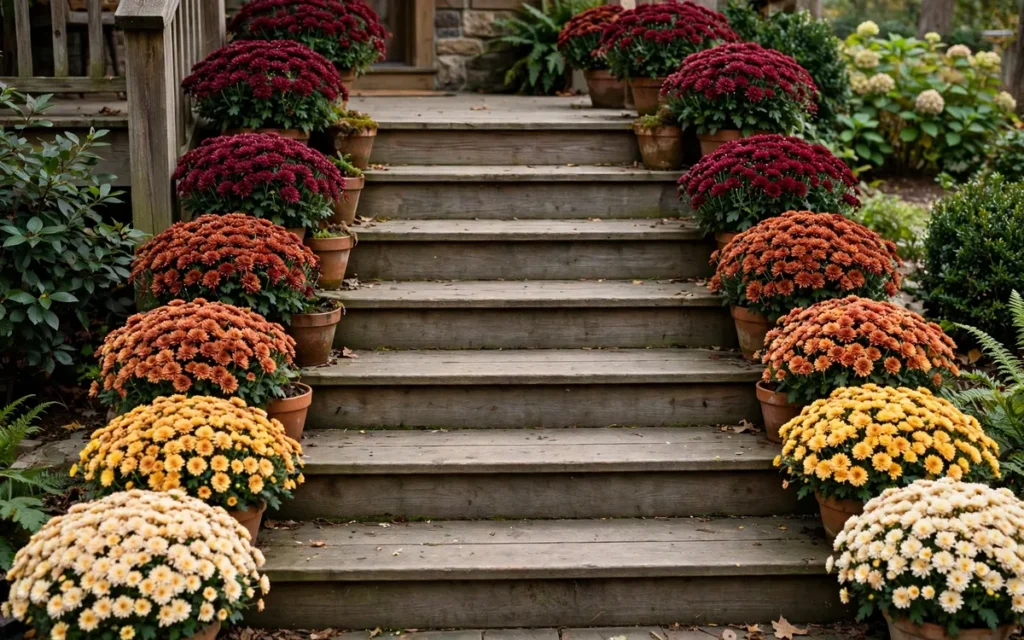
Take advantage of the wide color spectrum of potted mums by staging an ombré transition down your steps. Place deep burgundy mums on the top landing, transition to burnt bronze and rust on middle treads, and finish with golden mustard and warm cream at the base. For more on choosing and caring for the plants themselves, the University of Illinois Extension’s guide to caring for fall favorites is the reference worth bookmarking.
Buy the mums by the extension rule, not by the prettiest pot: choose plants at about 50 percent bloom, with as many buds still closed as open. A mum bought in full bloom fades before the season ends, while one bought at half bloom and watered properly runs six to eight weeks — well past Thanksgiving. Water at soil level, never over the foliage, and water deeply; a potted mum in sun drinks more than new owners expect. Stage the ombré at the edges of the treads so the gradient reads from the street while the middle of each step — Step 1’s walking line — stays clear.
11. Textured Flowering Kale and Ornamental Cabbage

When early frosts threaten delicate flowers, ornamental cabbages and flowering kale step in. Their ruffled rosettes in shades of dusty magenta, violet, and seafoam green offer dense texture that stays fresh through chilly November mornings.
Kale and cabbage are the porch’s cold insurance, and the numbers explain why: their color intensifies once temperatures drop below about 60°F (the University of Florida’s extension service puts the trigger there), and a planted display holds well down to roughly 20°F — far beyond the first frosts that finish lesser flowers. Plant them from the start rather than as replacements, and the porch has a backbone still deepening in color when the mums finally fade.
12. Tall Dried Cornstalk Bundles with Velvet Ribbons
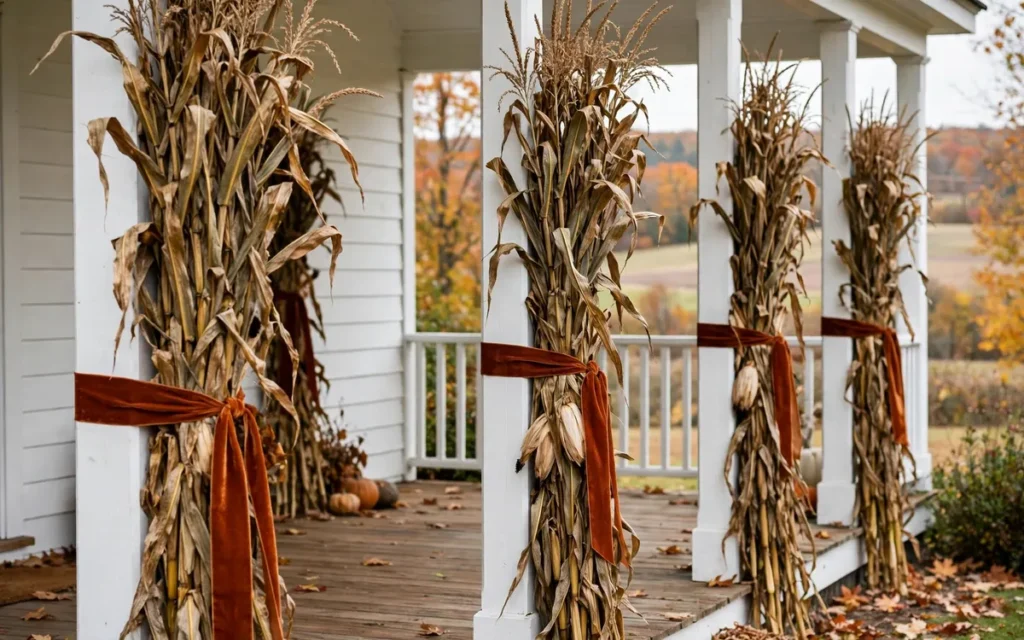
Anchor porch columns or entryway corners with tall bundles of dried cornstalks. Instead of coarse burlap, bind the centers with wide, frayed-edge velvet ribbon in rust, moss green, or plum. This pairing of harvest textures with rich ribbon immediately elevates the look.
Bundles typically run 5 to 8 feet tall, which makes them Step 2’s tall point — the top of the triangle that mums and pumpkins sit beneath. Two safety fittings come with the height. First, anchor each bundle to its post or railing; a loose 7-foot bundle in an October gust is a sail. Second, respect the NFPA’s distance rule: dried cornstalks catch fire easily, so they stand away from open flames and from heat sources like bulbs and heaters — pretty at the post, never beside the lantern cluster.
13. Potted Ornamental Grasses for Height and Movement

Place containers of purple fountain grass or feather reed grass behind your pumpkin groupings. The feathery plumes catch late-afternoon sunlight and sway in the breeze, adding height and dynamic motion that static decor cannot match.
Grasses are the tall layer at a lower price and lower risk than cornstalks: living, self-supporting in their pots, and nothing about them is a fire concern. Set the pots directly behind the pumpkin groups so the plumes rise out of the display rather than beside it — height reads as part of the arrangement when it shares its footprint.
14. Seasonal Hanging Basket Makeovers
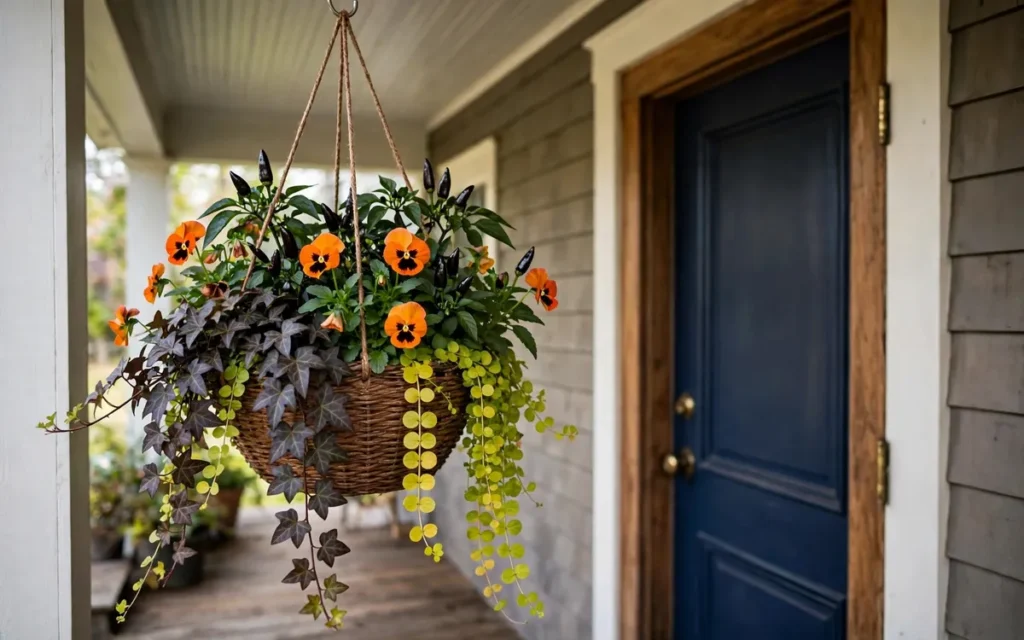
Swap out fading summer ferns for cold-hardy hanging displays. Combine trailing bronze ivy, vibrant orange pansies, dark ornamental peppers, and trailing creeping Jenny to draw the eye upward and balance ground-level arrangements.
The basket is the layer most fall porches forget: everything else happens at or below waist height, and the eye reads the porch as bottom-heavy. A made-over basket at eye level completes the triangle vertically — foliage above, the door’s wreath at the center, pumpkins below. And every plant in the mix is cold-tolerant, so the basket improves through October instead of collapsing at the first frost the way the summer fern did.
Ambient Lighting & Evening Glow
As daylight hours shorten, thoughtful lighting becomes essential for maintaining cozy curb appeal after sunset. Layering warm light sources creates an irresistible evening glow — and on a porch full of dried leaves and cornstalks, it is also where the safety rules in Step 3 earn their keep: every light in this section is flameless, or listed and rated for the outdoors.
15. Grouped Hurricane Lanterns with Pillar Candles

Group matte-black, aged brass, or weathered zinc hurricane lanterns in clusters of three on porch steps or beside door planters. Vary the heights — a graduated trio, such as 12-inch, 18-inch, and 24-inch frames — and use weather-resistant outdoor LED pillar candles with built-in timers for effortless evening illumination.
The timers are the fitting that makes the cluster effortless. Outdoor LED pillars run on daily repeating cycles set once at switch-on: the standard patterns are 5 hours on and 19 off, or 6 hours on and 18 off, depending on the maker. Set them at dusk once and the porch lights itself at the same time every night. And because the “candles” are LED, the cluster can sit near the door’s dried garland without breaking Step 3’s distance rule the way a real flame would.
16. Copper Fairy Lights Woven into Garlands
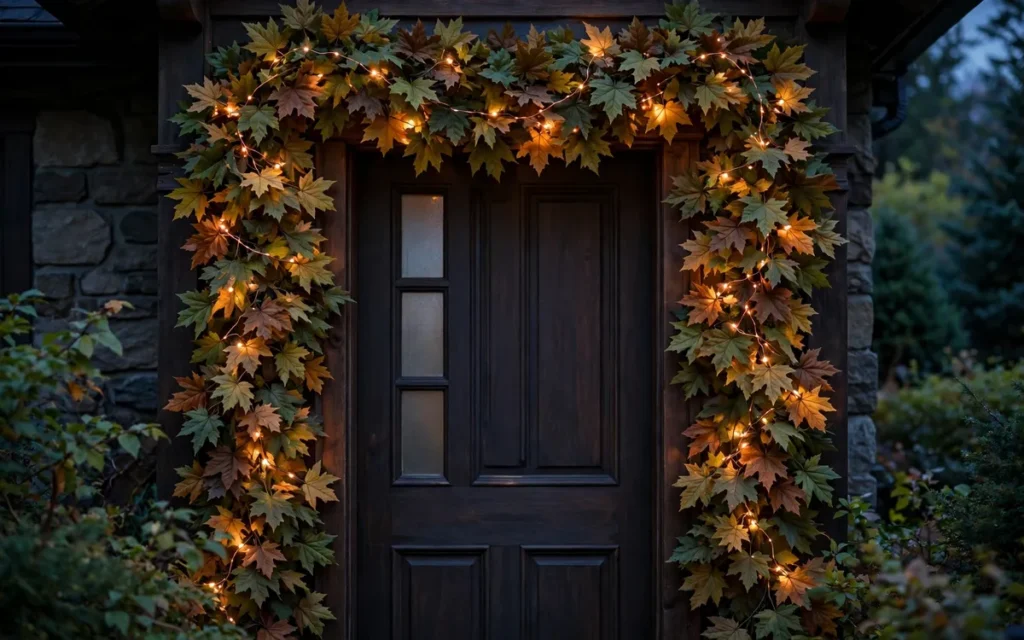
Frame your doorway with a lush garland of preserved oak leaves, magnolia branches, and faux autumn berries. Thread a strand of warm-white, battery-operated micro fairy lights on thin copper wire throughout the leaves, tucking the battery pack inside an adjacent planter.
One honest label check before a strand goes up: seasonal string lights are tested to the UL 588 standard, so choose strands listed for indoor and outdoor use — that listing is what says the strand is built for porch weather. Battery strands sidestep cords entirely, and their low heat is precisely why they can be woven through dried leaves where a hotter bulb would break the NFPA distance rule from Step 3.
17. Upcycled Glass Jar Luminaries Along Walkways
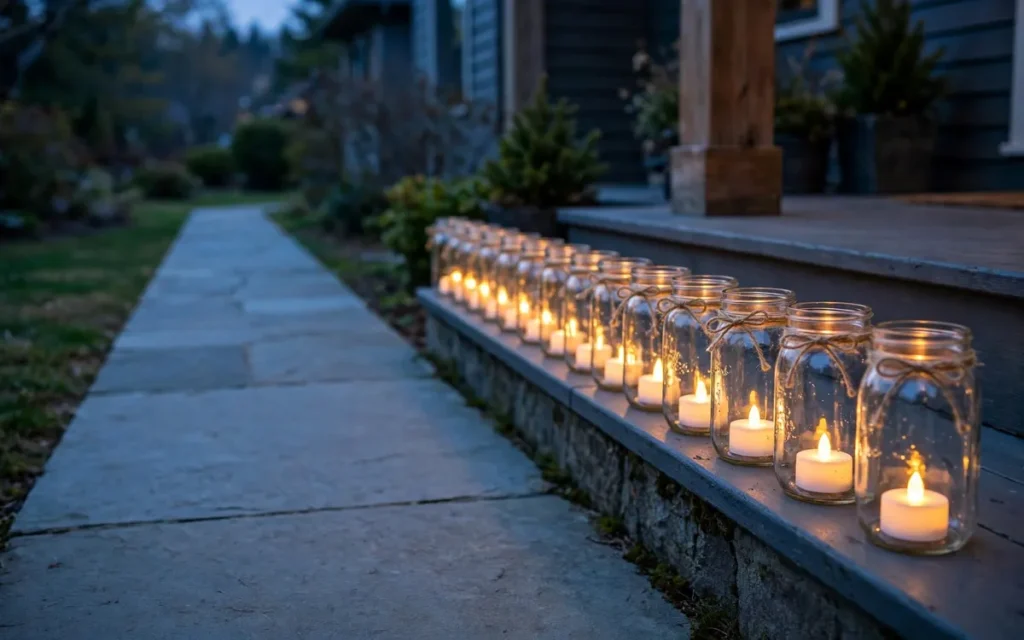
Line the pathway leading to your porch steps with vintage glass mason jars or amber bottles. Fill the bottom with dried field corn, acorns, or lentils, and nestle a battery-powered tea light inside to create an enchanting amber trail to your door.
Place the jars at the path’s edges, never in the path itself — they mark Step 1’s 36-inch walking line rather than decorating the middle of it. The filler at the bottom does practical work too: it weights each jar against tipping and lifts the tea light to mid-glass, where the amber glow carries furthest. Battery lights, again, are the point — a line of real flames along a walk edged with fallen leaves is the one version of this idea to skip.
18. Vintage Edison Bulb String Lights Draped Overhead

If you have a covered porch ceiling or sturdy railing, hang heavy-duty outdoor string lights with exposed amber-tinted Edison filaments. The warm filament glow casts a flattering golden wash over seating areas and decor vignettes.
Overhead strings are the one lighting idea here that plugs in, so they carry the full outdoor checklist: strands listed for outdoor use, plugged into a GFCI-protected outlet, connections kept off the ground where puddles form. Fixtures under a covered porch sit in damp-location territory; anything rain actually reaches needs a wet-location rating instead. Choose LED Edison-style bulbs where you can — the same amber filament look at a fraction of the heat, which matters on a porch decorated with dried goods.
Cozy Seating & Seasonal Textiles
Transforming your porch into an outdoor extension of your living room encourages lingering with a warm drink and wrapping yourself in seasonal comfort. Carry that same cozy feeling indoors with these cozy fall bedroom ideas.
19. Plaid Tartan Throws on Weathered Rocking Chairs

Nothing captures autumn hospitality quite like a classic front porch rocking chair. Drape a heavyweight wool or washable acrylic throw in rich Black Watch tartan or rust plaid casually across the armrest, ready for crisp morning coffee routines.
The fabric honesty rule from Step 3 applies here: heavyweight wool and washable acrylic both survive porch life, but an ordinary indoor throw left out overnight drinks the morning dew, and damp fabric stored damp is how mildew starts — that failure gets its own mistake section below. Indoor textiles come in at night or live in a deck box; the throw that stays on the rocker all season should be one bought for the outdoors.
20. Weather-Resistant Bouclé and Velvet Accent Pillows
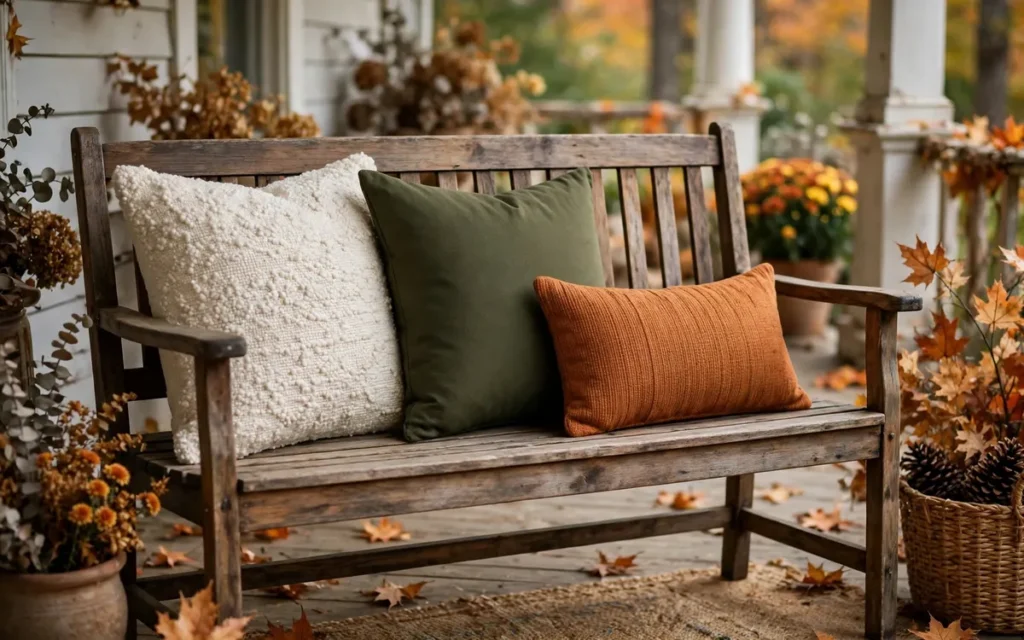
Outfit outdoor benches or wicker chairs with weather-resistant pillows that deliver indoor softness. Combine tactile fabrics by pairing a nubby cream bouclé lumbar pillow with a deep terracotta or mustard velvet square pillow for rich visual depth.
Read the label the way manufacturers write it. The benchmark outdoor class is solution-dyed acrylic — the Sunbrella class — where the pigment runs through the fibre itself, which is why it resists fading season after season. Two honest limits come with it: water-repellent is not waterproof, so cushions still need shelter in a real downpour; and while the acrylic fibre itself does not feed mildew, mildew can grow on dirt and residue left sitting in any fabric — so pillows get brushed off and stored dry.
21. A Styled Autumn Porch Swing
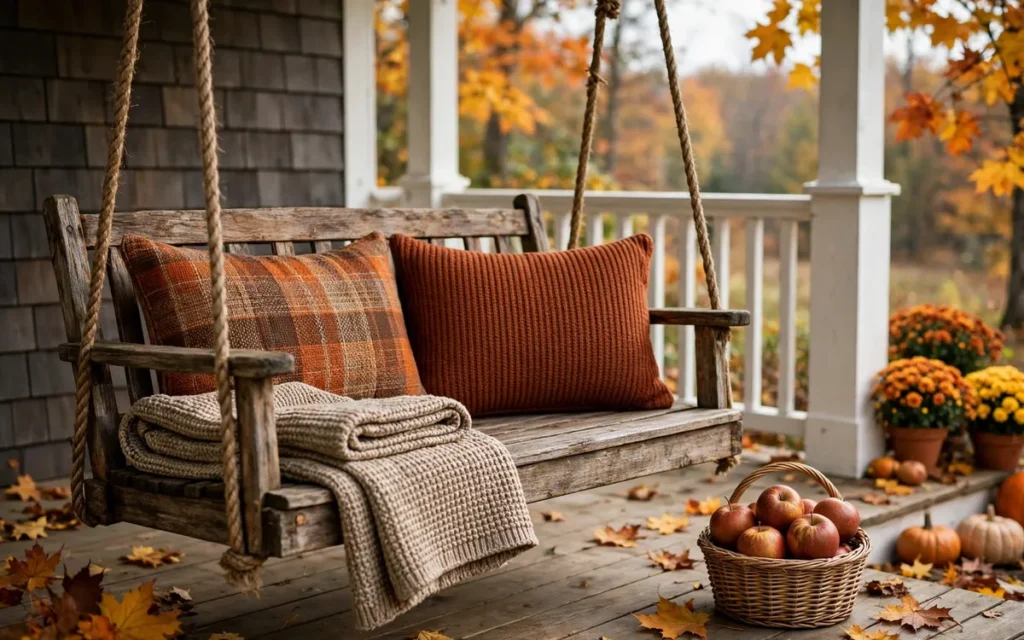
Treat a hanging ceiling swing like an inviting outdoor daybed. Lay down an all-weather mattress cushion in warm oat or linen, pile it with oversized knit cushions, and drape a chunky chenille blanket over the back. Flank the base with low wooden bowls filled with mini pumpkins.
The swing is furniture, so it follows the furniture rules: the cushion is all-weather class (idea 20’s label check applies to it too), and the styling respects the swing’s geometry. Keep the pumpkin bowls flanking the base, out of the swing’s arc — a swinging seat and a bowl of pumpkins at shin height are a predictable meeting — and hang it where that arc never crosses Step 1’s walk to the door.
22. Reclaimed Wood Bench with a Faux Sheepskin Topper

Place a rustic, weathered wood bench against an open porch wall. Layer a plush ivory faux sheepskin pelt across the seat for instant Nordic hygge, anchoring the corner with a tall potted mum and a stack of antique hardcover books tied with jute twine.
The topper is an evening layer, not a permanent one — this is mistake 3’s fix in practice. Faux sheepskin left out through dew and rain mats down and holds moisture against the bench, so it comes in overnight and comes out when the porch is being used. The bench, mum and books are the corner’s all-weather anchor; the sheepskin is the ten-second touch that dresses it.
Architectural Accents & Vintage Details
Unique vintage pieces and architectural salvage give your porch curated personality that retail stores cannot replicate. They are also the most forgiving layer — nothing here wilts, fades or rots — so they are worth hunting for slowly.
23. Repurposed Wooden Orchard Ladders
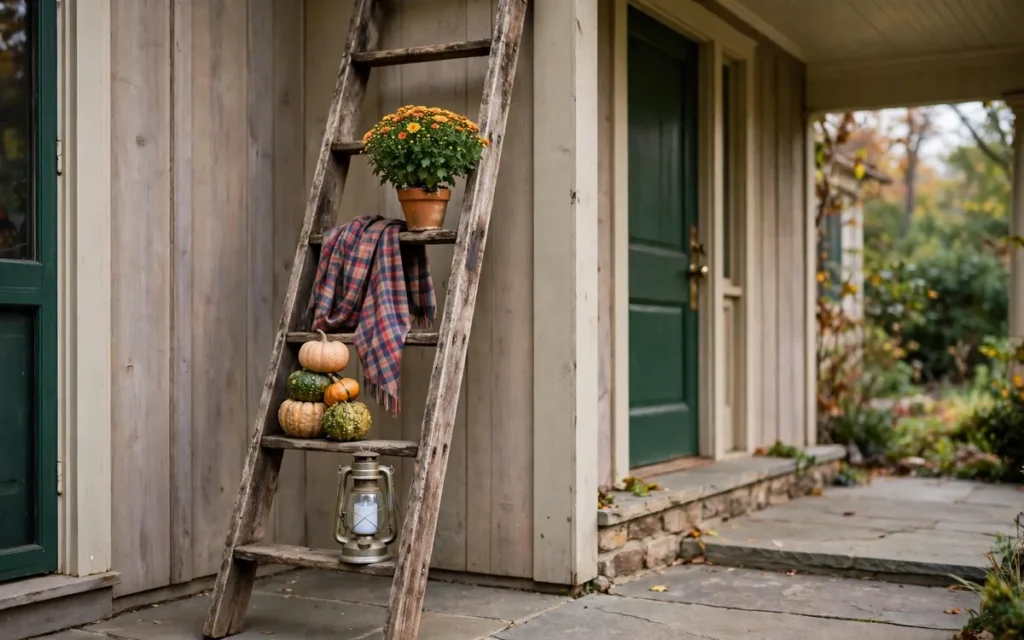
Lean an antique wooden orchard ladder against your porch siding. Use the rungs to hang seasonal plaid scarves, suspend mini wreaths, or hang small tin candle lanterns at staggered heights. It adds vertical interest without taking up precious floor space.
One fitting the pretty photos skip: secure the ladder. A leaned ladder on a smooth porch floor can skate at the base or tip in a gust, and Step 3’s anchoring rule covers it — a discreet tie to a post or a non-slip pad under the feet keeps the lean where you put it. Secured, the ladder is the small porch’s best friend: a whole wall of display for about six inches of floor.
24. Hand-Lettered Wooden Welcome Signs

Complement your entryway with a tall vertical welcome board or a framed chalkboard leaning beside the door. Choose timeless typography — clean serif lettering or flowing modern calligraphy — with greetings in the “Gather Here” spirit, surrounded by simple botanical flourishes.
Placement is the fitting: the sign leans beside the door, inside Step 1’s frame, where it reads as part of the entry, not an obstacle — and like the ladder, it gets secured against tipping. Timeless lettering matters more than the greeting: a clean serif board still looks right in five autumns, while a joke-of-the-moment sign dates the porch by November.
25. A Rustic Wheelbarrow Spilling Over with Harvest Bounty
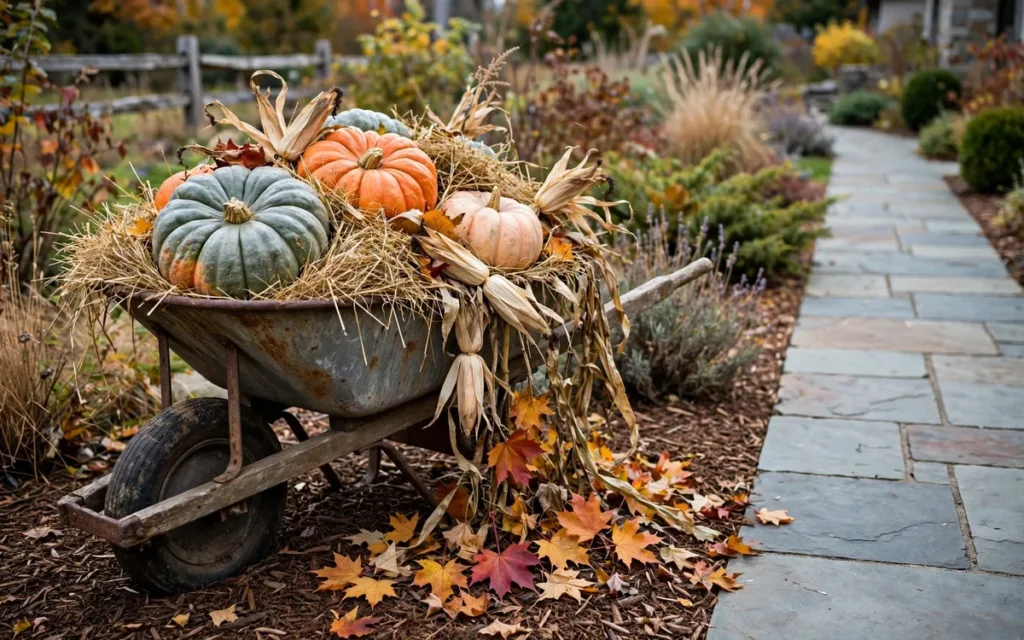
Position a weathered metal or wooden garden wheelbarrow near your walkway or garden bed at the foot of your porch. Tilt it slightly to display a natural arrangement of decorative hay, ornamental squashes, heirloom pumpkins, and flowering bronze mums spilling outward.
Anchor the display so it stays a display: a tilted, loaded wheelbarrow is top-heavy on one wheel, so chock the wheel and settle the legs before the arrangement goes in — a barrow that rolls or tips into the walkway breaks Step 1’s clearest rule. Parked beside the walk rather than on it, spilling toward the garden bed, it is the perfect full stop at the end of the porch’s story: the harvest, arriving.
What It Costs: Three Ways In
No guide in this niche publishes honest porch budgets, so treat the three tiers below as what they are — rough planning classes for deciding how far to take the system, not quotations. Prices vary by store, region and how much you already own.
The door-only tier (roughly under $75). The layered mats, a wreath, and a few pumpkins and mums at the door. This tier runs Step 1 completely and touches nothing else, and for a stoop or small landing it may honestly be the whole job: the frame is what makes a porch look styled, and the frame is cheap.
The full-porch tier (roughly $75–$300). The door plus the layers: planters and mums for the steps, a stacked heirloom display, lanterns with LED pillars, garlands and string lights, outdoor-rated pillows and throws. This is where most porches land — Steps 1 and 2 in full, with Step 3’s care keeping it handsome to Thanksgiving.
The furniture tier (roughly $300 and up). Everything above, anchored by the pieces that stay for years: a swing, bench or pair of rockers, large fluted urns, and genuine vintage finds like the orchard ladder and wheelbarrow. Buy this tier slowly, secondhand where you can — the furniture is the porch’s permanent architecture, and the fall layer dresses it anew each year.
5 Mistakes That Undo a Polished Porch
Every idea above can be undone by one of these. Most of them began life as the original version of this article’s own warnings, promoted to where they belong — and most cost nothing to fix.
Using Only Orange Accents
A porch done entirely in orange reads flat, oversaturated, and dated by the second week — the eye gets one note, played loudly, with nothing to rest on. The fix is range: mix in soft neutrals, sage greens, deep plums, warm brass, and natural wood tones, and let orange be the loudest voice rather than the only one. Idea 6’s white, sage and champagne cascade exists for houses where orange fights the exterior; a porch can be unmistakably autumn with barely a pumpkin-orange object on it.
Ignoring Scale and Proportion
Tiny items get lost on a large porch, and oversized pieces crowd a small stoop until the door feels like an obstacle course. The discipline is Step 2’s: choose two or three substantial statement pieces rather than a dozen cluttered miniature items, build each grouping as a triangle of tall, mid and low, and let each stacked tier run at roughly 60 to 70 percent of the one below. When everything is the same small size, nothing is a focal point — the porch reads as storage for fall, not a display of it.
Leaving Indoor Textiles Outdoors
Regular indoor throws and pillows absorb morning dew rapidly and mildew follows — a fabric left damp and stored damp smells of it within weeks. The honest outdoor class is solution-dyed acrylic (the Sunbrella class), whose pigment runs through the fibre: water-repellent, though not waterproof, and the fibre itself does not feed mildew — though mildew can grow on dirt and residue left sitting in it, which is why outdoor cushions get brushed off and stored dry. Anything not outdoor-rated plays by the simpler rule: in at night, or in an enclosed deck box between uses.
Putting Real Flame — or Any Heat — Near Dried Decorations
Wind extinguishes real candles easily enough, but the deeper problem is what sits beside them. The NFPA’s guidance is blunt: dried flowers, cornstalks and crepe paper catch fire easily, and all decorations should be kept away from open flames and other heat sources like light bulbs and heaters. In NFPA data, decorations start an average of 770 home fires a year in the US, and 44 percent began because the decorations were too close to a heat source. On a porch built from dried leaves, straw and cornstalks, the fix costs nothing in atmosphere: realistic outdoor LED pillar candles on timers give the same flickering glow with no flame at all.
Setting Pumpkins Down to Rot
Most porch pumpkins die from the bottom up. A pumpkin resting directly on damp wooden decking or wet concrete sits in trapped moisture, softens, and rots from the underside while the top still photographs well. The handling does the rest — a pumpkin carried by its stem can lose that stem, and the stem is the cork that seals the fruit; without it, the fruit shrivels at the stem end and rots early, which is why extension guidance says to lift pumpkins by the body and reject any with bruises or sunken spots. And skip the old folk tip of smearing petroleum jelly over stems and undersides: extension sources endorse it only on a carved pumpkin’s cut surfaces (and even there, never near a real candle — LED only). For uncarved display pumpkins, Step 3’s sequence is the whole recipe: wash, dry, raise on cedar shingles, saucers or cardboard rounds, handle by the body — and a pumpkin treated that way runs weeks to months instead of days.
FAQs
When is the best time to start decorating a porch for fall?
Late September through the first week of October is the sweet spot. Temperatures have generally dropped enough that real pumpkins and potted mums will thrive without wilting from late-summer heat, allowing your display to transition seamlessly through Halloween and Thanksgiving.
How do I decorate a very small front porch or narrow stoop?
Focus on vertical space and intentional layering. Use a vertical door wreath, a layered welcome mat, and a single tall planter flanked by two stacked heirloom pumpkins on one side of the door. Leaving the opposite side completely clear preserves floor space and prevents a crowded feeling. And if your entry opens onto a patio, these apartment patio privacy ideas can screen the space without blocking the light.
What are the longest-lasting plants for autumn porch planters?
Ornamental cabbage, flowering kale, heuchera (coral bells), and pansies are exceptionally hardy — kale and cabbage hold their color down to roughly 20°F. Chrysanthemums are the classic, and with proper care they last far longer than most people expect: buy them at about 50 percent bloom rather than in full flower, water at soil level, and a potted mum runs roughly six to eight weeks, well into late autumn.
How do I secure my porch decor against strong autumn winds?
Weigh down hollow plastic or resin pumpkins by pouring playground sand or pea gravel inside through a small hole cut in the bottom. For wreaths, use heavy-duty outdoor suction hooks or reinforced wire rather than lightweight over-the-door hangers that rattle in heavy gusts. Add the tall pieces: tie cornstalk bundles to their posts, and secure leaned ladders and signs so a gust cannot tip them into the walkway.
How long do uncarved pumpkins last on a porch?
Longer than most people think — if they start healthy and stay dry underneath. A standard field pumpkin kept in cool, dry shade typically lasts eight to twelve weeks; the hard-skinned heirlooms like Jarrahdale and Cinderella keep for several months. Heat and ground moisture shorten both numbers fast, which is why the wash-dry-raise routine matters. A carved pumpkin is a different clock entirely: expect three to ten days.
How do I keep pumpkins from rotting?
Start at the market: choose pumpkins with intact stems and no bruises, sunken spots or watery patches, and lift them by the body — never by the stem, the cork that seals the fruit. At home, wash them (a soak of ten parts water to one part vinegar for twenty to thirty minutes is the wildlife-safe option extension services describe; a ten percent bleach solution is the alternative), dry them thoroughly, and set them raised on cedar shingles, ceramic saucers or cardboard rounds — never directly on damp decking or wet concrete.
How do I transition from Halloween to Thanksgiving without redecorating?
Decorate once, in the fall palette, and treat Halloween as a removable layer rather than a second display. The base — mats, wreath, pumpkins, mums, lanterns — never changes. In late October, add the few unmistakably Halloween pieces (a black accent or two, a carved pumpkin with an LED candle, a spooky sign); on November first, lift those pieces off, and the porch is already dressed for Thanksgiving. The heirloom pumpkins and warm textiles that read “harvest” in September read “Thanksgiving” in November.
How can I decorate a fall porch on a budget?
Spend on the frame, forage the texture. The door-only tier from the budget section — layered mats, a wreath, a few pumpkins and mums — does most of what visitors actually register, because the entry is what the eye judges. Then fill in free: fallen branches arranged in a tall pot, pinecones in a bowl, dried grasses from the garden. And follow the scale rule in reverse — one substantial statement piece, like a stacked heirloom display, reads richer than fifteen small items scattered thin, and usually costs less.
Keep the Welcome Going
When the porch turns from fall to deep winter, the same entry shrinks its palette and keeps its welcome: these small front porch winter decor ideas measure the footprint first, then style it for the coldest months.
Just inside that same front door, the entryway table is where the welcome continues — and where the keys and mail land. Our guide to entryway table decor ideas styles it with the same measured approach: the right size table, the right size mirror, and one tray that keeps the top from becoming a dumping ground.
Every autumn porch starts at the same place: the door itself. Underneath the fall layer sits an all-year door — sized wreath, wide mat, readable numbers, a right-sized light — and our guide to front door decor ideas is where that base gets built before the pumpkins arrive.
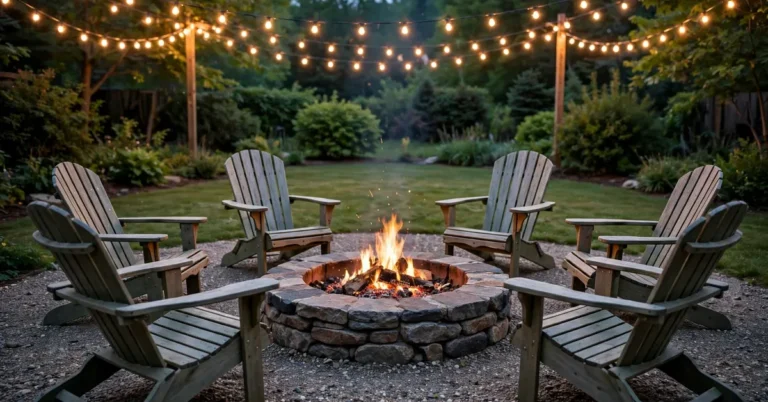
When the evening outgrows the porch, the backyard takes over — and the fall porch’s natural counterpart is a fire pit ringed with chairs. It works by numbers rather than guesswork: a 36 to 44 inch pit, a 7 to 8 foot seating circle and at least 10 feet of clearance from the house, all worked through in our guide to outdoor fire pit ideas.
The same measured approach works on a much smaller footprint, too. If your outdoor space is a balcony rather than a porch, our small balcony decor ideas show how to fit seating, planting and soft lighting into a compact ledge without crowding it.
Conclusion
Designing an inviting fall porch is a wonderful way to celebrate seasonal textures, harvest colors, and outdoor living. Frame it, layer it, make it last — a door measured before it is dressed, groupings built as triangles of tall, mid and low, and the small care habits that keep pumpkins sound and fabrics fresh. Do those three things and the rest of these fall porch decor ideas become the easy part: strong foundations like layered rugs, organic height from hardy foliage, unexpected heirloom pumpkin varieties, and soft lantern light on the stoop.
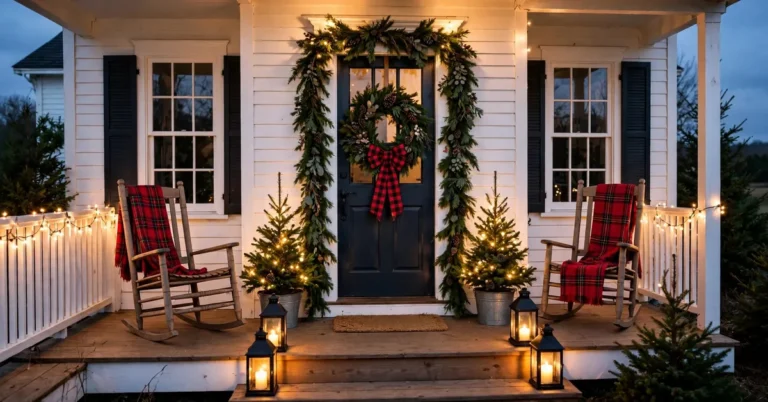
Select three or four ideas that match your home’s exterior architecture, experiment with heights and textures, and enjoy the cozy autumn ambiance every time you return home. And when the season turns, carry the look forward with these farmhouse christmas porch decor ideas for a farmhouse-style holiday entry.


11 Comments